Drones of War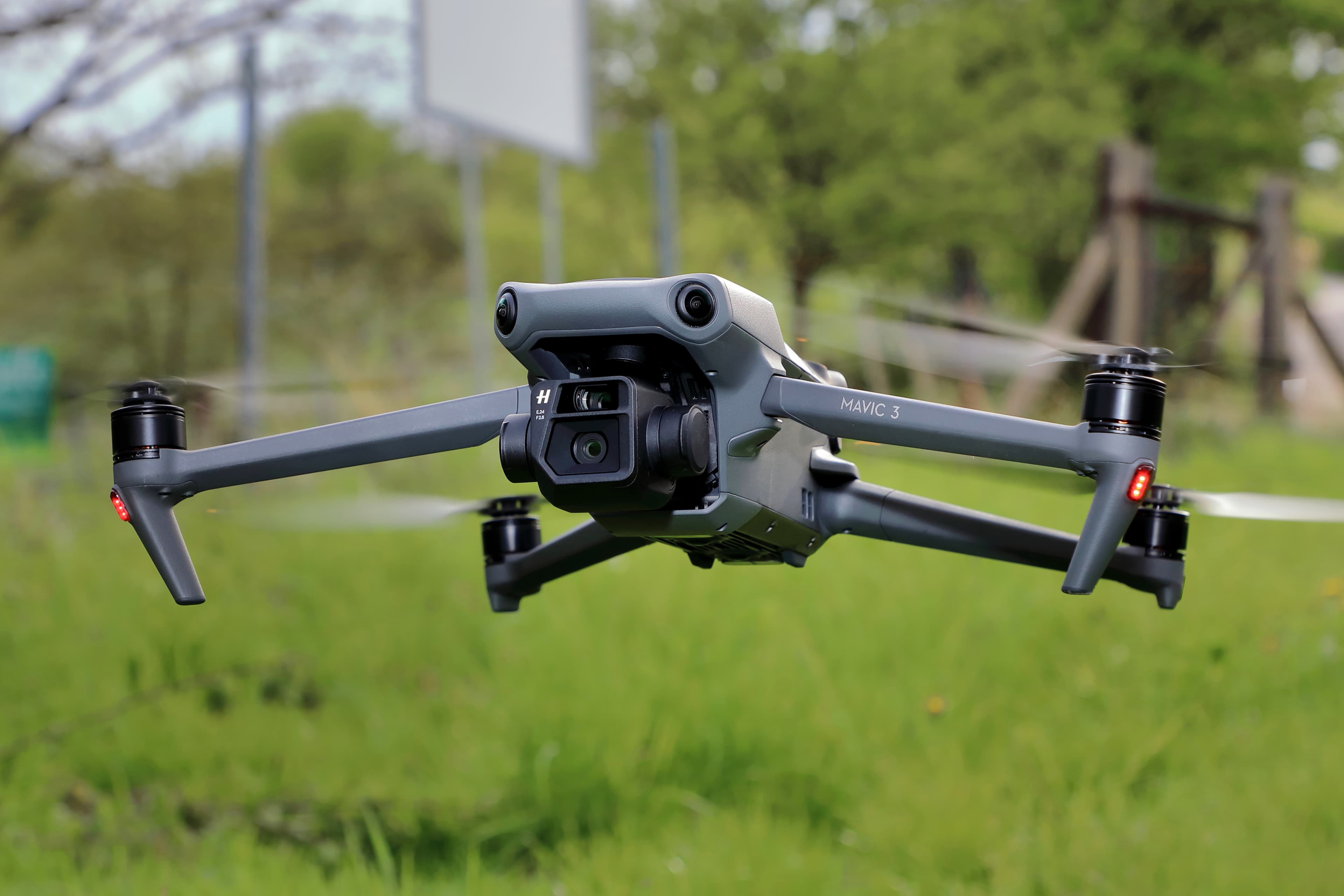
DJI Mavic & Matrice in War
Commercial DJI drones — designed for filmmakers and surveyors — became the most numerous aircraft in the Ukraine war, providing real-time battlefield intelligence and improvised bomb-dropping capability to every unit on both sides.
A $3,000 Camera Drone Changed Modern Warfare. Really.
Here is a fact that should bother every defence procurement officer on the planet: the most numerous aircraft flying over the battlefields of Ukraine was not designed by a defence contractor. No military requirement document. No proving ground. It's a consumer product from Shenzhen, built for filmmakers and real estate agents.
DJI's Mavic and Matrice series, the Mavic 3 and 3 Pro especially, along with the Matrice 300/350 RTK, now form the backbone of tactical ISR for both Ukrainian and Russian forces. Tens of thousands are in active military service, and that's a conservative count. They outnumber purpose-built military drones by a wide margin. They direct artillery. They spot threats. And with a $50 3D-printed adapter, they drop grenades.
None of this is what DJI's product managers planned. But the largest European land war since 1945 doesn't care about your product roadmap.
What Makes These Things So Effective
The reason DJI dominates isn't subtle: the drones work, they're cheap, and you can buy them online.
Take the Mavic 3. Folds to the size of a water bottle, weighs under a kilogram, goes in a backpack alongside everything else a soldier carries. Setup is seconds: unfold, power on, launch. The camera is genuinely impressive for the price. A Hasselblad-branded 4/3 CMOS sensor shooting up to 5.1K video, a 162mm telephoto for zoomed recon, and on the thermal variants (Mavic 3T, Mavic 3 Enterprise) a FLIR thermal sensor for night and all-weather target detection. Up to 46 minutes of flight time in ideal conditions. Video link out to 15 kilometres with clean line-of-sight.
The Matrice 300 RTK and its successor, the 350 RTK, handle the heavier work. Bigger airframe, interchangeable payloads, including the Zenmuse H20T that packs visual, zoom, thermal, and laser rangefinder into one gimbal. Fifty-five minutes of flight time, and it handles wind and rain that would ground a Mavic. These get used for longer-range recon, precision artillery correction, and as bomb-drop platforms when the mission calls for a bigger munition.
Now look at the cost picture. A Mavic 3 runs $2,000 to $4,000 depending on the variant. A Matrice 350 RTK with sensor payload, $10,000 to $15,000. Meanwhile the military alternatives: a Raven RQ-11B costs roughly $35,000. A Puma AE, over $250,000. ScanEagle, $100,000 or more per unit. And none of those can be bought online, shipped in days, and operated after an afternoon of training by a twenty-year-old who grew up flying quads as a hobby.
That cost gap is the whole story, really. Everything else follows from it.
Eyes in the Sky, Grenades from Above
The primary role is ISR at company and battalion level. The capability that previous conflicts required dedicated recon aircraft or satellite passes to achieve is now sitting in a backpack at the platoon level.
The way it works in practice: an operator launches a Mavic from a concealed position a few hundred metres behind the line. The drone climbs to 100-300 metres, the zoom camera sweeps the area. Enemy positions, vehicles, fortifications, movement, all of it shows up on a tablet that the unit commander and artillery liaison watch in real time. When a target appears, the operator pulls GPS coordinates from the drone's telemetry and camera geometry, relays them to the guns. The artillery fires. The drone watches the impact. The operator corrects. The guns fire again.
That observe-adjust-fire loop running in near real-time turns every howitzer battery with a $2,000 drone overhead into something close to a precision weapon system. Before drones, artillery correction meant a forward observer with binoculars, a map, and a radio, exposed and working slowly. Now the observer sits kilometres from the target, out of direct danger, and achieves first-round effects that would have been impractical with traditional methods.
Thermal imaging from the Mavic 3T and Matrice thermal payloads pushed this into the night. Vehicles, generators, cooking fires, body heat: anything with a thermal signature is visible on IR regardless of lighting. Night used to mean concealment for movement and resupply. With thermal drones on constant patrol, that assumption is dead.
And then there's bomb dropping, which deserves its own discussion because it was never supposed to be a thing.
The typical rig: a 3D-printed or commercially produced release mechanism bolted to the drone's underside, holding a modified grenade, mortar round, or purpose-built munition with stabilisation fins. The operator flies over the target, positions directly overhead using the downward camera, triggers the release. The munition falls vertically. From 50-100 metres, a skilled operator puts it within a metre of the aim point. Purpose-built dropping munitions with printed fin assemblies fly straighter than modified grenades, but even the crude stuff works well enough against stationary targets like parked vehicles, occupied positions, or sleeping soldiers.
The munitions have proliferated over the course of the war:
- Modified hand grenades (VOG-17, VOG-25, RGD-5) with printed fin kits, the simplest and most common
- 60mm and 82mm mortar shells fitted with drop mechanisms
- Purpose-built drone munitions: small shaped charges, thermobaric payloads, fragmentation bomblets designed specifically for quadcopter delivery
- Cumulative (shaped-charge) grenades for anti-armour work, hitting vehicle roofs where protection is thinnest
The psychological dimension is worth flagging separately. The knowledge that a drone might be overhead right now, capable of dropping a grenade through a vehicle hatch or into an uncovered trench, forces soldiers underground. It limits movement. It degrades effectiveness even when no drone is actually present. I'd argue the fear is worth more than the explosive yield in many tactical situations.
The DJI Problem
DJI sits in an uncomfortable spot, and the discomfort runs deeper than most reporting suggests.
Start with AeroScope. This is DJI's RF detection tool that identifies and locates DJI drones by intercepting their telemetry. Both sides had AeroScope receivers before the war. The problem became obvious fast: if the enemy has AeroScope, they can detect your DJI drone and trace it back to the operator. Your surveillance asset becomes a targeting beacon. DJI initially sold AeroScope to both sides, then reportedly tried to restrict sales. Both sides responded with countermeasures: modified firmware to disable or spoof AeroScope telemetry, third-party radio modules that bypass DJI's transmission protocols, plus operational procedures to reduce detection risk.
Geofencing is another pressure point. DJI drones have software restrictions that limit flight near airports and sensitive sites. In a war zone, the question becomes: could DJI enable geofencing over Ukrainian or Russian territory and brick drones in active military use? DJI says it doesn't customise geofencing for conflict zones. But the fact that a single company's software update could theoretically disable a significant portion of both sides' tactical ISR capability is the kind of dependency that gives strategists heartburn.
Then there's supply chain reality. Both sides acquire DJI drones through commercial channels, grey markets, and third-country intermediaries. Attempts to restrict sales have been about as effective as you'd expect for a globally available consumer product. Controlling the flow of DJI drones into a war zone turned out to be roughly as feasible as controlling the flow of smartphones. The Chinese government hasn't imposed export controls, and DJI maintains it doesn't support military use of its products.
This Didn't Start in Ukraine
The Ukraine war put DJI drones on every defence analyst's radar, but the military use predates 2022 by years.
ISIS got there first, at least at scale. During the Battle of Mosul in 2016-2017, Islamic State fighters used Phantom and Inspire series quadcopters to drop modified 40mm grenades on Iraqi and coalition forces. The bomb-dropping concept that became universal in Ukraine was worked out in Mosul's rubble. Houthi forces in Yemen picked up the pattern for surveillance and targeting of Saudi coalition positions. Resistance forces in Myanmar adapted the techniques against the military junta. And during the 2020 Nagorno-Karabakh war, both Armenian and Azerbaijani forces ran DJI drones for tactical recon alongside their military-grade systems.
The through-line is clear: every conflict since 2016 that involved at least one technologically adaptive belligerent saw commercial DJI drones enter the battlefield. Ukraine just scaled it by orders of magnitude.
Training, Cold Batteries, and Electronic Warfare
Integrating consumer drones into military operations required organisational changes that traditional force structures weren't built for.
Ukraine stood up a formal drone warfare branch, with dedicated units at the company level, training centres with standardised curricula, and logistics chains just for drone procurement and maintenance. The Army of Drones initiative, launched in mid-2022 via the UNITED24 platform, tried to systematise what had been an ad-hoc proliferation of drones acquired through volunteer networks. Russia followed a similar but bumpier path, grafting commercial drone operations onto existing recon and artillery structures while volunteer organisations built parallel capability. The Russian learning curve was steeper initially, but by late 2023 they'd reached comparable density of commercial drone operations.
Training runs the spectrum from formal schools to YouTube tutorials and squad-level mentorship. The basics of flying a DJI drone safely take days. The hard part, maintaining observation under electronic warfare pressure, identifying targets at distance, coordinating with artillery, executing effective bomb runs, takes weeks to months.
Which brings up the limitations, because these drones were never built for this.
Electronic warfare is the big one. Standard DJI transmission protocols, OcuSync and O3, were designed for regulatory compliance and consumer performance, not for surviving in a contested electromagnetic environment. In heavy EW, DJI drones lose their video link, control authority, or both. Modified firmware and aftermarket radios help but don't fix the fundamental problem.
Cold weather hits hard. Lithium polymer batteries lose capacity in the cold. Ukrainian winter ops regularly see 30-40 percent drops in battery performance, cutting flight time and operational radius. Operators keep batteries warm in their jackets until launch. It works, but it underlines the gap between consumer engineering and military operating conditions.
And the drones break. They're consumer electronics. They crash, they malfunction when wet, they don't survive the kind of rough handling that military gear absorbs as a matter of course. Attrition rates are high: crashes, EW, enemy fire, weather, mechanical failure. The economics only work because replacements are cheap enough to absorb constant losses.
The strategic vulnerability that nobody has solved is the dependency itself. The world's militaries, state and non-state alike, leaning on one Chinese company for tactical ISR capability. DJI could, in theory, push a firmware update that alters or disables functionality. No evidence that has happened, but the possibility shapes procurement thinking and is driving investment in alternative platforms.
What This Actually Means
Twenty years ago, the capability a Mavic 3 provides, real-time aerial surveillance, thermal imaging, precision coordinate generation, was available only to the world's most advanced militaries through dedicated systems costing millions. Today it costs $3,000 and fits in a backpack.
The implication for future conflicts is stark. Any armed group, anywhere, can now buy tactical ISR capability that exceeds what most militaries had a generation ago. The barrier is financial, a few thousand dollars, not technological. Training takes weeks, not years. The supply chain is global e-commerce, not defence contractors.
Bespoke military drone programs with custom sensors and encrypted datalinks will keep their niche. There are things commercial drones can't do. But the honest assessment, proven in the most intense conventional war of the 21st century, is that a $3,000 DJI Mavic with a $50 grenade adapter delivers the majority of the tactical drone capability a front-line infantry unit actually needs. Defence industries worldwide would prefer that not be true. It is anyway.
Sponsored
Place your ad hereSpecifications
| Primary Models Used | Mavic 3, Mavic 3 Pro, Matrice 300/350 RTK |
| Weight | 0.9-9 kg (varies by model) |
| Max Flight Time | 43-55 minutes (varies by model) |
| Max Speed | 47-82 km/h (varies by model) |
| Operational Altitude | Up to 6,000 m |
| Camera | 4K/5K with thermal imaging options |
| Range | 15-30 km (controller dependent) |
| Typical Role | ISR, artillery correction, grenade/munition dropping |
| Cost | $2,000-$15,000 per unit (commercial price) |