Drones of War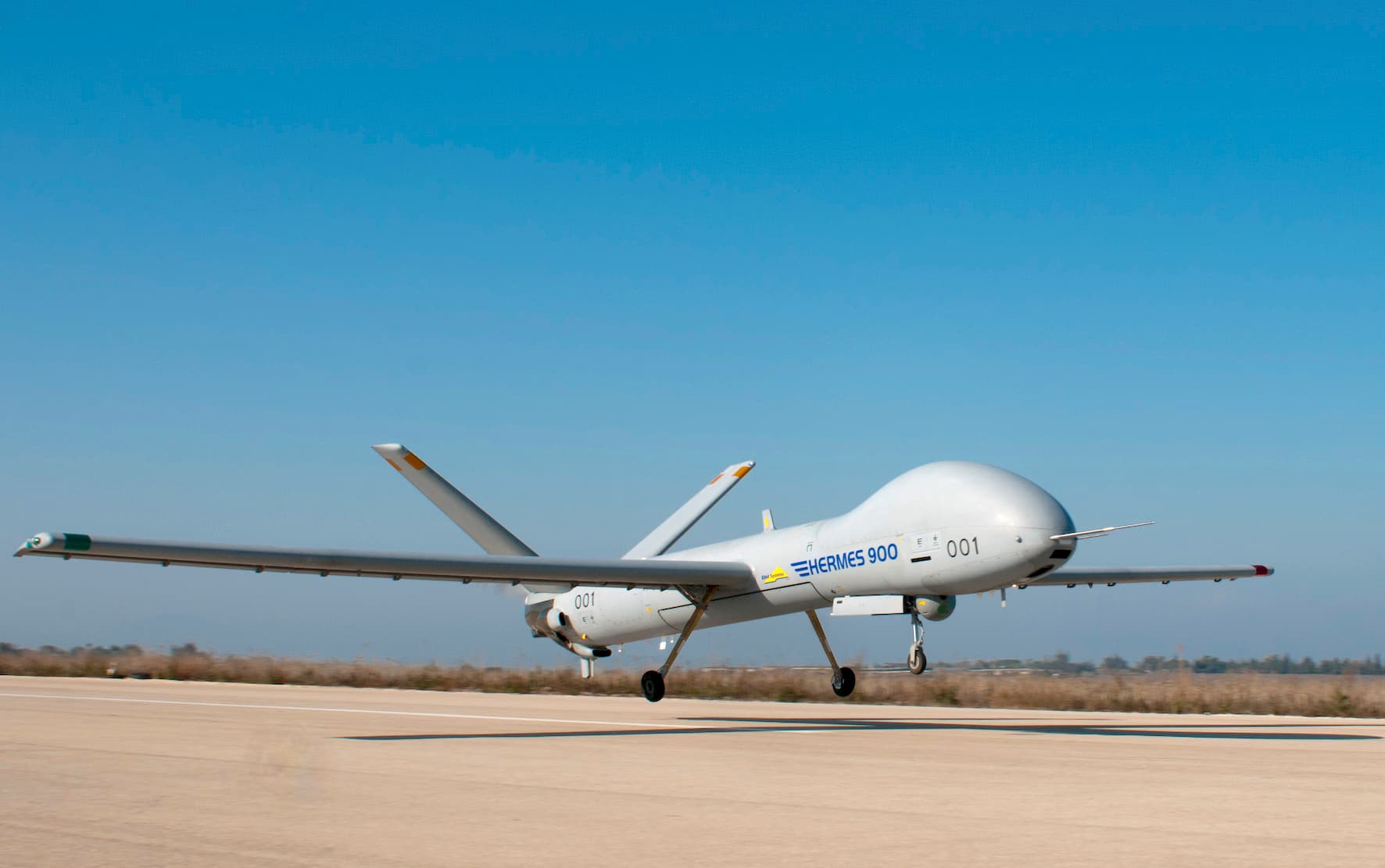
Hermes 900
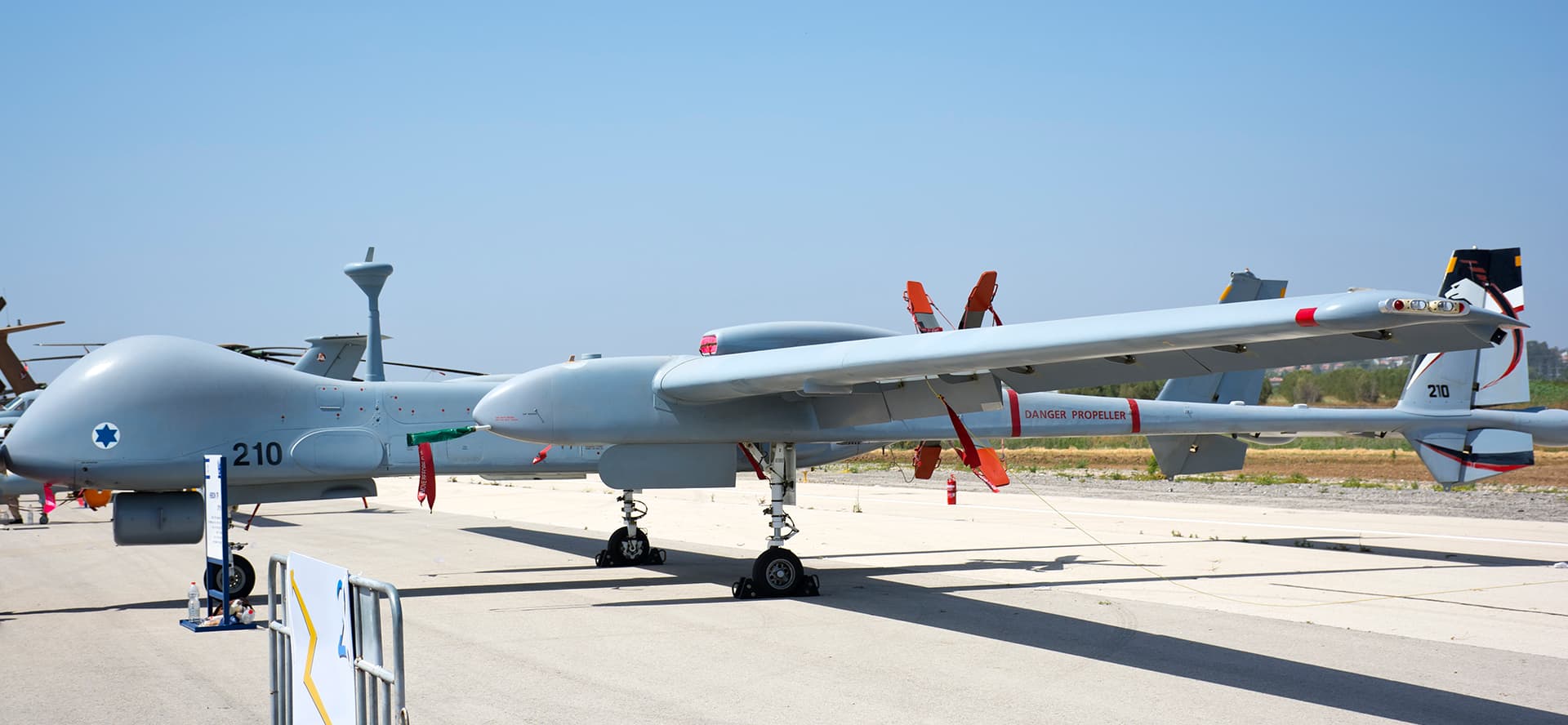
The Hermes 900 is Elbit Systems' medium-altitude, long-endurance UAV that serves as the Israeli Air Force's primary tactical drone under the designation Kochav, with over 20 export customers making it one of the most widely operated MALE platforms outside of American and Chinese systems.
The Drone That's Always Up
Forget the Heron TP for a moment. If you want to know which unmanned aircraft does the most daily work for the Israeli Defence Forces, it's this one. The Hermes 900 is the platform that's airborne every day over Gaza, the West Bank, and Israel's borders with Lebanon and Syria. It's the persistent tactical surveillance backbone, the thing that makes Israel's intelligence-driven targeting methodology actually function at operational tempo.
The Israeli Air Force calls it "Kochav" (Star). It was built by Elbit Systems as a successor to the widely exported Hermes 450, and it occupies the critical middle ground in Israel's drone fleet: bigger and more capable than the 450, smaller and cheaper than the IAI Heron TP that handles strategic-level missions. Over 30 hours of endurance, up to 30,000 feet operating altitude, a modular sensor suite, and in its armed configuration, precision strike capability. For 20-plus export customers, it's become the default choice for nations that want a capable MALE drone without the price tag or political headaches of buying American.
Origins
Elbit Systems, Israel's largest publicly traded defence electronics company, unveiled the Hermes 900 design at the 2009 Paris Air Show, with the first flight happening that same year. The development was a direct response to the Hermes 450 reaching its growth limits. The 450 had been successful, both with the IDF and export customers, but operators wanted heavier sensor payloads, longer endurance, and higher ceilings than the airframe could support. The 900 was designed from scratch to handle all of that while keeping the operational simplicity and moderate cost that made the Hermes family attractive in the first place.
Chile became the first export customer in 2011, ordering three units for its Air Force. The IAF itself started receiving deliveries around 2012, and the platform achieved initial operational capability alongside the Heron and Heron TP in Israel's layered drone architecture.
The Airframe
Standard MALE configuration: high-mounted wings, V-tail, retractable landing gear, nose-mounted sensor payload, rear pusher propeller. The execution reflects Elbit's decades of experience in this space, but the layout is conventional by design. Proven works.
The fuselage runs about 8.3 metres long with a 15-metre wingspan. Construction is primarily composite materials, keeping the maximum takeoff weight at roughly 1,180 kg while providing good structural margins. There's an internal payload bay in the fuselage plus external wing hardpoints for weapons or additional sensor pods.
Power comes from a Rotax 914 turbocharged four-cylinder engine, the same 75 kW (100-115 hp) unit that shows up in MALE drones worldwide, including Iran's Shahed-129. The Rotax 914's dominance in this aircraft class tells you something about how few alternatives there are for this combination of reliability, weight, and fuel efficiency. The upgraded StarLiner variant reportedly uses the more powerful Rotax 916 for heavier payloads and higher altitude operations.
Endurance exceeds 30 hours in surveillance configuration, which makes it genuinely multi-day capable with crew rotation on the ground. Cruise speed is a leisurely 112 km/h, optimised for fuel economy during loiter. Maximum speed hits 220 km/h when it needs to reposition. The 30,000-foot ceiling provides decent standoff from ground threats while keeping sensors effective.
What It Carries
Payload capacity is up to 300 kg, a significant jump from the Hermes 450's roughly 150 kg. That extra capacity matters because it opens up heavier, more capable sensor combinations.
The standard sensor fit is Elbit's own CoMPASS EO/IR turret, a gyro-stabilised electro-optical and infrared camera for day and night work. Beyond that, the modular architecture supports synthetic aperture radar for all-weather ground mapping, SIGINT/ELINT payloads for electromagnetic spectrum monitoring, maritime patrol radar for surface vessel detection, and communications relay equipment that lets the drone serve as an airborne repeater for ground forces in rough terrain.
The armed variant carries Rafael Spike family missiles, turning the platform into a hunter-killer that can develop a target through sustained surveillance and then engage without handing off to another asset. The IDF has used this capability extensively, though the specifics stay classified.
The 300 kg ceiling forces trade-offs, though. A full ISR package doesn't leave much room for weapons, and vice versa. The armed variant operates with either reduced sensor capability or reduced weapon loadout. Both at full capacity simultaneously isn't realistic.
IDF Operations
The Hermes 900 made its combat debut during Operation Protective Edge in Gaza in July 2014. Since then it has been the IDF's primary tactical MALE drone, with a continuous operational presence that's remarkable by any standard.
Over Gaza, the density of Hermes 900 coverage is essentially continuous. Multiple aircraft maintain overlapping surveillance at all hours across every escalation cycle: Protective Edge in 2014, Guardian of the Walls in 2021, and the sustained operations after October 2023. This persistent overhead presence enables the intelligence-driven targeting process that defines how the IDF fights. Targets get developed through sustained observation, sometimes over days or weeks, before engagement decisions are made. Without continuous drone coverage, that process breaks down.
Along the Lebanon border, the Hermes 900 runs routine surveillance against Hezbollah positions, monitors for cross-border tunnel construction, and provides early warning during escalation periods when sortie rates spike.
What makes the platform particularly effective in Israeli service is the system it feeds into. The Hermes 900 doesn't operate in isolation. Its sensor data flows into a networked C2 architecture that distributes intelligence to ground forces, artillery, and manned aircraft in near-real-time. The drone is a node, and its value multiplies through the quality of that network.
Who Buys It
This is where the Hermes 900 story gets interesting from a market perspective. Over 20 countries have ordered it, which puts it near the top of the global MALE drone export rankings behind only Chinese and Turkish competitors in breadth.
In Latin America, Brazil bought the Hermes 900 alongside the smaller Hermes 450 for border surveillance and counter-narcotics. Chile was the first export customer back in 2011. Colombia and Mexico have also procured the system for similar missions.
In Europe, Switzerland is one of the few countries to select a non-European MALE drone, driven partly by the StarLiner variant's ability to operate in civilian airspace (essential for flying over Swiss territory). The European Maritime Safety Agency runs Hermes 900s for Mediterranean maritime patrol and border security.
Asia-Pacific has seen growing interest. Singapore signed a $120 million contract with Elbit in 2025 for its Air Force. India received its first Hermes 900s in December 2024, with the Indian Navy using them for maritime surveillance and plans to acquire up to 10 units. Thailand and the Philippines have also selected the platform.
Azerbaijan operates up to 15 Hermes 900s, with operational use confirmed since 2018. Iceland, in an unusual application, uses them for fisheries protection and exclusive economic zone monitoring.
The export appeal comes down to a few things. Combat-proven by the IDF, which counts for more than any specification sheet. Elbit's support infrastructure and training are well established. The price is substantially below the MQ-9 Reaper. And Israel's export policies, while subject to government approval, generally come with fewer political strings than American drone sales. That last point has been a decisive factor for multiple customers.
StarLiner: The Civil Airspace Version
Most military drones can't legally fly in non-segregated airspace alongside manned aircraft. That limits their usefulness for homeland security, border patrol, and maritime surveillance over populated areas. The Hermes 900 StarLiner was developed specifically to solve this.
It integrates a Detect-and-Avoid system that meets civil aviation authority requirements, letting it sense and avoid other aircraft autonomously. The upgraded Rotax 916 engine, enhanced avionics, and improved system redundancy round out the package.
Switzerland's selection was partly driven by this civil airspace compatibility. EMSA's maritime operations benefit from the same capability. For customers whose primary use case is domestic surveillance rather than battlefield ISR, the StarLiner is the variant that makes the purchase make sense.
How It Compares
The MALE drone market is crowded, and the Hermes 900 sits in a specific spot.
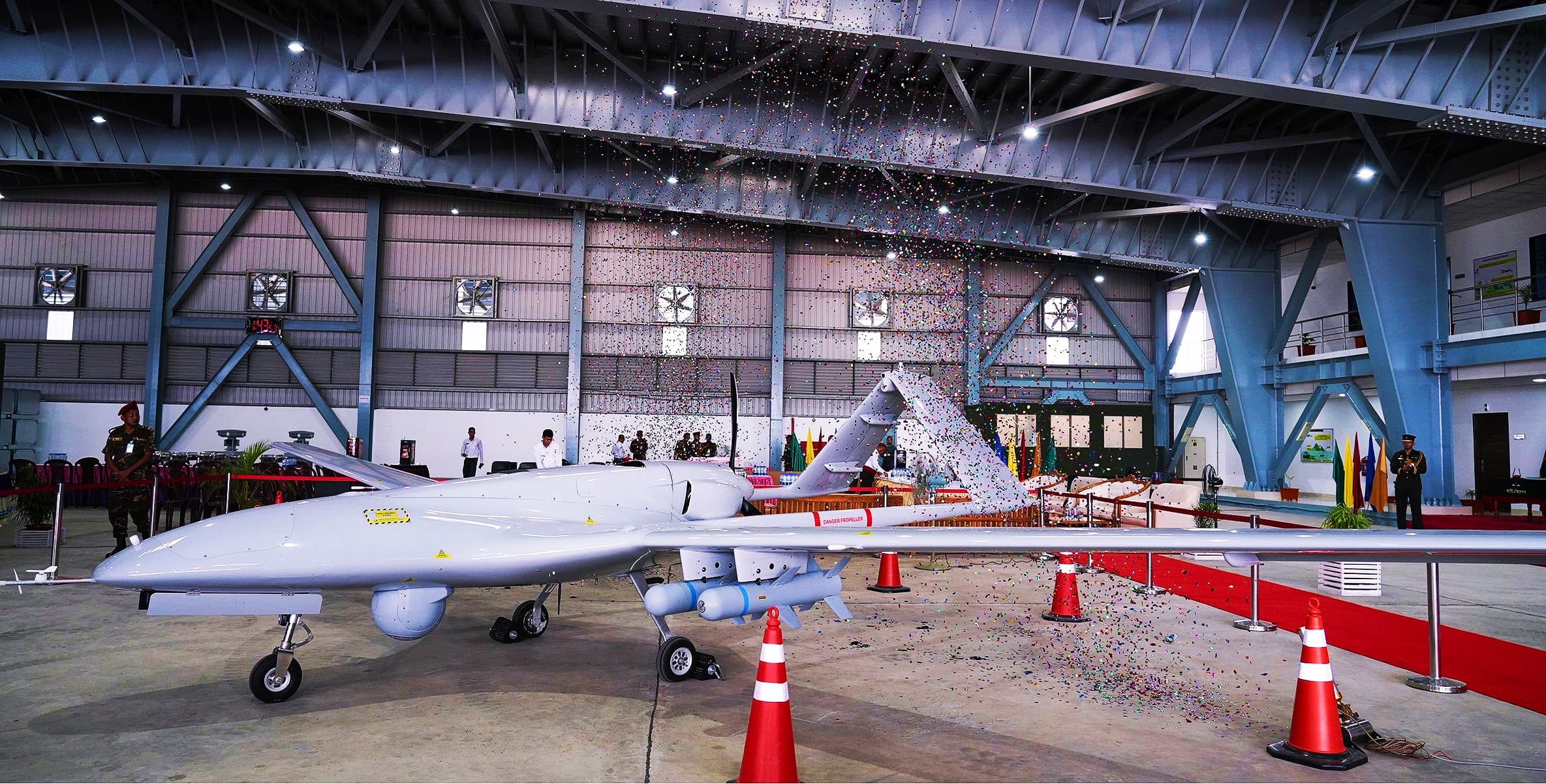
The Bayraktar TB2 gets more headlines, and it's smaller, cheaper, and optimised for armed reconnaissance with an excellent combat record. But its 150 kg total payload (of which about 55 kg is the optronic system, leaving roughly 95 kg for weapons), shorter endurance (27 hours), and lack of satellite communications in the base model constrain ISR capability. The TB2 is the value option. The Hermes 900 is the capability option. Different tools for different jobs.
The Heron TP, made by rival Israeli manufacturer IAI, is significantly larger with higher altitude capability and heavier payload. It's the strategic-level platform in IDF service. The Hermes 900 operates a tier below.
The MQ-9 Reaper is in another class entirely: heavier, more capable, with SATCOM and sophisticated weapons integration. Also far more expensive and politically difficult to export. The Hermes 900 appeals to nations that can't get the Reaper or don't need that much capability.
China's Wing Loong II competes directly in many markets, particularly the Middle East and Africa. Comparable performance at a lower price point, but without the IDF combat pedigree or the sensor sophistication that Elbit offers.
Where It Falls Short
No self-defence against air threats. Like every MALE drone, it's a target for fighters, medium-range SAMs, and electronic warfare. It only works in permissive or semi-permissive airspace where air superiority has already been established.
It's slow. 220 km/h maximum, 112 km/h cruise. Repositioning to a distant area eats endurance. For time-sensitive tasks, the transit time can be the limiting factor.
Standard operations use line-of-sight data links, which caps the operating range at roughly 200 to 300 km depending on altitude and terrain. SATCOM options exist, particularly on the StarLiner, but the baseline system is range-limited.
Political risk is real. Israeli arms exports can be affected by diplomatic shifts, and customers face the possibility that changes in Israeli government policy or international pressure could disrupt spare parts, software updates, and support. Some potential buyers have gone with Turkish or Chinese systems partly for this reason.
And like all propeller-driven MALE drones, weather sensitivity is a constraint. Icing, heavy turbulence, and strong crosswinds can ground the aircraft or force it below its optimal altitude band. In regions with harsh climate, this limits operational availability seasonally.
Why It Matters
The Hermes 900 isn't the most advanced drone in any single parameter. Not the fastest, not the highest-flying, not the most heavily armed, not the stealthiest. What it is, is reliably good at everything a MALE drone needs to do, at a price point that dozens of nations can afford, backed by support infrastructure that keeps aircraft flying.
In the drone market, that combination wins contracts. Proven capability, reasonable cost, dependable support. Specifications alone don't sell platforms. Track records do. And the Hermes 900's operational record with the IDF, combined with a growing roster of satisfied export customers, makes it one of the strongest products in the global MALE drone market.
Elbit's continued investment through variants like the StarLiner, plus ongoing sensor and weapons integration work, should keep the platform competitive through the end of this decade. The Israeli drone industry, split between Elbit's Hermes family and IAI's Heron family, has collectively equipped a significant fraction of the world's military drone operators. The Hermes 900 is the volume product that holds that market position together.
Sponsored
Place your ad hereSpecifications
| Wingspan | 15 m (49 ft) |
| Length | 8.3 m |
| Max Takeoff Weight | 1,180 kg |
| Payload | 300 kg |
| Max Altitude | 9,144 m (30,000 ft) |
| Endurance | 30+ hours |
| Max Speed | 220 km/h (136 mph) |
| Cruise Speed | 112 km/h |
| Range | 1,000 km (operational radius) |
| Engine | Rotax 914 (75 kW / 100 hp) |
| Armament | Spike missiles (armed variant) |
| Propulsion | Piston (pusher) |