Drones of War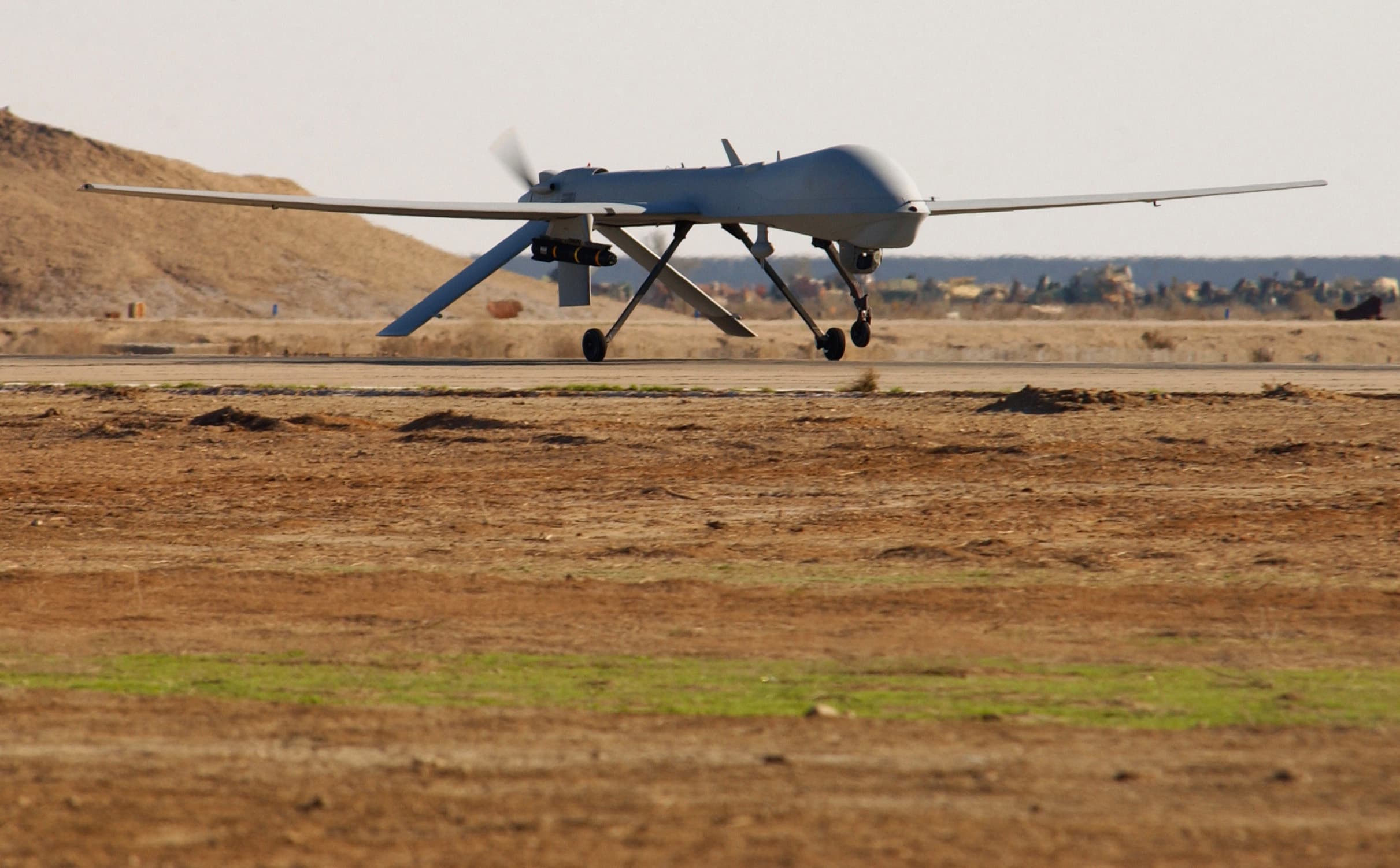
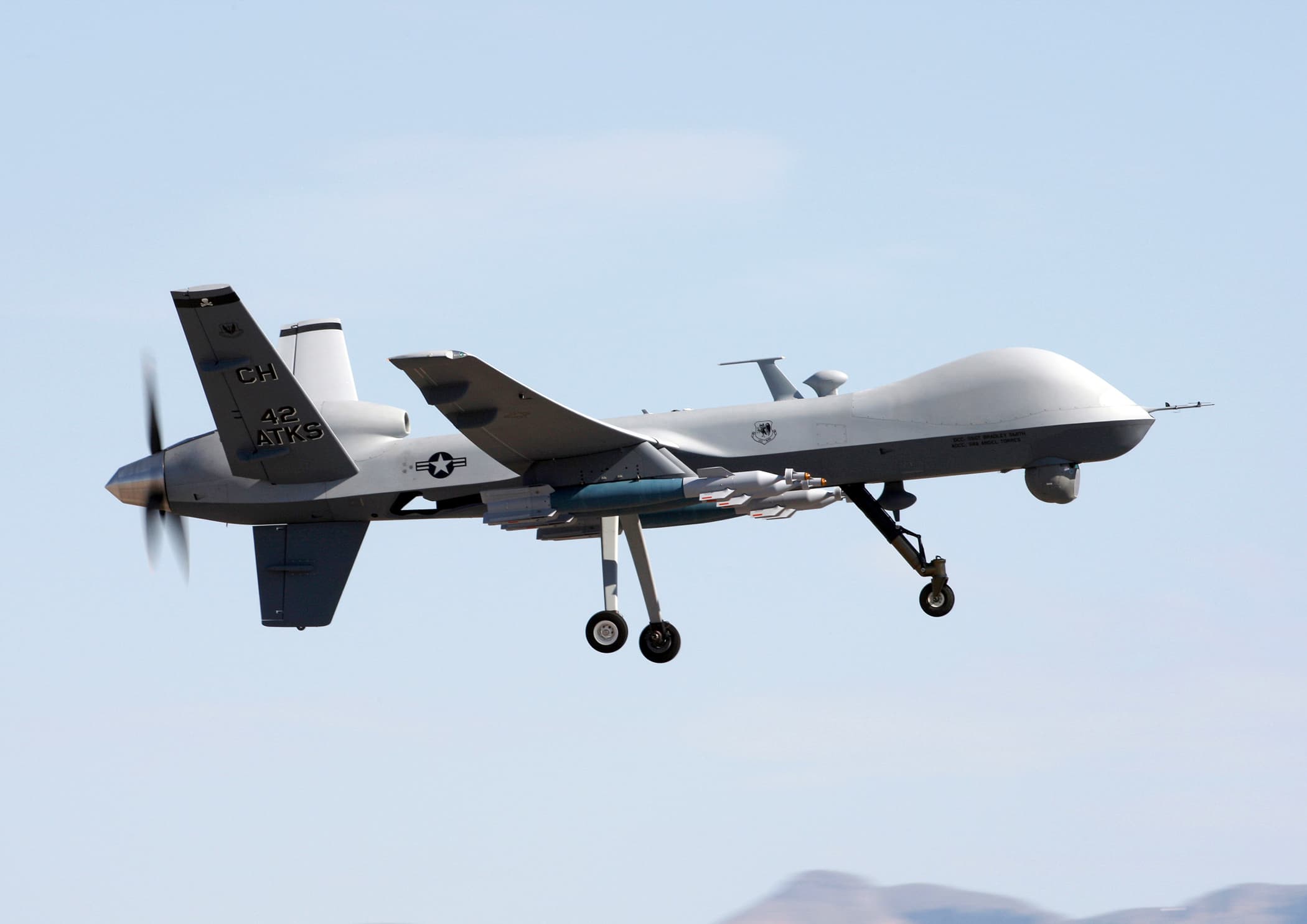
MQ-1 Predator
The MQ-1 Predator was the first remotely piloted aircraft to fire a weapon in combat, killing al-Qaeda's military chief Mohammed Atef in Afghanistan on 14 November 2001. Over a seventeen-year operational career, it became the defining instrument of the War on Terror and the prototype for every armed drone that followed.
A Surveillance Plane That Wasn't Supposed to Kill Anyone
Here's what you need to understand about the Predator before anything else: it was never designed to carry weapons. The RQ-1, as it was originally designated, was a reconnaissance platform. The "R" stood for reconnaissance. The "Q" meant unmanned. No "M" for multi-role. When people inside the Air Force first suggested strapping missiles to this thing, the idea was treated as somewhere between impractical and ridiculous.
The airframe itself was almost comically modest. A high-wing monoplane with an inverted-V tail, driven by a Rotax 914F four-cylinder piston engine putting out 115 horsepower. That's less than a Honda Civic. The engine was designed for ultralight sport aircraft. Wingspan of 14.8 metres, fuselage 8.2 metres long, empty weight around 512 kg. Maximum takeoff weight of 1,020 kg, which left roughly 204 kg for sensors, communications gear, and eventually weapons. Not much to work with.
What the Predator did have going for it was patience. Clean configuration endurance exceeded 40 hours. Even loaded with weapons and sensors, it could stay up for 20 to 24 hours. Nothing else in the American inventory came close. The sensor turret under the nose packed a Raytheon AN/AAS-52 MTS-A (on later variants; earlier ones used a Wescam turret) with electro-optical and infrared cameras plus a laser designator, and the Ku-band satellite link let an operator sitting in Nevada fly the thing over Central Asia. Without that satellite connection, you've just got another short-range drone. With it, you've got something genuinely new.
But the part that actually changed history wasn't the airframe or the sensors. It was a bureaucratic argument that got settled by a national catastrophe.
The Summer of 2001
After the 1998 US embassy bombings in Kenya and Tanzania, the CIA became fixated on finding Osama bin Laden. Predators started flying surveillance over Afghanistan in September 2000, operating out of Uzbekistan. On multiple occasions, the drones spotted what analysts believed was bin Laden himself, moving between compounds.
They could only watch. The Predator had no weapons.
The Air Force and CIA started testing Hellfires on the Predator in early 2001. The engineering was trickier than it sounds. Each AGM-114 Hellfire weighs about 45 kg, and the aircraft's total payload budget was barely 200 kg. Mounting two missiles meant strengthening the wings, adding wiring, upgrading the laser designator. They fired the first test shot on 16 February 2001 at a range near Indian Springs Air Force Station in Nevada. It worked.
Then the arguing started. Who would control the armed Predator? Who'd authorise strikes? Who'd take the legal hit if a missile killed civilians? The Air Force and CIA spent the entire summer of 2001 fighting over jurisdiction. Those arguments were still going on the morning of September 11th.
After 9/11, the debate ended overnight. Armed Predators were in Afghanistan within weeks.
Abraham Karem's Garage Project
The origin story deserves a quick detour because it says something about how this aircraft ended up the way it did. The Predator didn't come out of a Lockheed Martin skunkworks or a traditional Pentagon acquisition programme. Its roots trace back to Abraham Karem, an Iraqi-born engineer who grew up in Israel and immigrated to the US, where he was building long-endurance UAVs in his garage in Southern California during the 1980s.
Karem's company, Leading Systems, produced the Amber drone and flew the GNAT-750 prototype in 1989. General Atomics bought the assets in 1990 and continued development, eventually producing the improved RQ-1 Predator, which first flew in July 1994. The Air Force called it an "Advanced Concept Technology Demonstration," which is bureaucrat-speak for "we're not sure this will work, but let's try." It deployed to Bosnia in 1995 for ISR missions, and the persistent video feeds it provided were unlike anything NATO commanders had seen before.
The garage-to-battlefield lineage matters. It partly explains why the Predator was cheap, simple, and underpowered compared to what a major defence contractor would have designed from scratch. And those qualities, for better and worse, defined its entire career.
First Blood
The first attempted armed strike came on 7 October 2001, opening night of Operation Enduring Freedom. A CIA Predator went after Mullah Mohammed Omar's compound in Kandahar. The missile hit the building. Omar wasn't there; he'd left shortly before. The debut was a miss.
Five weeks later, on 14 November 2001, a Predator fired into a compound south of Kabul. The target was Mohammed Atef, al-Qaeda's military operations chief. Atef was killed. First confirmed drone kill in the history of warfare.
That single event cracked open a door that hasn't closed since. Every armed drone strike since then, every debate about remote warfare, every question about whether there's a moral difference between killing from a cockpit and killing from a control station on the other side of the planet: all of it traces back to that November night. The Predator didn't just validate a concept. It created a category.
Afghanistan and Iraq: The Workhorse Years
Through the Afghan campaign, the Predator flew thousands of ISR sorties and a steadily growing number of strike missions. Its slow cruise speed, around 130 km/h, would be suicidal in conventional air combat. In counterinsurgency, it was an advantage. The aircraft could orbit over a compound for hours, building up a pattern-of-life picture before anyone authorised a shot. Fast jets had to keep circling back. The Predator just stayed.
Predators operated from Kandahar and later from bases across the Gulf region, with pilots sitting at ground control stations at Creech Air Force Base, Nevada (originally called Indian Springs). The role kept expanding: close air support for ground troops, convoy overwatch, surveillance of suspected IED factories.
Iraq was similar. Predators deployed from the start of Operation Iraqi Freedom in 2003, initially heavy on ISR, scanning routes for IEDs, tracking insurgent movements, providing overwatch for raids. As the insurgency worsened, armed missions became more frequent, particularly in Anbar Province and around Baghdad. By the time things peaked, Predators were flying alongside the bigger MQ-9 Reapers that started arriving in 2007, handling lighter ISR while the Reapers took the heavier strike work.
I won't pretend to cover every theatre comprehensively. Before Afghanistan and Iraq swallowed all the attention, Predators had flown ISR over Bosnia in 1995 and Kosovo in 1999. Serbia shot down several of them, and one's reportedly sitting in the Belgrade Aviation Museum. They also flew armed missions over Libya in 2011, hitting Gaddafi's forces during the NATO intervention.
The CIA Programme
This is the part of the Predator story that gets uncomfortable, and it's also the part where the open-source reporting is thinnest and most contradictory.
Starting in 2004, CIA-operated Predators began launching strikes into Pakistan's Federally Administered Tribal Areas, going after al-Qaeda and Taliban leadership who'd crossed the border from Afghanistan. Pakistan's government publicly condemned every strike while reportedly providing tacit consent and intelligence support behind closed doors. That arrangement satisfied nobody's legal framework but served both sides' operational needs.
The programme accelerated sharply under Obama. Estimates for total strikes in Pakistan between 2004 and 2018 range from about 350 to over 400, depending on whose database you trust. Civilian casualty figures are even more contested. The Bureau of Investigative Journalism, the New America Foundation, and the Long War Journal all maintain separate databases with significantly different numbers. We're talking ranges from a few hundred to well over a thousand civilians killed. I don't think anyone outside the classified reporting knows the real number with any confidence.
The programme expanded to Yemen, where Predators and later Reapers hit Al-Qaeda in the Arabian Peninsula targets, and to Somalia against Al-Shabaab. The most contested single strike came on 30 September 2011, when a drone killed Anwar al-Awlaki, an American citizen and senior AQAP figure, in Yemen. Two weeks after that, a separate strike killed his sixteen-year-old son, Abdulrahman, also a US citizen. The constitutional questions raised by killing American citizens without trial remain unresolved. Frankly, I don't think the legal system has any clean answers for them.
What Went Wrong With the Machine
The Predator's limitations were real, and the Reaper was specifically designed to fix them.
The Rotax engine was the obvious problem. At 115 hp, the aircraft was slow, altitude-limited, and couldn't carry meaningful weapons loads. Two Hellfires, max. The MQ-9 Reaper's Honeywell TPE331 turboprop puts out 950 shaft horsepower and carries up to 1,360 kg of external ordnance across its hardpoints. Not even close to the same class of aircraft.
Icing was a persistent headache. The piston engine and small airframe had no de-icing equipment, which restricted operations in cold weather and at altitude. Multiple Predators were lost to icing over the Afghan mountains.
The satellite link introduced about 1.2 seconds of latency between the operator's input and the aircraft's response. Manageable for surveillance. Dangerous in dynamic situations. Operators who forgot the Predator wasn't meant to be flown aggressively sometimes lost aircraft.
And survivability in contested airspace was effectively zero. No electronic countermeasures, no radar warning receiver, no chaff or flares, and a radar cross-section roughly equivalent to a small Cessna. Against anything beyond small arms and MANPADS, the Predator was a sitting duck. This was never a platform for a real fight against a real air defence network.
The Crews
This is the aspect of the Predator story I find most worth dwelling on, because it introduced something genuinely unprecedented.
Predator crews, a pilot and a sensor operator, sat in air-conditioned ground control stations at Creech AFB or at distributed stations around the world. They flew combat missions for a shift, then drove home to their families. The commute from war to suburban Las Vegas took about twenty minutes.
The psychological effects were not what anyone expected. Studies found that Predator crews experienced post-traumatic stress, burnout, and emotional exhaustion at rates comparable to, and sometimes exceeding, those of pilots who actually flew in combat zones. The Predator's camera could zoom into a target's face from thousands of feet up. That created a connection between the operator and the person being killed that was, paradoxically, more intimate than what a fighter pilot experiences dropping a bomb from altitude.
And then there was the institutional contempt. The Air Force initially treated drone operations as a lesser form of flying. Lower prestige, fewer promotion opportunities. Experienced Predator pilots left the service at rates that threatened the whole programme. It took years for the culture to acknowledge that flying a drone in combat was combat, wherever the operator happened to be sitting.
The lack of normal decompression mechanisms made it worse. No forward operating base camaraderie, no shared experience of being in the combat zone, no deployment-homecoming ritual. Just the shift, the drive, the family dinner, and then back to the kill chain the next morning.
Signature Strikes, Sovereignty, and the Legal Mess
The Predator forced legal questions into public debate that remain open. The programme straddled the laws of armed conflict, domestic law, intelligence law, and international human rights law simultaneously. The Air Force operated under Title 10 military authority; the CIA operated under Title 50 intelligence authority. The targeting standards, proportionality requirements, and accountability mechanisms were different between the two, and both were making life-or-death decisions with the same aircraft.
"Signature strikes" came out of this programme. That's where targets are selected based on observed behaviour patterns rather than confirmed identity. The criticism writes itself: you're killing people based on suspicion, in countries where the US isn't formally at war. Defenders argued the behaviour patterns were distinctive enough to provide reasonable confidence. Whether that's true depends heavily on which strike you're examining.
Sovereignty was just as fraught. Strikes in Pakistan, Yemen, and Somalia happened in countries that hadn't publicly consented to US military operations on their territory. The legal fiction of tacit consent, a government privately agreeing while publicly condemning, kept things running but created a precedent. Other countries have taken note. Some will eventually use the same logic for their own cross-border operations.
None of this has been definitively resolved.
Retirement and the Numbers
General Atomics began developing the Predator B (later the MQ-9 Reaper) in the late 1990s. The first Predator B flew on 2 February 2001, and the Air Force declared the MQ-9 operationally capable in October 2007. As Reapers took over, the Predator got pushed into lighter ISR roles, the maintenance burden mounting on airframes that had been designed for limited flying but were being ground through combat rotations at industrial tempo.
The Air Force formally retired the MQ-1 on 9 March 2018 at a ceremony at Creech. Total fleet flight hours had exceeded two million, with over 1.9 million of those in combat.
Some numbers worth sitting with: about 360 Predators were built in total (MQ-1 and RQ-1 variants combined). Through 2015, at least 105 were destroyed in Class A mishaps alone, and the true total through to retirement is higher. By 2009, 70 had already been lost. That kind of attrition rate would be catastrophic for manned aircraft. For the Predator, it was considered acceptable. No pilots killed. No families receiving folded flags.
Hellfires fired from Predators killed thousands of people across at least seven countries. The exact number will never be known. The competing tracking databases can't even agree on order-of-magnitude estimates in some theatres.
The aircraft was exported to several allies. Italy flew them in Afghanistan under NATO command. Turkey operated early variants for ISR before building its own drone industry. The UK, Morocco, and the UAE also received variants, though the full export picture remains partly classified.
What It Proved
The Predator demonstrated, permanently, that unmanned aircraft could be woven into the kill chain. Operators could fly, observe, decide, and strike from the other side of the planet. And the political cost of drone operations turned out to be vastly lower than putting pilots at risk.
That last point matters most, I think. The Predator lowered the threshold for using force. Strikes that would have required risking a pilot's life, strikes that might have been reconsidered or scrubbed for that reason, became routine. Whether that's a net good for global security is a question people who study this honestly still disagree about.
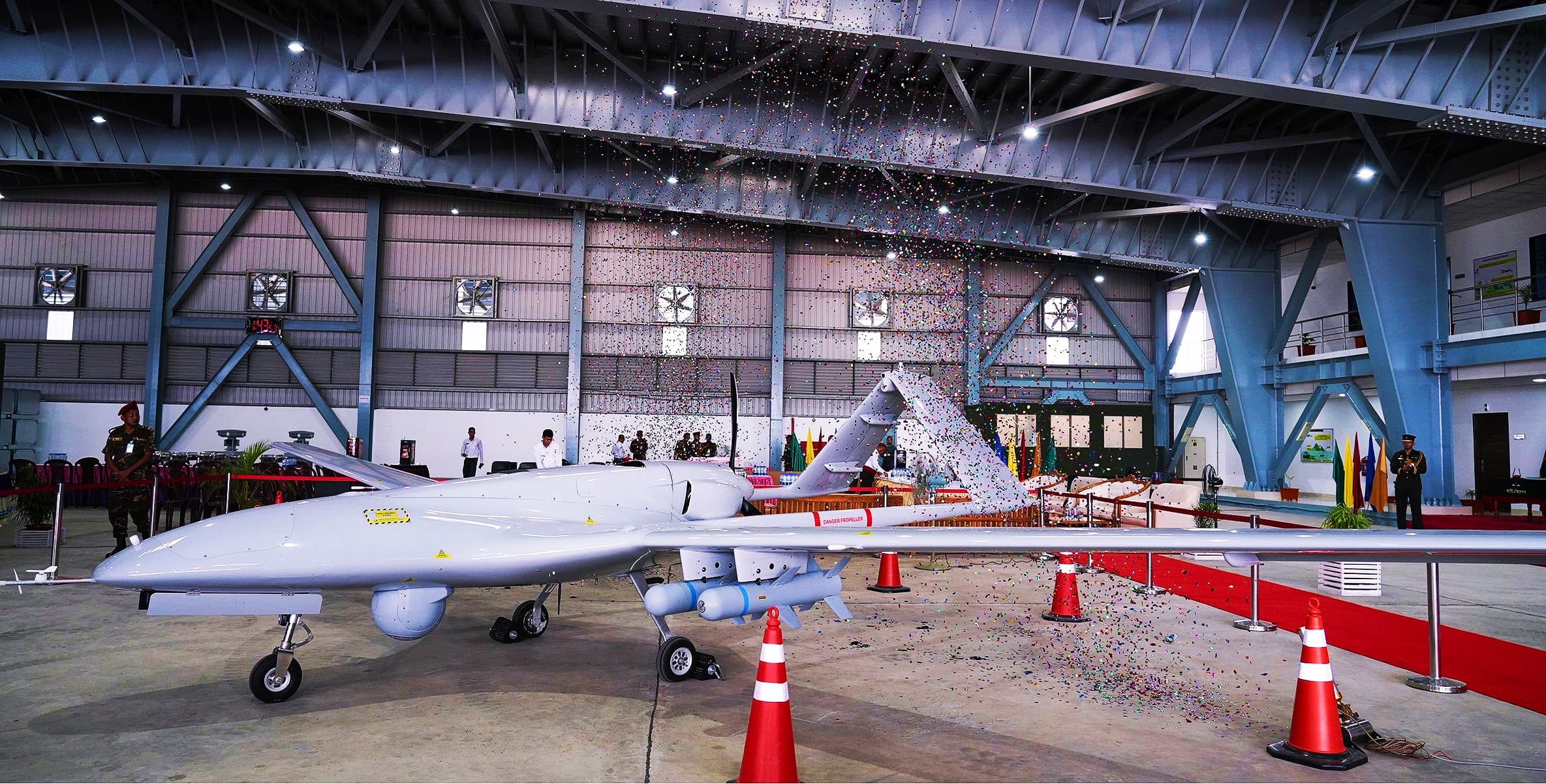
It also kicked off the global drone arms race. Every country that watched America conduct two decades of drone warfare drew the obvious conclusion. Turkey built the Bayraktar TB2. Iran developed the Shahed and Mohajer families. China produced the Wing Loong and CH-4 Rainbow. Israel expanded what was already a sophisticated industry. None of these programmes appeared in isolation. All of them exist, at least partly, because the Predator showed what was achievable.
The aircraft is retired. What it started isn't.
Sponsored
Place your ad hereSpecifications
| Wingspan | 14.8 m (48.7 ft) |
| Length | 8.2 m (27 ft) |
| Height | 2.1 m (6.9 ft) |
| Max Takeoff Weight | 1,020 kg (2,250 lb) |
| Empty Weight | 512 kg (1,130 lb) |
| Payload | 204 kg (450 lb) |
| Max Altitude | 7,620 m (25,000 ft) |
| Endurance | 40 hours (clean), 24 hours (armed) |
| Max Speed | 217 km/h (135 mph) |
| Cruise Speed | 130 km/h (81 mph) |
| Engine | Rotax 914F four-cylinder (115 hp) |
| Armament | 2x AGM-114 Hellfire missiles |
| Hardpoints | 2 (wing) |
| Range | 740 km (460 mi) |