Drones of War
Sea Baby
The Sea Baby is a Ukrainian unmanned surface vessel built by the SBU's clandestine engineering teams, capable of carrying up to 850 kg of explosives over 1,000 km — the weapon that struck the Kerch Bridge and helped drive Russia's Black Sea Fleet from Crimean waters.
Why the Sea Baby Matters
On the night of 17 July 2023, two low-slung drone boats crossed hundreds of kilometres of open water, navigated past Russian naval patrols, and slammed into the Kerch Strait Bridge — the 19-kilometre road-and-rail link that Russia built to connect the annexed Crimean peninsula to its mainland. The explosions collapsed two lanes of the roadway and damaged the adjacent span. The weapon was a previously unknown unmanned surface vessel called Sea Baby, and its debut announced a category of warfare that most navies had not seriously planned for: expendable, long-range, precision-guided surface drones carrying warheads large enough to threaten major infrastructure.
The Sea Baby did not emerge from a defence contractor's design bureau or a shipyard with decades of naval heritage. It was conceived, built, and deployed by the Security Service of Ukraine, the SBU, an intelligence agency that before February 2022 had no maritime weapons programme at all. That origin story — a spy service building a fleet of attack boats from scratch inside a country under full-scale invasion — is as significant as any technical specification.
Origins: The SBU Builds a Navy
When Russia launched its full-scale invasion of Ukraine in February 2022, Ukraine's conventional navy was effectively destroyed within days. The flagship of the Black Sea Fleet, the cruiser Moskva, was sunk by Neptune anti-ship missiles in April 2022, but Ukraine had very few such missiles. What it did have was a population of engineers, IT specialists, and special operations personnel willing to improvise.
SBU chief Vasyl Maliuk disclosed in August 2023 that Sea Baby development began in July 2022, roughly five months after the invasion. The early prototypes were crude: experimental kamikaze boats with heavy metal hulls and limited electronics. The SBU worked initially with private companies and Ukrainian Navy specialists, but disputes over specifications and budgets led the agency to bring the entire programme in-house.
By Maliuk's account, the drones are produced at an underground facility inside Ukrainian territory, with no Western equipment or foreign involvement in the manufacturing process. The SBU assembled a team of civilian engineers, IT specialists, and intelligence officers to handle everything from hull fabrication to software development. Whether that claim of total self-sufficiency is entirely accurate is difficult to verify, but the pace of iteration — from first prototypes in mid-2022 to a bridge strike in July 2023 — is remarkable by any standard.
The early models carried warheads of around 108 kg, roughly comparable to the explosive payload of the separate MAGURA V5 programme run by Ukraine's military intelligence directorate (GUR). But the SBU pushed for something much larger. By late 2023, the Sea Baby had evolved into a platform capable of hauling up to 850 kg of explosives across 1,000 km of open sea. That is not a drone boat. That is a guided cruise missile that happens to float.
Design and Engineering
The Sea Baby is a 6-metre planing hull vessel with a 2-metre beam and a freeboard of just 600 mm — barely visible above the waterline, which is precisely the point. The hull is constructed from fibreglass composite that the SBU claims is radar-absorbing, making it difficult for shipborne and coastal radar systems to detect at useful ranges. The low profile and composite construction together give the Sea Baby a radar cross-section small enough to slip past surveillance systems designed to track conventional surface vessels.
Propulsion. Two 200-horsepower inboard motors drive twin waterjets, pushing the craft to a reported top speed of 90 km/h (49 knots). Waterjet propulsion was a deliberate choice over conventional propellers: it allows shallow-water operation, reduces the risk of fouling, and provides better high-speed manoeuvrability. At full speed, the Sea Baby planes across the surface, reducing hull drag and extending effective range.
Navigation and control. The vessel is remotely piloted via a low-latency satellite link rather than operating autonomously. The primary communications link uses Starlink satellite terminals, with a Kymeta flat-panel satellite antenna as backup. Multiple redundant communications systems ensure that losing one link does not mean losing the drone. The operator can be hundreds of kilometres from the target, guiding the vessel in real time using onboard optical sensors and GPS waypoints.
AI integration. More recent variants incorporate AI-assisted friend-or-foe targeting systems and auto-capture capabilities. This does not make the Sea Baby fully autonomous — a human operator retains control — but it does allow the onboard systems to assist with terminal guidance and target discrimination, particularly in congested waters or during multi-drone swarm operations.
Self-destruct. The Sea Baby includes multilayered self-destruct systems designed to prevent capture. If the vessel loses communication or is intercepted, it can be programmed to detonate or scuttle, denying adversaries the opportunity to reverse-engineer the platform.
Specifications at a Glance
| Parameter | Original (2023) | Upgraded Variant (2025) |
|---|---|---|
| Length | 6 m | 6 m |
| Beam | 2 m | 2 m |
| Height above waterline | 0.6 m | 0.6 m |
| Max speed | 90 km/h (49 kn) | 90 km/h (49 kn) |
| Range | 1,000 km | 1,500 km |
| Payload | Up to 850 kg | Up to 2,000 kg |
| Propulsion | 2 x 200 hp waterjet | 2 x 200 hp waterjet |
| Guidance | GPS + satellite + optical | GPS + satellite + AI-assisted |
| Hull | Fibreglass composite | Fibreglass composite |
The October 2025 upgrade, unveiled publicly by the SBU, extended the range to 1,500 km and nearly tripled the maximum payload to 2,000 kg. At that capacity, the Sea Baby can deliver a warhead comparable in yield to a heavyweight anti-ship torpedo, but at a fraction of the cost and with no risk to a crewed submarine.
Armament Variants
One of the Sea Baby's most distinctive characteristics is its modularity. The platform has evolved far beyond its origins as a single-use explosive boat.
Kamikaze configuration. The original and most common role: the hull is packed with explosives and guided into a target. Warhead sizes have ranged from 450 kg for anti-ship strikes to the full 850 kg loadout used against the Kerch Bridge.
Mine-layer. Beginning in 2023 and publicly disclosed in 2024, Sea Baby drones have been configured to deploy bottom mines — plastic-cased devices weighing approximately 180 kg that settle into the silt in shallow waters and are extremely difficult to detect. This variant transformed the Sea Baby from a direct-attack weapon into an area-denial tool.
Grad MLRS. In what Defence Express described as the first unmanned naval multiple launch rocket system in history, a Sea Baby variant has been fitted with a 10-round 122 mm BM-21 Grad rocket launcher. The rockets are unguided with a range of roughly 1,000 metres, and accuracy from a moving sea platform is questionable, but the psychological and harassment value against coastal targets is significant.
Machine gun platform. A gyro-stabilised remote weapons station mounting a 14.5 mm KPVT heavy machine gun with an auto-capture and target recognition system. This variant is designed for surface combat against small boats, defensive engagements, and potentially anti-helicopter operations.
Aerial drone mothership. A large container configuration allows the Sea Baby to carry and launch FPV attack drones, extending its reconnaissance and strike envelope beyond the horizon of its own sensors.
Sub Sea Baby. In December 2025, the SBU revealed a submersible variant — essentially an unmanned underwater vehicle — that reportedly struck a Russian Improved Kilo-class submarine at its berth in Novorossiysk. If confirmed, this was the first time in military history that an unmanned underwater vehicle successfully attacked a submarine at pier.
Combat Record
The Kerch Bridge — 17 July 2023
The Sea Baby's first publicly known operation targeted the Kerch Strait Bridge, the most symbolically and logistically important piece of infrastructure connecting Russia to occupied Crimea. At approximately 03:04 and 03:20 EEST, two Sea Baby USVs struck the bridge in sequence, each carrying up to 850 kg of explosives. The first hit the road section, the second targeted the railway portion roughly five minutes later.
The attack collapsed two of the bridge's four road lanes entirely and displaced the adjacent span. Two civilians were killed and one injured. Road traffic was disrupted for weeks. The railway section, critical for supplying Russian forces in Crimea, was also temporarily affected.
This was not the first attack on the Kerch Bridge — a truck bomb in October 2022 had previously caused severe damage — but it was the first confirmed use of a naval drone against the structure, and it demonstrated that Ukraine could repeatedly threaten a target that Russia considered heavily defended.
A second Sea Baby attack on the bridge was attempted on 2 September 2023. Russian forces claimed to have intercepted the drones, though the SBU disputed the account.
Ship Strikes — August 2023
In early August 2023, the SBU claimed hits on multiple Russian vessels using its naval drones. The large landing ship Olenegorskiy Gornyak was struck on 4 August 2023 in Novorossiysk, suffering significant damage to its hull. The following day, 5 August 2023, the Russian tanker SIG, which was under US sanctions for transporting stolen Ukrainian grain, was hit near the Kerch Strait.
Maliuk publicly credited the Sea Baby programme with both strikes, though some analysts noted that the vessels used in these attacks — referred to as the Kozak (Cossack) Mamai variant — had different hull configurations than the bridge-attack Sea Baby, suggesting the SBU was operating multiple USV designs under the same programme umbrella.
Mine Warfare — 2023-2024
When Russia erected physical barriers blocking the entrance to Sevastopol Bay to prevent drone boat attacks, the SBU adapted. Brigadier General Ivan Lukashevych disclosed that over a period of roughly six weeks, Sea Baby drones criss-crossed Russian-controlled waters near Crimea, covering more than 4,800 km in total, and planted approximately 15 bottom mines along tracked naval patrol routes.
The results were substantial. At least four Russian warships were damaged by these mines: the air-cushion missile corvette Samum (struck on 14 September 2023), the patrol ship Pavel Derzhavin, a large tugboat, and the modern minesweeper Vladimir Kozitsky. The irony of a minesweeper hitting a mine planted by a drone boat captures the asymmetric nature of this conflict.
Ongoing Operations
By early 2025, the SBU credited the Sea Baby programme with strikes against 11 Russian warships. The platform participated in what Ukrainian forces termed Operation Spider Web, a coordinated campaign of drone and mine attacks designed to make the western Black Sea untenable for Russian naval operations. Combined with the GUR's MAGURA V5 strikes — which sank the patrol ship Sergey Kotov and the landing ship Tsezar Kunikov, among others — Ukraine's two parallel naval drone programmes effectively pushed the Black Sea Fleet out of Crimean waters without employing a single crewed warship.
Sub Sea Baby — December 2025
On 15 December 2025, the SBU published video showing the detonation of a submersible drone against an Improved Kilo-class submarine at Novorossiysk. The attack was described as a joint operation between the SBU's 13th Main Directorate of Military Counterintelligence and the Ukrainian Naval Forces. Russia's Ministry of Defence denied any damage. If the Ukrainian claim is accurate, the Sub Sea Baby represents yet another escalation: the ability to strike targets that were previously considered safe in protected harbours.
Sea Baby vs MAGURA V5
Ukraine operates two distinct naval drone programmes, often confused in media reporting. Understanding the differences matters.
The MAGURA V5 is developed by the GUR (Defence Intelligence of Ukraine) and is a smaller, more manoeuvrable platform optimised for hunting warships at sea. At 5.5 metres long with a 320 kg payload capacity, it is faster in relative terms and designed as a dedicated ship-killer. The MAGURA has a range of approximately 833 km and an endurance of up to 60 hours.
The Sea Baby is an SBU programme — a different organisation entirely — and is larger, heavier, and designed as a multi-purpose platform. Its 850 kg payload capacity (up to 2,000 kg in upgraded variants) makes it suited for striking hardened infrastructure like bridges as well as ships. One Ukrainian defence analyst compared the distinction to "a truck versus a Mercedes" — the Sea Baby hauls more but the MAGURA is more specialised for its role.
Both platforms share similar guidance and control architectures and have been used in complementary operations. The SBU's Sea Baby handles infrastructure strikes, mine-laying, and heavy payload missions; the GUR's MAGURA specialises in open-water anti-ship operations.
Operators
The Sea Baby is operated exclusively by Ukraine's Security Service (SBU), specifically its specialised naval drone units. There are no known export customers, and the platform is not commercially available. Given that it is manufactured at a classified underground facility and its specifications remain partially classified, foreign sales seem unlikely in the near term.
However, the concept the Sea Baby represents — a cheap, expendable, long-range attack USV — has attracted intense interest from navies worldwide. Several countries are known to be developing similar capabilities, and the Sea Baby's combat record serves as the most compelling proof of concept in existence.
Limitations
The Sea Baby is effective, but it is not invulnerable, and treating it as a wonder weapon misreads the evidence.
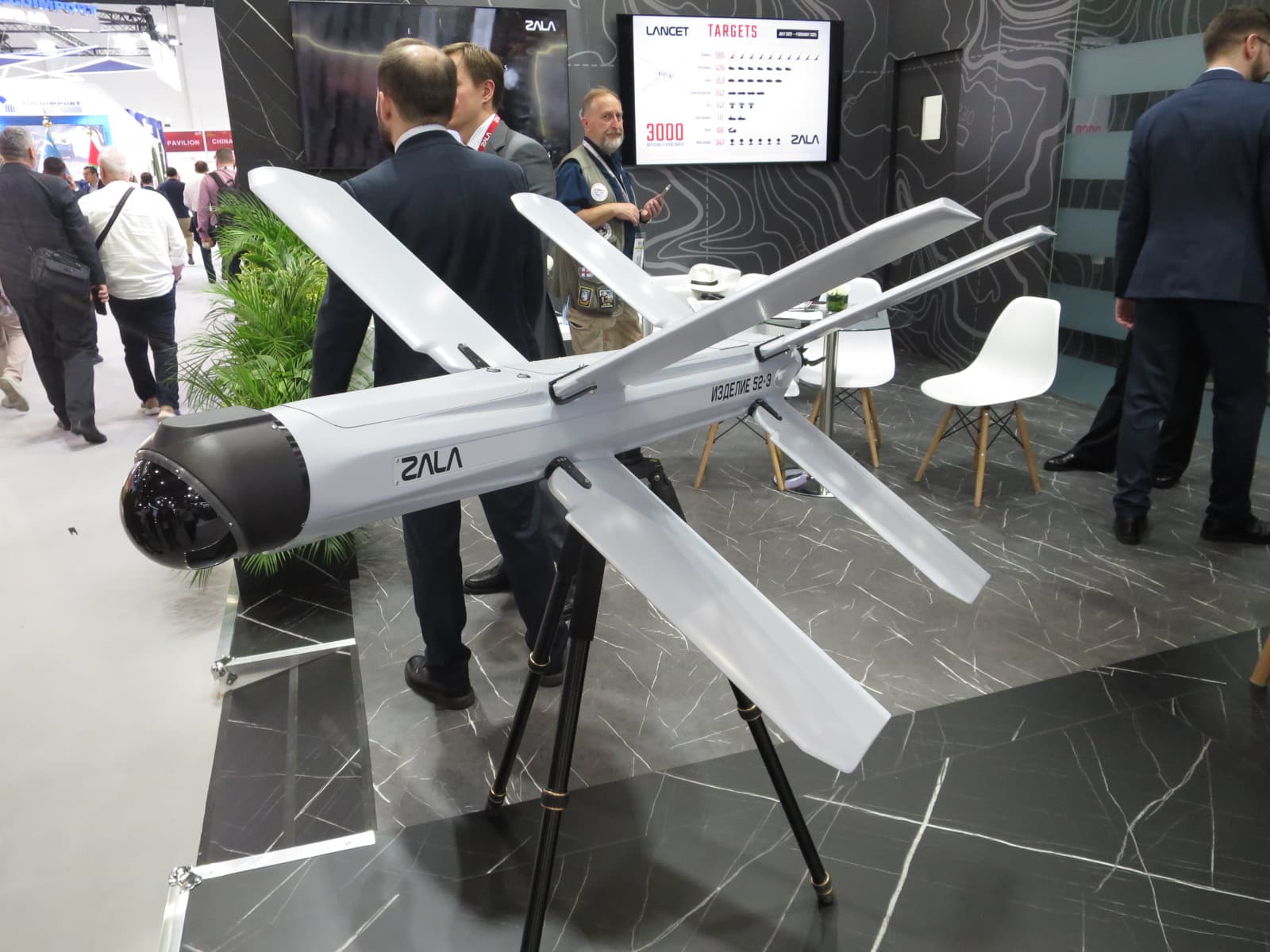
Speed and detection. At 90 km/h, the Sea Baby is fast for a surface drone but not fast enough to outrun most naval vessels or evade directed fire once detected. Russian forces have adapted by deploying helicopter patrols, scout drones (including Orion UCAVs), and Lancet loitering munitions specifically to intercept incoming USVs. Successful interception rates have increased as Russia learned to take the threat seriously.
Weather dependence. A 6-metre planing hull in heavy seas loses speed, range, and navigational precision. The Black Sea is relatively benign for much of the year, but winter storms can ground operations. The low freeboard that aids stealth also means the vessel is susceptible to swamping in rough conditions.
One-way economics. In kamikaze configuration, each Sea Baby is a single-use weapon. The SBU has not disclosed unit costs, though earlier models were reportedly priced at approximately 8.5 million hryvnias (roughly $230,000 at 2023 exchange rates). That is extraordinarily cheap compared to the naval assets it can threaten, but sustaining a campaign still requires continuous production.
Electronic warfare. Russian EW capabilities in the Black Sea theatre have improved throughout the conflict. Jamming satellite links, spoofing GPS, and disrupting optical guidance channels are all viable countermeasures. The Sea Baby's redundant communications systems mitigate this, but they do not eliminate the vulnerability entirely.
Scalability. Manufacturing USVs in an underground facility under wartime conditions imposes production ceiling limits that a peacetime industrial base would not face. How many Sea Babies Ukraine can produce per month remains classified, but the pace of operations suggests dozens rather than hundreds.
Strategic Significance
The Sea Baby's importance extends well beyond the Black Sea.
Before Ukraine's naval drone campaign, the conventional wisdom held that controlling a body of water required either a navy or shore-based anti-ship missiles with sufficient range. Ukraine had neither in meaningful quantity after February 2022. What it demonstrated instead was that a fleet of expendable surface drones, costing a fraction of a single anti-ship missile battery, could impose unacceptable risk on a major naval power operating in a confined sea.
Russia's Black Sea Fleet — which on paper vastly outgunned anything Ukraine could deploy — was forced to withdraw from western Crimean waters, abandon the naval base at Sevastopol as a forward operating position, and disperse its remaining combatants to ports further from the front. That retreat was accomplished without a single Ukrainian warship firing a shot.
The implications are systemic. Every navy in the world is now grappling with the reality that billion-dollar surface combatants can be threatened by weapons costing under $250,000. Port security, mine countermeasures, and close-in defence against small surface targets — areas that many navies have underinvested in for decades — are suddenly urgent priorities. The Sea Baby did not invent the concept of the unmanned attack boat, but it provided the first sustained, industrial-scale proof that cheap USVs can reshape the balance of power at sea.
For Ukraine specifically, the Sea Baby programme demonstrated that unconventional organisations — an intelligence service, not a navy — can develop effective naval weapons under wartime pressure, iterating faster than traditional procurement systems could manage. The SBU went from zero maritime capability to striking the most heavily defended bridge in Europe in roughly twelve months. That timeline is the real headline, and it is one that defence planners in every maritime nation are now studying carefully.
Sponsored
Place your ad hereSpecifications
| Length | 6 m |
| Beam | 2 m |
| Height Above Waterline | 0.6 m |
| Weight | ~1,000 kg (estimated) |
| Warhead | Up to 850 kg of explosives (original); up to 2,000 kg (upgraded variant) |
| Max Speed | 90 km/h (49 knots) |
| Range | 1,000 km (original); 1,500 km (upgraded variant) |
| Guidance | GPS + satellite link (Starlink primary, Kymeta backup) + AI-assisted targeting |
| Propulsion | 2 x 200 hp inboard motors driving twin waterjets |
| Hull Material | Radar-absorbing composite (fibreglass) |
| Armament Options | Explosive payload, 122 mm BM-21 Grad MLRS (10-round), 14.5 mm KPVT machine gun turret, naval mines, FPV drone mothership |