Drones of War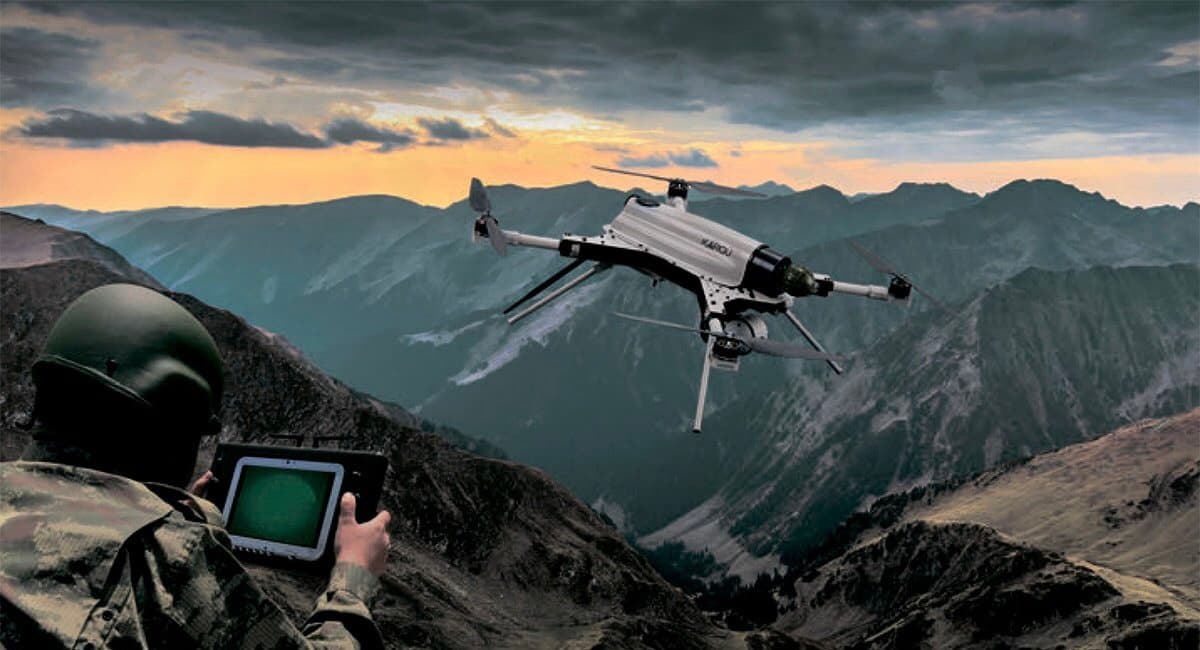
STM Kargu-2
The STM Kargu-2 is a Turkish autonomous quadcopter loitering munition that entered global consciousness in 2021 when a United Nations report suggested it may have been the first lethal autonomous weapon system to attack humans without operator command, during the 2020 Libyan civil war. Whether that actually happened remains disputed, but the implications of the technology it carries are not.
What the UN Report Actually Said (and Didn't Say)
On March 8, 2021, the UN Security Council published report S/2021/229 from the Panel of Experts on Libya. It was mainly about arms embargo violations and ceasefire monitoring. But buried in paragraph 63 was a sentence that set the defence policy world on fire.
The panel described how, during Operation PEACE STORM in March 2020, retreating Haftar-aligned Libyan National Army forces "were hunted down and remotely engaged by unmanned combat aerial vehicles or lethal autonomous weapons systems such as the STM Kargu-2." Then the key phrase: these systems "were programmed to attack targets without requiring data connectivity between the operator and the munition: in effect, a true 'fire, forget and find' capability."
"Without requiring data connectivity between the operator and the munition." If that's accurate, it means a drone selected and attacked human targets on its own, with no human making the kill decision in real time. The first documented use of a lethal autonomous weapon system against people in combat.
But here's what the report does not say: that anyone was confirmed killed by a Kargu-2 operating in autonomous mode. The panel described the capability and the operational context. They didn't provide direct evidence of a specific autonomous engagement. Jack McDonald, a lecturer in war studies at King's College London, pointed out that the report didn't make clear whether the Kargu-2 was actually operating autonomously or manually during the events described.
The Bulletin of the Atomic Scientists published a piece titled "Was a flying killer robot used in Libya? Quite possibly." That headline captures the evidentiary situation precisely. The capability was there. The weapon was present. The conditions were consistent with autonomous use. But definitive proof of a specific autonomous kill hasn't been publicly established.
Arms control organisations immediately cited the report as proof that killer robots had arrived. Ethicists demanded regulations. Military analysts argued about whether a line had been crossed. All of this happened around a relatively small Turkish quadcopter that most people had never heard of.
The Autonomy Architecture
What makes the Kargu-2 different from a standard remotely piloted drone is its onboard machine learning. STM equipped the system with algorithms that do real-time object classification: the drone analyses camera imagery, identifies objects in the frame, and classifies them as specific target types. Person, vehicle, building. With additional training data, potentially more granular distinctions: types of vehicles, armed vs unarmed individuals, military vs civilian objects. All of this runs locally on embedded processors. No need to transmit video back to an operator for analysis.
STM offers the Kargu-2 in both manual and autonomous modes. Manual mode is straightforward: operator controls it via handheld station, sees live camera feed, picks the target, commands the attack. Standard loitering munition stuff.
Autonomous mode is where it gets complicated. The drone gets a target area and target parameters. It flies there, searches for objects matching the parameters, classifies potential targets, and, according to STM's marketing materials, engages the selected target. The question is whether that engagement needs operator confirmation or can happen automatically.
STM's official position, from their website: "precision strike missions are fully performed by the operator, in line with the Man-in-the-Loop principle." That directly contradicts the UN panel's description of operations "without requiring data connectivity." Either the Kargu-2 was used in a mode STM doesn't officially endorse, or the UN panel got the characterisation wrong.
Both are plausible. Doctrine and actual use diverge all the time, particularly in chaotic multi-faction conflicts like Libya where different armed groups have varying levels of training and oversight. A weapon that can operate autonomously and that gets deployed to forces in communication-degraded environments may end up being used autonomously regardless of what the manufacturer's website says.
The Drone Itself
Strip away the autonomy debate and the Kargu-2 is physically unimpressive. Quadcopter. Four rotors, square configuration, looks like a big commercial DJI drone carrying explosives instead of a camera gimbal. Dimensions: 600 mm by 600 mm by 430 mm. Weight: 7.06 kg. Max speed: 72 km/h. Endurance: 25-30 minutes. Range: 5-10 km. It carries a fragmentation or armour-piercing warhead (STM hasn't publicly disclosed the exact warhead weight).
Those numbers put it firmly in the short-range tactical category. Closer to a hand grenade with wings than to a cruise missile. The range means the operator has to be near the front line. The endurance allows a brief loiter. The payload kills exposed personnel and damages soft vehicles but won't do much against armour.
What the quadcopter design gives you that fixed-wing competitors don't: hover capability, vertical takeoff and landing (no launcher needed), and the ability to operate in confined urban spaces and among vegetation where a fixed-wing drone can't manoeuvre. You can launch it from any flat surface. For a comparison of how it stacks up:
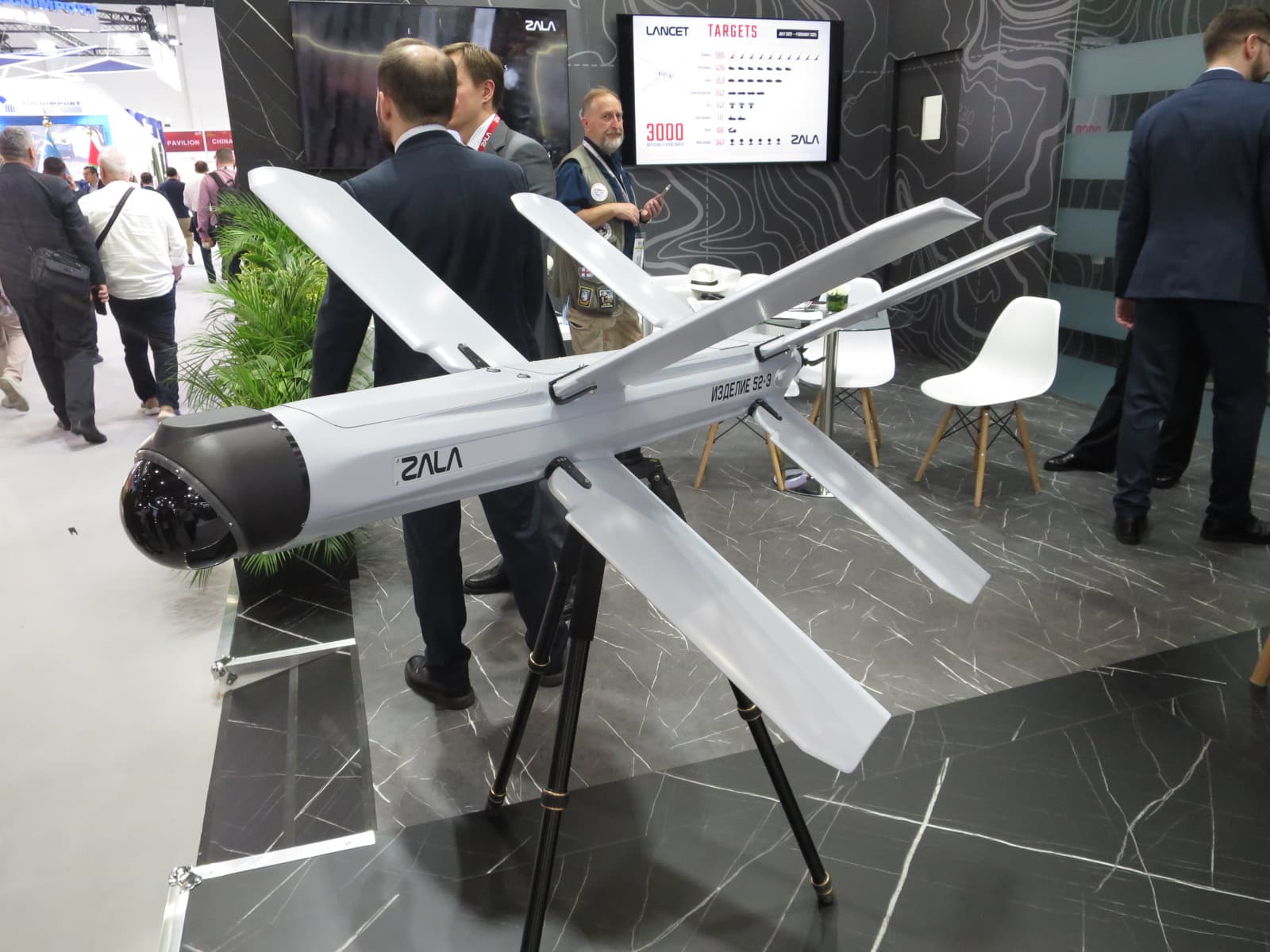
| STM Kargu-2 | Switchblade 300 | ZALA KYB | Warmate | |
|---|---|---|---|---|
| Configuration | Quadcopter | Fixed-wing | Flying wing | Fixed-wing |
| Weight | 7.06 kg | 2.5 kg | ~7 kg | 5.7 kg |
| Range | 5-10 km | 10-30 km | ~40 km | 30 km |
| Endurance | 25-30 min | 15-20 min | 30 min | 70 min |
| Speed | 72 km/h | 101-161 km/h | 80-130 km/h | 80-150 km/h |
| Autonomous mode | Yes | No | Claimed | No |
| Hover capability | Yes | No | No | No |
| Swarm capable | Yes (up to 20) | No | No | In development |
The range disadvantage is obvious. Five to ten kilometres vs. 30 km for the Warmate. But for urban warfare, building-to-building fighting, or operations in complex terrain where you need a drone that can hover and look around corners, the quadcopter form factor has real advantages.
The Swarm Problem
STM has been developing swarm capability for the Kargu, with up to 20 units coordinating autonomously. The idea: a swarm saturates an area, individual drones searching different sectors, sharing target information, coordinating attacks to overwhelm defences.
In February 2026, STM announced the Kargu drone swarm completed its first live-fire test, with multiple units conducting coordinated engagement against ground targets. That moves the Kargu from a single-drone weapon to a multi-drone system.
This is where the autonomy question gets really uncomfortable. A human operator can plausibly maintain meaningful control over one drone. Twenty drones, all making engagement decisions simultaneously? That requires either significant automation or an impractically large number of operators. Swarm logic inherently pushes toward machine autonomy because the coordination problem exceeds what a human brain can handle at scale.
Military implications are serious. Twenty Kargu drones, each carrying a fragmentation warhead, arriving simultaneously from multiple directions. Conventional counter-UAS systems designed to engage single targets would be swamped. Electronic warfare could disrupt swarm coordination, but if the individual drones are operating autonomously on pre-programmed target parameters, breaking their communication might not prevent individual attacks. The drones could just keep hunting on their own.
Where It's Been Used
The Libya incident is the most famous, but there's more.
The Turkish Armed Forces have used the Kargu-2 in cross-border operations against Kurdish groups in northern Syria. Details are sparse. The scope and results haven't been publicly disclosed.
There are unconfirmed reports that Azerbaijan used the Kargu-2 during the 2020 Nagorno-Karabakh war. That conflict was a showcase for Turkish drone technology generally, with the Bayraktar TB2 getting most of the attention. If the Kargu-2 was there, it operated in the shadow of its larger cousin.
By 2024, exports had reached more than 10 countries across three continents. In May 2025, STM finalised the first export contract for an armour-piercing warhead variant, expanding the target set beyond personnel to light armoured vehicles and bunkers.
The Ethics Questions Nobody Has Answered
The Kargu-2 landed at the centre of a debate about lethal autonomous weapons that had been building for years, but the debate is still unresolved.
If a drone was used autonomously in Libya, was it legal under international humanitarian law? That depends on whether the targeting met the principles of distinction (hitting only combatants), proportionality (not causing excessive civilian harm), and precaution (taking feasible steps to minimise civilian casualties). Whether a machine learning algorithm can reliably meet those standards is genuinely contested.
When an autonomous weapon kills the wrong person, who's responsible? Current IHL holds commanders accountable for attacks under their authority. But if a commander authorises an autonomous drone mission and the algorithm makes an error, the legal framework for assigning blame is untested. The programmer? The manufacturer? The commander who trusted the algorithm? Nobody has worked this out.
Then there's proliferation. The Kargu-2 has been exported to over 10 countries. If those countries use it in autonomous mode, the precedent from Libya, however ambiguous, gets normalised with each deployment. And unlike nuclear weapons or hypersonic missiles, the barrier to entry for autonomous drones is low. This technology can reach armed groups, militias, and non-state actors in ways that expensive weapons systems can't.
The Turkish Drone Context
STM, formally known as Savunma Teknolojileri Muhendislik ve Ticaret A.S. (Defence Technologies Engineering and Trade Inc.), was established in 1991. The Kargu programme started as a reconnaissance system and evolved into an armed variant. The Kargu-2 entered the Turkish Armed Forces inventory in 2018 and was first publicly shown at the Defense & Security 2019 exhibition in Bangkok.
STM occupies a different niche from Baykar (maker of the TB2 and Akinci). Baykar builds large medium-altitude drones for strategic ISR and strike. STM focuses on smaller tactical systems for close combat. The Kargu-2 is an infantry weapon, not an air force asset. It solves a different problem: not "how do we destroy a target 200 km away" but "how do we kill that enemy position 3 km from our troops."
Turkey's investment in both strategic drones from Baykar and tactical drones from STM gives the Turkish military and its allies a layered capability across the full range of modern drone warfare.
What the Kargu-2 Changed
The Kargu-2's physical capabilities are middling by current standards. Short range, limited endurance, modest payload. It's not the most capable loitering munition you can buy.
What makes it historically significant is the Libya question. Before the 2021 UN report, lethal autonomous weapons systems were discussed in diplomatic forums like the UN Convention on Certain Conventional Weapons. The discussions were abstract, theoretical, about weapons that might exist someday. After the Libya report, the conversation became concrete. A weapon existed, it had been deployed, and autonomous use was at least plausible.
That shift, from theoretical to possibly operational, is the Kargu-2's lasting contribution to the global security picture. Every subsequent discussion about autonomous weapons regulation, every military programme developing AI-enabled targeting, every arms control proposal dealing with LAWS, all of it happens in a world that the Kargu-2 incident helped create. The question is no longer whether autonomous weapons will be used. It's how the world manages a technology that's already here.
Sponsored
Place your ad hereSpecifications
| Dimensions | 600 x 600 x 430 mm |
| Weight | 7.06 kg |
| Warhead | Fragmentation or armour-piercing |
| Range | 5–10 km |
| Endurance | 25–30 minutes |
| Speed | 72 km/h (max) |
| Guidance | Machine learning object classification, EO camera, operator-in-the-loop or autonomous |
| Swarm | Up to 20 units (in development) |
| Launch | Vertical takeoff (quadcopter) |
| Propulsion | Electric (four rotors) |