Drones of War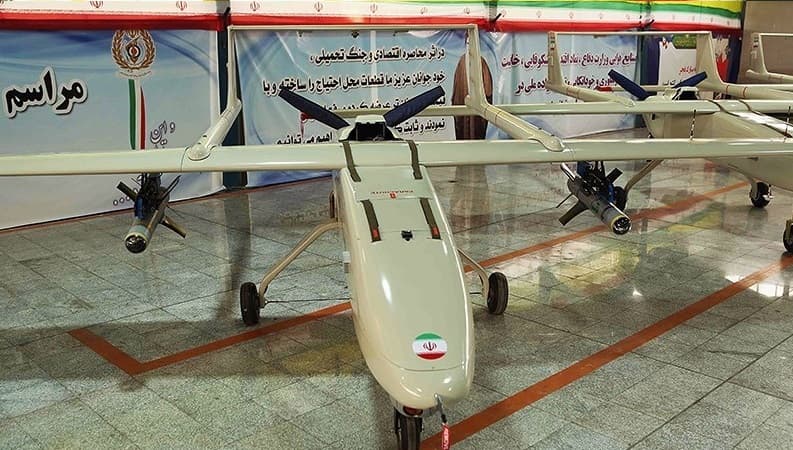
Mohajer-6
The Mohajer-6 is Iran's primary armed medium-altitude drone, a versatile ISR and strike platform that has been supplied to Russia for the war in Ukraine, deployed by Iranian forces in Syria, and exported to Venezuela and Ethiopia. It represents the sharp end of Tehran's strategy to project power through affordable, combat-proven drone technology.
Wreckage Over Odesa
Sometime in late September 2022, Ukrainian air defences brought down an aircraft nobody recognised over Odesa Oblast. When analysts got to the wreckage, it confirmed what Western intelligence had been saying for months: Iran was supplying armed drones to Russia for the invasion of Ukraine. The aircraft was a Mohajer-6, designed by Qods Aviation Industries and manufactured by HESA, both subsidiaries of Iran's state-owned Aerospace Industries Organization.
That's the headline version. But the Mohajer-6 story is older, stranger, and more strategically interesting than one shootdown in southern Ukraine.
What Makes It Different from the Shahed
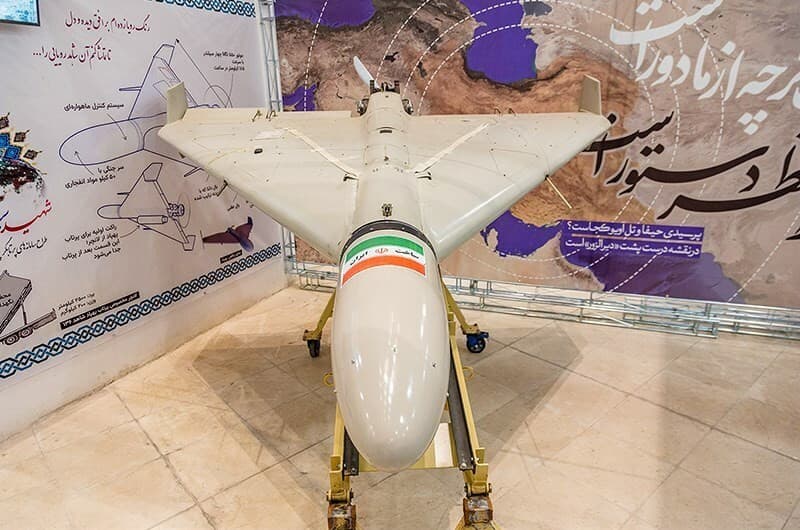
The Mohajer-6 isn't the Iranian drone most people have heard of. The Shahed-136 gets the coverage, with its delta wings and swarm attacks against Ukrainian cities. The distinction matters, though. The Shahed is disposable. You launch it, it flies into something, it's gone. The Mohajer-6 comes back. It's a reusable, multi-mission platform that does reconnaissance, surveillance, target acquisition, and precision strike. In terms of market positioning, Iran is trying to compete in the MALE drone space that the US, Israel, Turkey, and China have dominated.
Four Decades of Mohajer Drones
Here's what most coverage misses: the Mohajer programme is one of the longest-running drone lineages anywhere. Iran was flying Mohajer drones during the Iran-Iraq War in the 1980s. They were crude things, basically radio-controlled aircraft with cameras strapped on, used to watch Iraqi positions along the front. But they worked. And they gave Iranian engineers real experience with unmanned aircraft under combat conditions.
Each generation built on the previous one. The Mohajer-2 improved range and data link reliability. The Mohajer-3 got better sensors. The Mohajer-4 was the first with real operational utility, serving as the workhorse for Iranian tactical ISR through the 2000s and into the early 2010s.
The Mohajer-6 is where the family made a genuine jump. The Mohajer-4 was strictly a reconnaissance bird. The Mohajer-6 was designed from the start for both ISR and strike. Previous variants used aging Iranian avionics; this one incorporates modern commercial components and digital systems. Range and endurance pushed it into the medium-altitude, medium-endurance bracket that Western militaries consider the minimum useful threshold.
That four-decade progression from garage-quality recon platforms to a legitimate armed MALE drone is one of the more underappreciated defence industrial stories out there. Iran's approach, gradual improvement, learning from each deployment, accepting modest capability as a stepping stone, has been strategically sound even when any individual generation was years behind what Israel or the US was fielding.
The Aircraft
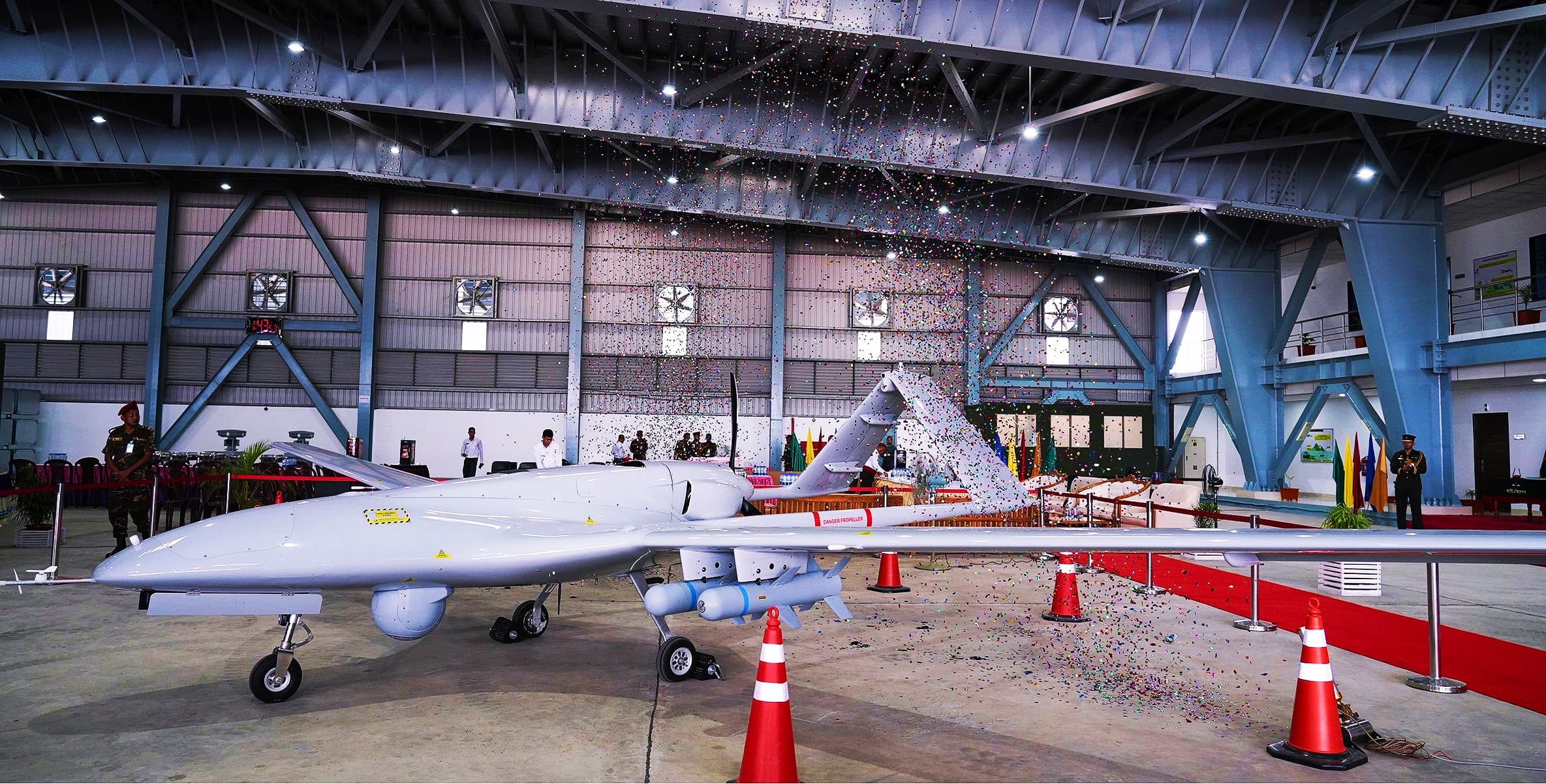
Conventional high-wing monoplane with a twin-boom tail and a pusher propeller. Wingspan is 10 metres. Length 5.67 metres. Maximum takeoff weight sits around 670 kg, which puts it in the medium tactical category. It's substantially smaller than an MQ-9 Reaper or Wing Loong II, and roughly comparable in size to a Bayraktar TB2, though the TB2 has a wider wingspan and far greater endurance.
The engine is a Rotax 914 turbocharged unit producing 115 horsepower, driving a three-blade prop. This is a commercial off-the-shelf powerplant designed for light sport aviation, and its presence in a military drone has been a persistent headache for sanctions enforcement teams. Western-manufactured components flowing to Iranian defence programmes through intermediary procurement networks is a whole rabbit hole. The engine gives the Mohajer-6 a top speed of about 200 km/h and endurance of around 12 hours.
The sensor turret hangs under the forward fuselage: electro-optical and infrared. Quality has reportedly improved across production batches but remains well below Western systems like the Raytheon MTS-B on the Reaper.
Weapons go on four underwing hardpoints. Standard loadout is Qaem-5 precision-guided bombs (about 20-25 kg each) or Sadid-345 guided munitions. Total weapons payload runs 100-150 kg depending on variant and configuration. Small by Western standards. The Qaem-5 uses GPS/INS guidance with a terminal imaging infrared seeker for hitting vehicles, personnel concentrations, and light structures. It won't do what a Hellfire or a 500-pound JDAM does, but against the target sets Iran and its partners typically engage, the smaller warhead is often enough.
The SATCOM Question
Standard Mohajer-6 operates via line-of-sight data link, roughly 200 km from the ground station. That's the big constraint. It keeps the aircraft tethered to its operators and limits it to a tactical role.
The Mohajer-6B variant reportedly has a SATCOM link extending the operational range to something like 2,000 km. That's a completely different proposition. It turns a tactical asset into a theatre-level surveillance and strike platform. Production of the SATCOM variant appears limited, and I haven't seen confirmation of it in widespread export. But its existence tells you where Iran wants to go with this programme.
Syria: The Proving Ground
Syria was where the Mohajer-6 first saw combat. Iranian forces deployed it in support of Assad's counterinsurgency campaigns against various Islamist factions, including ISIS. Open-source photographic evidence places the type in Syrian skies from at least 2018, though the exact start date is fuzzy.
The operating environment was mostly permissive. Rebel factions had limited air defences, which made Syria a low-risk proving ground. The Mohajer-6 did primarily ISR work, feeding targeting data to Iranian-advised ground forces and occasionally conducting direct strikes with Qaem-5 munitions.
Iranian-backed Iraqi Popular Mobilization Forces also reportedly operated or received targeting data from Mohajer-6 drones during operations against ISIS remnants in western Iraq. The line between Iranian-operated and PMF-operated assets is deliberately blurred by everyone involved, and sorting out who was actually in the control station for any given sortie is probably impossible from open sources.
Ukraine: Where the Mohajer-6 Got Tested for Real
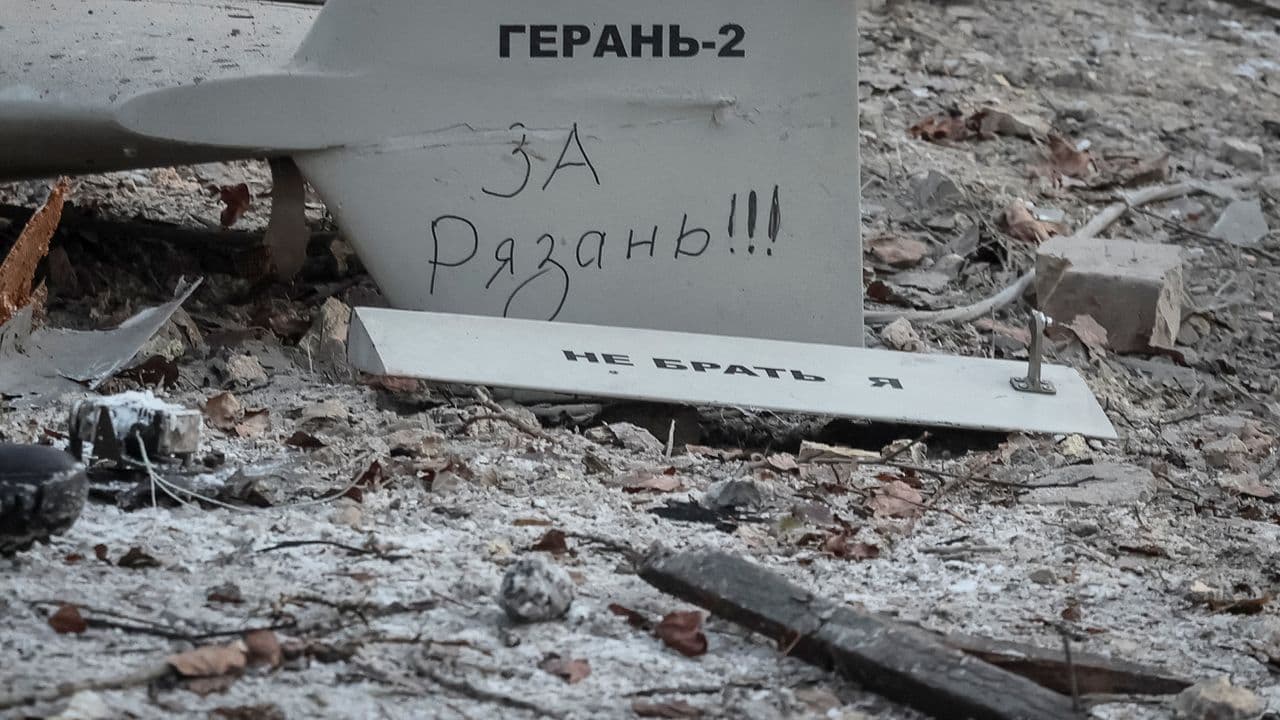
The most consequential deployment started in 2022 with Iran's drone supply package to Russia. The package included the more numerous Shahed-136 one-way attack drones (Russia calls them Geran-2) and an unknown number of Mohajer-6 airframes.
Ukraine's defence ministry confirmed Mohajer-6 use in late September 2022 with that first shootdown near Odesa. Analysis by Ukrainian intelligence and Western OSINT investigators showed Russia initially using the type mainly for reconnaissance, flying surveillance over Ukrainian positions and feeding targeting coordinates to Russian artillery and missile batteries.
Then in May 2024, a Mohajer-6 armed with Qaem-5 guided bombs crashed in Russia's Kursk Oblast. That was the first hard evidence Russia was operating the armed variant, not just the reconnaissance version. Whether that meant a new batch of deliveries with integrated weapons or Russia had figured out how to arm previously unarmed airframes isn't clear.
Performance in Ukraine has been mixed. Ukrainian air defences, which have grown very capable through the war, have intercepted multiple Mohajer-6 drones. The aircraft is slow and has minimal electronic countermeasures, which makes it vulnerable. But its value as a persistent ISR platform, particularly for artillery spotting, gets acknowledged even by Ukrainian analysts. A Mohajer-6 circling at 4,000 metres provides real-time video to artillery batteries that can correct fire within minutes.
Yemen and Venezuela
Iran-backed Houthi forces have operated various Iranian drone types since at least 2019, and the Mohajer-6 appears in the inventory. They've used it for ISR along the Saudi border and for targeting Saudi military positions. Sorting out exactly which Iranian drone type was used in which Houthi operation is often impossible from open-source reporting. They have a lot of different Iranian-origin platforms.
The geopolitically flashier deployment is Venezuela. Photographic evidence confirmed the presence of Mohajer-6 drones at Venezuela's El Libertador Air Base in late December 2025, with local assembly handled by the Venezuelan state firm EANSA under Iranian oversight. That got immediate attention from the US. Iranian combat drones in the Western Hemisphere, with theoretical range covering chunks of the Caribbean and northern South America, is the kind of thing that sets off alarms in Southern Command.
Venezuela likely can't maintain and operate the system independently without continued Iranian support. Reports suggest Iranian technical advisors are on-site, and technology transfer agreements may include provisions for local assembly.
Ethiopia and Other Operators
Ethiopia has used the Mohajer-6 in its conflicts in Tigray and with regional insurgencies. The IRGC Ground Forces and IRGC Navy fly the type domestically for border surveillance, maritime patrol in the Gulf, and the occasional demonstration of force. Syria's Assad government operated the type with direct Iranian support before its fall.
The actual operator list is probably longer than what's publicly confirmed. Iran has been aggressive about drone diplomacy, offering the Mohajer-6 as a cheap way to build military relationships with countries that either can't buy Western drones due to sanctions or export controls, or that prefer suppliers who don't ask questions about human rights.
The Sanctions Problem
The Mohajer-6 relies heavily on components Iran doesn't make. The Rotax 914 comes from BRP-Rotax in Austria. Navigation and avionics reportedly incorporate Western-manufactured chips and modules. That dependency is both a vulnerability and a focus of enforcement.
After Iran's drone transfers to Russia were confirmed, the EU and US tightened sanctions on Iranian drone manufacturers and their supply chains. The Rotax engine has been a particular focus. Investigators have traced procurement networks that route engines through intermediary countries to dodge export controls.
Iran claims domestic engine alternatives exist. Whether the domestically produced substitutes match the Rotax's reliability and performance is an open question that the available reporting doesn't really answer. Long-term production sustainability probably depends on either defeating sanctions enforcement or developing genuine alternatives to the critical Western components.
Where It Falls Short
I want to be clear about what the Mohajer-6 isn't. It's not a peer to the MQ-9 Reaper or even the TB2 in several respects.
Endurance at 12 hours is adequate but nothing special. The Reaper does 27 hours. The TB2 can manage up to 27 hours too. More advanced MALE drones push past 30.
The 100-150 kg payload limits what weapons it can carry. The munitions work against soft targets and light vehicles but won't do much to hardened positions or armour.
The sensor package is functional but lacks the resolution and multi-spectral capability you'd get from Western equivalents. That constrains the identification range, which constrains the engagement envelope.
At 200 km/h max, the piston engine makes it slower than most modern MALE drones and exposed to a wider range of air defence threats.
Electronic countermeasures are minimal or absent. In the kind of electronic warfare environment Ukraine has become, the Mohajer-6 is susceptible to GPS jamming, comms disruption, and spoofing.
Cost and Production
Nobody outside Iran knows exact production numbers, but the system has been built in enough quantity to equip multiple IRGC branches, supply Russia with a meaningful number of airframes, and export to at least three countries simultaneously. That implies a production line doing dozens, possibly over a hundred, per year.
Cost estimates run $2-4 million per system including the ground control station and initial support. That makes it one of the cheapest armed drones on the global market. Significantly less than a TB2 (roughly $5-6 million) and a fraction of an MQ-9 ($32 million per unit). The low cost lets Iran absorb combat losses without financial strain and offer the system to buyers with tight defence budgets.
Why It Matters
The Mohajer-6's significance isn't in what a single airframe can do. Individually, it's a capable but unremarkable medium drone with real limitations. The significance is systemic. Iran has built a drone programme that, while technologically behind the West, Israel, and Turkey, is proliferating rapidly to states and non-state actors across multiple continents.
For roughly $2-4 million, a buyer gets a reusable ISR and light strike platform that needs relatively little infrastructure, can be operated by moderately trained crews, and delivers real combat capability against opponents who lack modern air defences.
That value proposition is potent. It explains why the Mohajer-6 keeps showing up in new theatres and new hands. Iran isn't competing for the high end of the drone market. It's competing for the enormous middle ground of militaries that need surveillance and strike capability, can't afford Western prices, and can't pass Western export vetting. That is a very large market.
Sponsored
Place your ad hereSpecifications
| Wingspan | 10 m (32.8 ft) |
| Length | 5.67 m (18.6 ft) |
| Height | 1.9 m (6.2 ft) |
| Max Takeoff Weight | 670 kg (1,477 lb) |
| Payload | 100–150 kg (220–330 lb) |
| Max Altitude | 5,500 m (18,000 ft) |
| Endurance | 12 hours |
| Max Speed | 200 km/h (124 mph) |
| Engine | Rotax 914 turbocharged engine (115 hp) |
| Armament | 4x Qaem-5 or Sadid-345 precision bombs, Hydra rockets |
| Hardpoints | 4 (wing) |
| Range | 200 km (124 mi), SATCOM variant up to 2,000 km |