Drones of War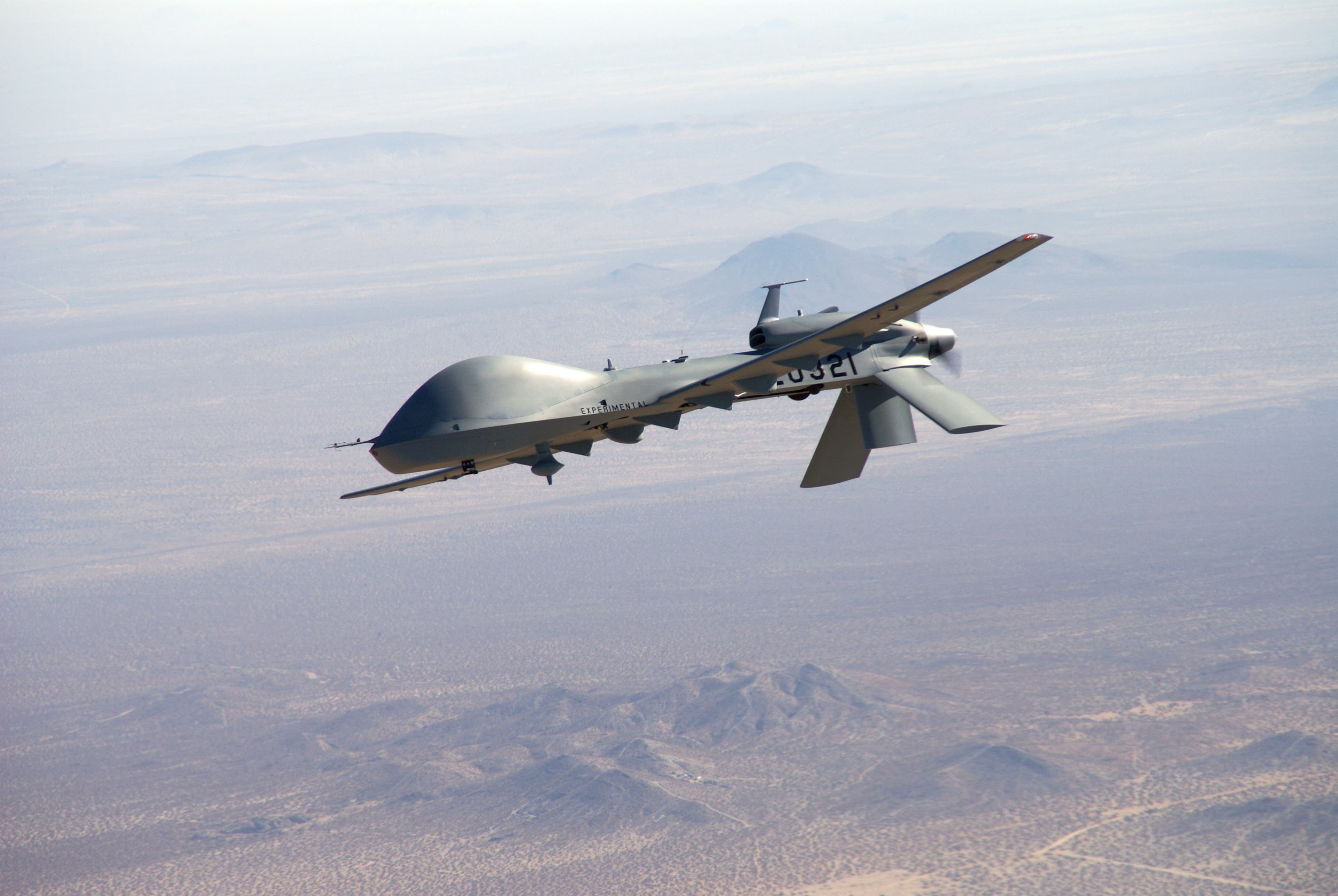
MQ-1C Gray Eagle
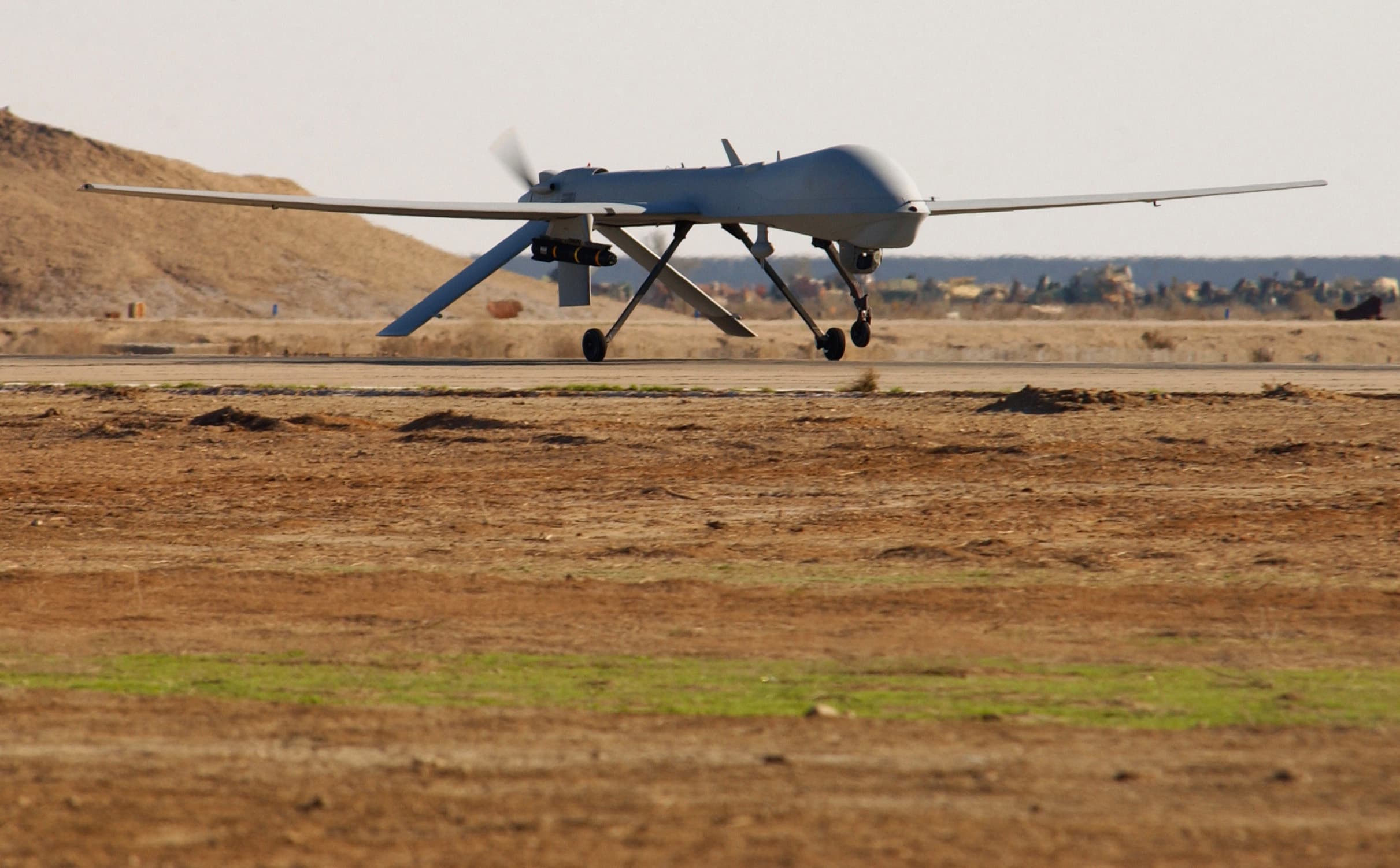
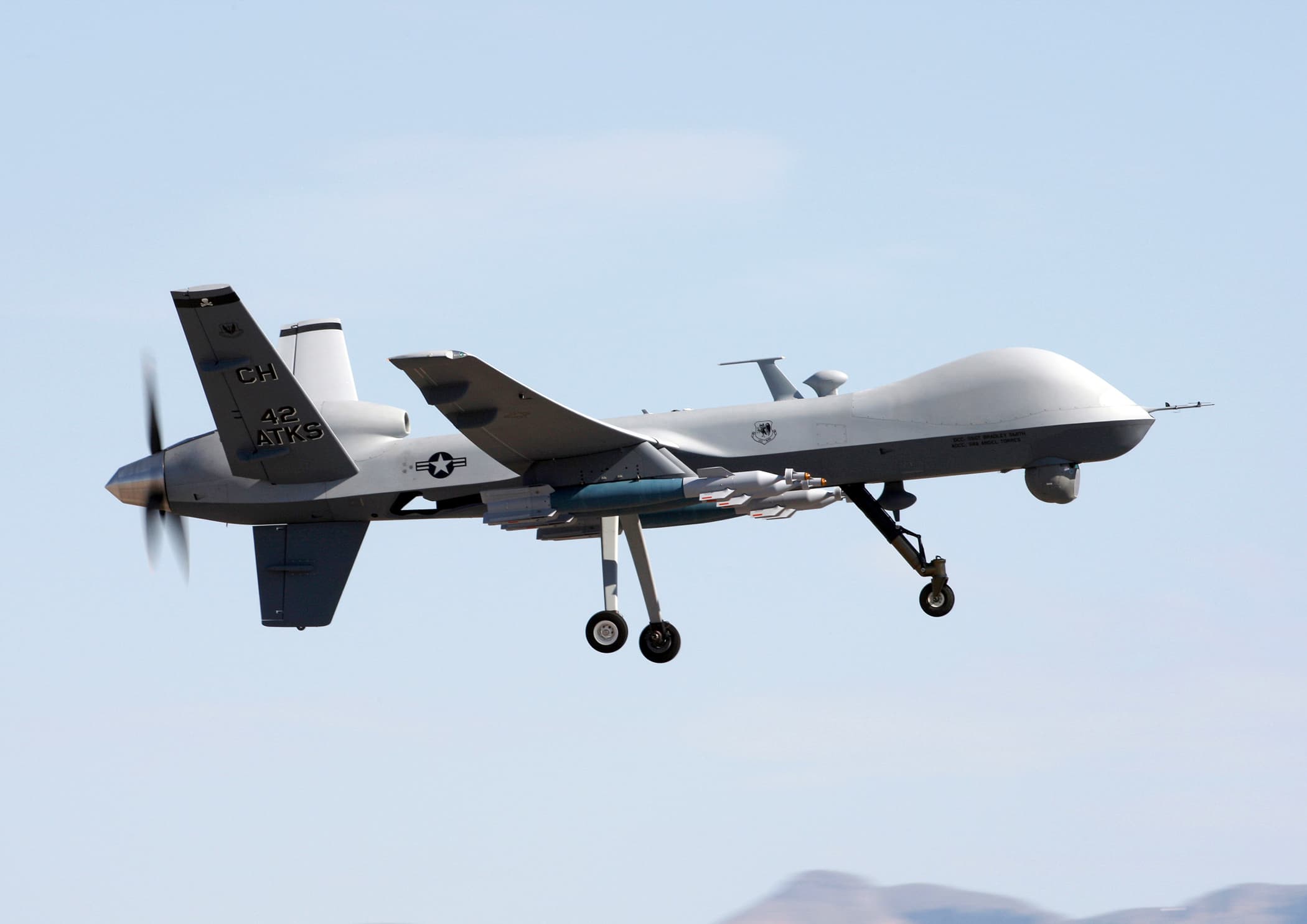
The MQ-1C Gray Eagle is General Atomics' extended-range armed drone built specifically for the US Army, bridging the gap between the retired MQ-1 Predator and the larger MQ-9 Reaper with 25-plus hours of endurance and Hellfire missiles.
Why the Army Built Its Own
The US Army wanted an armed drone it could actually control. Not request through Air Force channels, not borrow, not share. Its own.
That's the real story behind the MQ-1C Gray Eagle. The Air Force had Predators and Reapers, but those belonged to the Air Force and were allocated to ground commanders through a tasking process that didn't always match the pace of what a brigade on the ground needed. Army doctrine runs on organic assets: if the division commander needs eyes and weapons overhead at 3am, that capability should belong to the division, not to another service's priority queue. General Atomics, which had already built both the Predator and the Reaper, designed the Gray Eagle to fill that gap.
What came out looks like a Predator if you squint, but it's a substantially different aircraft. Bigger, heavier, longer-ranged, and designed around the specific way the Army fights: forward-deployed from rough strips, integrated with ground manoeuvre units at the division and brigade level, maintained by soldiers rather than contractor teams.
The JP-8 Detail That Matters More Than You'd Think
The Gray Eagle went through several name changes on its way to production. It started as the I-GNAT Extended Range in the early 2000s, became the Warrior, and eventually got the formal MQ-1C Gray Eagle designation. The "MQ" prefix means it does both reconnaissance and attack. The "1C" technically places it in the MQ-1 Predator family, though at this point the two aircraft share a general shape and not much else. First flight was in 2004, and the Army declared initial operational capability in 2009.
There are four things that separate the Gray Eagle from the Predator it replaced, and the one most people overlook is the fuel.
The Gray Eagle runs on JP-8, the standard military jet fuel that powers every vehicle and aircraft in the Army's logistics system. The original Predator used avgas, which meant a separate fuel supply chain for one aircraft type at forward operating bases where simplifying logistics is a matter of life and safety. JP-8 compatibility means the Gray Eagle drinks from the same tankers as everything else on the base. It sounds mundane. In practice, for units deployed to austere FOBs in Afghanistan, it was one of the most operationally significant design decisions General Atomics made.
The engine is a Thielert Centurion 1.7 heavy-fuel diesel, producing 135 horsepower through a rear pusher propeller. Endurance is 25 hours or more, slightly better than the Predator's 24 but achieved with a heavier payload and at higher altitudes, which makes the comparison more lopsided than the raw numbers suggest.
The other two big differences: payload and automation. The Gray Eagle carries up to 488 kg total across four external hardpoints plus internal sensor space. Standard loadout is four AGM-114 Hellfire missiles, though it can swap in GBU-44 Viper Strike glide munitions or other stores. And it has an automatic takeoff and landing system that lets it operate from short, unimproved surfaces, which is the kind of thing you need when your runways are gravel strips at FOBs that the Air Force wouldn't park a lawnmower on.
The Airframe and Sensors
Wingspan is 17 metres, length 8 metres. Maximum takeoff weight hits 1,633 kg, nearly double the original Predator. Maximum speed is around 310 km/h (167 knots), cruise roughly 150 km/h, and the operating ceiling is 8,840 metres (29,000 feet).
The sensor package centres on the Multi-Spectral Targeting System: EO, IR, and laser designator all in one turret. Find a target, identify it, designate it, and put a Hellfire on it, all from the same aircraft. Later variants added SAR and SIGINT capability.
Comms run both line-of-sight datalink and BLOS satellite relay, so the Gray Eagle can operate well beyond visual range of the ground control station. The SATCOM link was a meaningful step up from early Predator variants that were stuck with line-of-sight only.
The Combat Record Nobody Talks About
Here's something that always strikes me about the Gray Eagle: its combat record is enormous but almost invisible in public discussion. The Predator and Reaper get books written about them. The Gray Eagle has quietly been one of the most intensively used unmanned systems in the US military and barely registers outside specialist circles.
In Iraq from 2010 through 2021, Gray Eagles deployed with Army divisions doing persistent surveillance, counter-IED work, convoy overwatch, and strikes on high-value targets. When the ISIS campaign kicked off in 2014, they provided continuous frontline coverage, coordinating with ground forces and other air assets in a way that matched the Army's tempo better than requesting an Air Force Reaper through the air tasking order.
Afghanistan from 2012 onward was arguably where the Gray Eagle proved its value most clearly. For infantry commanders on the ground, a Gray Eagle overhead for 20-plus hours meant continuous armed overwatch of a patrol route, an area known for ambushes, or a suspected IED site. When it spotted something, it could engage with Hellfires immediately instead of everyone waiting for a separate strike asset to show up. That immediacy, sensor to shooter in the same aircraft under the ground commander's control, was what made it different from calling for Air Force support.
The fleet has logged hundreds of thousands of flight hours. Beyond Iraq and Afghanistan, Gray Eagles have deployed across the Middle East and Africa supporting both conventional units and special operations. Details on those deployments stay mostly classified.
What's Coming: The Extended Range
General Atomics hasn't stopped iterating. The Gray Eagle Extended Range (GE-ER) adds longer wings, more fuel capacity, and improved avionics. Endurance jumps to roughly 40 hours, which starts to approach Global Hawk territory for persistence. It also expands the weapons and payload options.
The GE-ER has been pitched to international customers too. South Korea has been a notable buyer. Several other US allies have evaluated the platform, though actual exports have been limited by American drone export controls, which have historically been stricter than what Turkey and China impose on their own armed UAV sales. The Gray Eagle competes in that market against the MQ-9 Reaper, the Bayraktar TB2 family, and Chinese Wing Loong II drones.
The Army has also been experimenting with using Gray Eagles as communications relay nodes, electronic warfare platforms, and even as motherships for launching smaller drones. The modular, multi-mission idea.
Who Operates It
The US Army fields Gray Eagles in dedicated UAS companies organic to Combat Aviation Brigades. Each company runs 12 aircraft with the ground control stations, launchers, and maintenance kit to support them. South Korea is the most prominent international operator. Australia and other allies have looked at the platform.
Where It Falls Short
The Gray Eagle has the same fundamental vulnerability as every Predator-family aircraft: it can't survive in contested airspace. It's big, slow, and about as stealthy as a barn door. Against any competent air defence system, it would last minutes. Every conflict where it's been used, the US already owned the sky. Against a peer adversary, the playbook changes entirely, and the Gray Eagle would need to operate very differently or not at all.
The heavy-fuel engine trades power for logistical convenience. It's less capable per kilogram than the turboprop on the Reaper, which constrains the Gray Eagle's payload and altitude ceiling compared to the bigger aircraft.
SATCOM latency is a constant background factor. For surveillance it's manageable, but for weapons employment the delay between operator input and aircraft response has to be worked into the engagement process. Operators deal with it, but it's there.
And the ground footprint is substantial: control stations, comms gear, launch and recovery areas, maintenance facilities. This is not a system you throw in the back of a truck and set up in a field. It needs a proper base, which limits how expeditionary it can really be compared to smaller tactical systems.
What It Actually Means for the Army
The Gray Eagle won't make anyone's list of the most exciting drones. It lacks the Predator's historical mystique, the Reaper's raw firepower, and the Global Hawk's altitude. What it gave the Army was something they'd never had before: a persistent armed surveillance platform organic to the division, available when the ground commander needed it without going through another service.
That distinction sounds bureaucratic until you're a brigade commander in Helmand at 2am and you need eyes on a compound right now, not whenever the CAOC gets around to your request. Having a Gray Eagle on call meant having your own armed orbit overhead, responsive to ground tactical needs in a way that Air Force assets, regardless of their capability, couldn't always match on the Army's timeline.
The Gray Eagle also proved that Army soldiers could maintain and operate complex drone systems at scale in rough conditions. That institutional muscle is now the foundation for whatever replaces the Gray Eagle as the battlefield gets more contested and the demands on unmanned systems keep growing.
Sponsored
Place your ad hereSpecifications
| Wingspan | 17 m (56 ft) |
| Length | 8 m (28 ft) |
| Max Takeoff Weight | 1,633 kg (3,600 lb) |
| Payload | 261 kg (575 lb) internal, 227 kg (500 lb) external |
| Max Speed | 310 km/h (167 knots) |
| Cruise Speed | 148 km/h (80 knots) |
| Endurance | 25+ hours |
| Ceiling | 8,840 m (29,000 ft) |
| Engine | Thielert Centurion 1.7 (135 hp) heavy-fuel |
| Armament | 4x Hellfire missiles, or GBU-44 Viper Strike |
| Propulsion | Pusher propeller |