Drones of War
Switchblade 300
The AeroVironment Switchblade 300 is the weapon that made the loitering munition concept personal. Small enough for a single soldier to carry and launch from a tube, it brought precision strike capability to the squad level and became the most widely discussed man-portable kamikaze drone of the Ukraine war — though its actual combat record proved more complicated than the headlines suggested.
The Ukraine Reality Check
Here's the story of the Switchblade 300 in two acts. Act one: spring 2022, the US announces security assistance packages to Ukraine, and the media discovers "kamikaze drones." Roughly 700 Switchblade systems ship to Ukraine, most of them the small 300 variant. First confirmed combat use comes in May 2022, footage from Kharkiv Oblast showing the thing doing exactly what it's supposed to do: small drone, steep terminal dive, boom. Ukrainian social media runs with it. Western outlets call it a war-changer.
Act two is less flattering.
The Switchblade 300 relies on GPS for its mid-course navigation. Russia's electronic warfare infrastructure, which is extensive and layered, made that a serious liability. GPS jamming and spoofing sent Switchblades off course or caused them to crash intact, no battle damage, just electronically lost. Ukrainian drone developer Yuriy Borovyk described them "glitching" under EW pressure. In the dense electromagnetic mess of eastern Ukraine, with systems like the Krasukha-4 and Pole-21 blanketing whole sectors, any GPS-dependent weapon had a bad time. The Switchblade wasn't special in that regard. By mid-2023, Ukraine was losing thousands of drones monthly to Russian EW. But while cheap FPV drones could absorb those losses, the Switchblade's price tag made each loss sting.
And that price tag is the real story. Depending on variant and what you're counting (complete system vs. expendable munition), estimates range from $6,000 to $70,000 per unit. Ukraine's improvised FPV drones? $300 to $500 each. A Ukrainian military analyst ran the numbers and concluded that killing an infantry target with an FPV drone cost roughly seven times less than using a Switchblade 300. For the price of one Switchblade, you could field 14 modified commercial DJI drones.
In a war burning through thousands of drones per month on both sides, that arithmetic was brutal. The Switchblade's real advantages (precision guidance, the ability to wave off an attack, a proper training pipeline) couldn't overcome the economics of industrial-scale drone attrition.
Training was another sore point. Western weapons shipped to Ukraine often came with minimal instruction. Some Ukrainian operators who trained properly praised the system. One called it a "splendid supplement" when used correctly. But "correctly" meant understanding both what it could do and what it couldn't, and that knowledge wasn't evenly spread across units receiving Western kit for the first time.
Then in April 2023, the US Army decided not to buy more Switchblade 300s for its own inventory. The Army didn't publicly cite Ukraine data, but the timing spoke for itself.
What It Actually Is
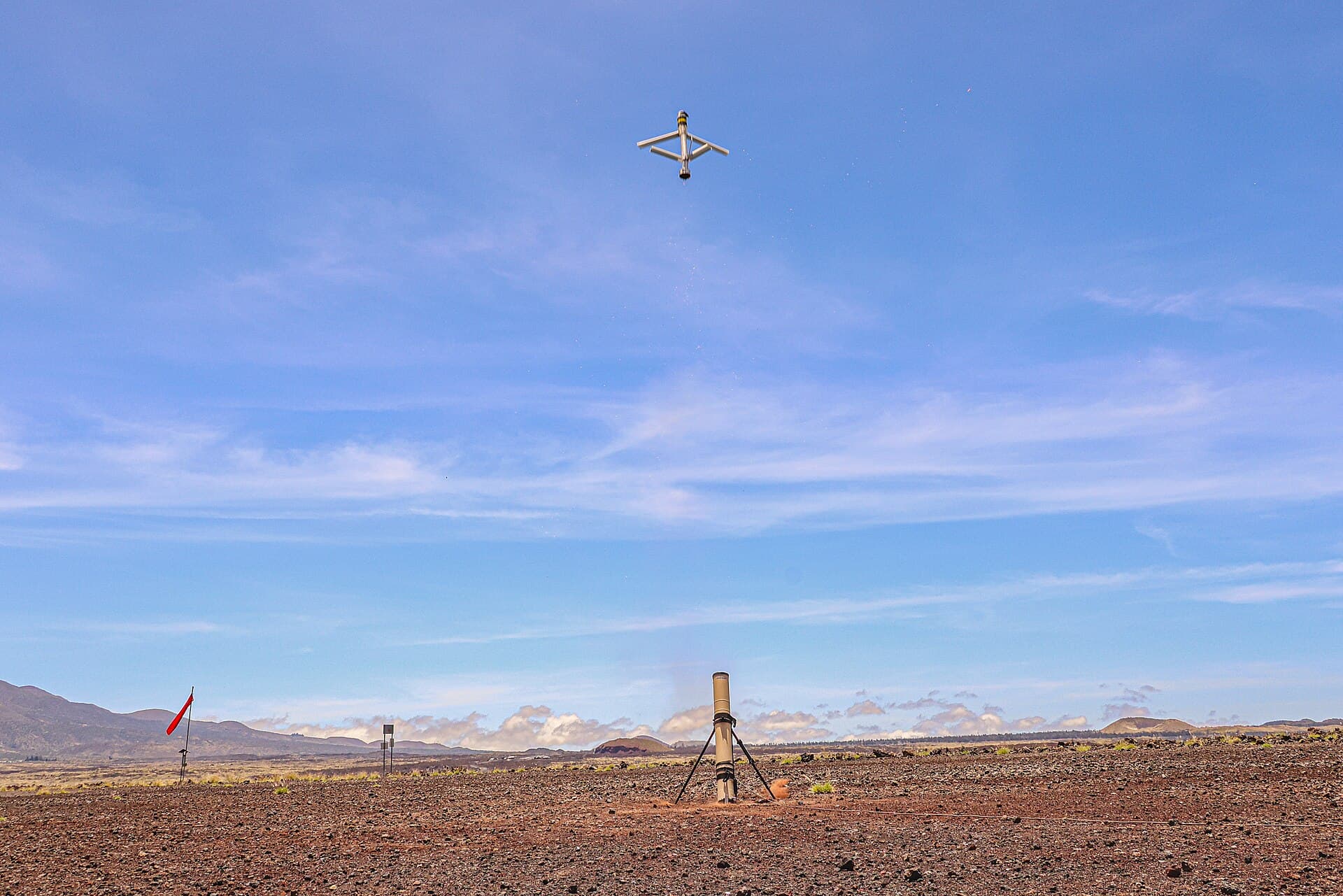
So what is the thing, stripped of the hype? A tube-launched loitering munition weighing 2.5 kg with its launcher. One soldier carries it in a rucksack alongside their normal combat load. You stand the tube up, initiate the launch, and a propellant charge kicks out the folded airframe. Wings snap open mid-flight (that's where the name comes from), an electric motor spins up a rear propeller, and you've got a quiet, camera-equipped drone cruising at around 101 km/h, with a dash speed of about 161 km/h.
The operator flies it from a ruggedised handheld ground station showing live video from the nose camera. GPS waypoints handle the transit phase; manual control takes over for the terminal attack. The whole kill chain stays in human hands. If conditions change, if the target moves, if civilians show up, if the ID is uncertain, the operator waves off and sends it back into a loiter pattern. That abort-and-re-engage capability is genuinely useful and is what separates this from a mortar round or a grenade.
The warhead is where expectations tend to collide with reality. People describe it as equivalent to a 40mm grenade, which is roughly fair. The Block 20 carries a 1.68 kg blast-fragmentation charge designed for what AeroVironment calls "focused lethality," meaning concentrated explosive effect in a small radius rather than widespread fragmentation. Against exposed personnel, it kills. Against troops in light cover, it can work depending on the dive angle. Against anything with actual armour protection, fortified positions, or sandbagged bunkers with overhead cover? Not really.
There's an often-cited anecdote from Ukraine where a Switchblade strike reportedly only cracked a bus window. That might not be representative, but it does illustrate the ceiling. This was never an anti-armour weapon. The frustration arose because Ukrainian operators sometimes tried to use it as one, then concluded it didn't work. It worked fine. They were using it on the wrong targets.
The Block Upgrades
The original Switchblade 300 had about 10 minutes of endurance and 10 km of range. For its intended mission in Afghanistan (finding and killing IED emplacers in known threat areas), that was plenty. Launch, fly to the spot, find the guy, strike. Ten minutes, done.
Block 10C pushed endurance to around 15 minutes and improved the sensors and ground control station. Useful but incremental.
The Block 20, announced in 2023, is the one that matters. This was AeroVironment's direct answer to everything that went wrong in Ukraine. Endurance jumps past 20 minutes. Range extends to roughly 30 km. The 1.68 kg warhead is carried over, but the guidance system gets improved EW resistance, which was clearly the priority. There's also a new sensor suite with better resolution and a proximity fuze option, letting the munition detonate at a set distance from the target rather than requiring a direct hit. That's a meaningful improvement against dispersed infantry.
Whether the Block 20 addresses the problems fast enough is a different question.
The Competitive Problem
The Switchblade 300 created the man-portable loitering munition category. It doesn't own it anymore.
Poland's WB Group Warmate is the most direct competitor and, frankly, looks strong on paper: 70 minutes of endurance versus the Switchblade's 20-ish, jam-resistant video guidance instead of GPS dependency, multiple warhead options, and a reportedly lower unit cost. Thousands have gone to Ukraine.
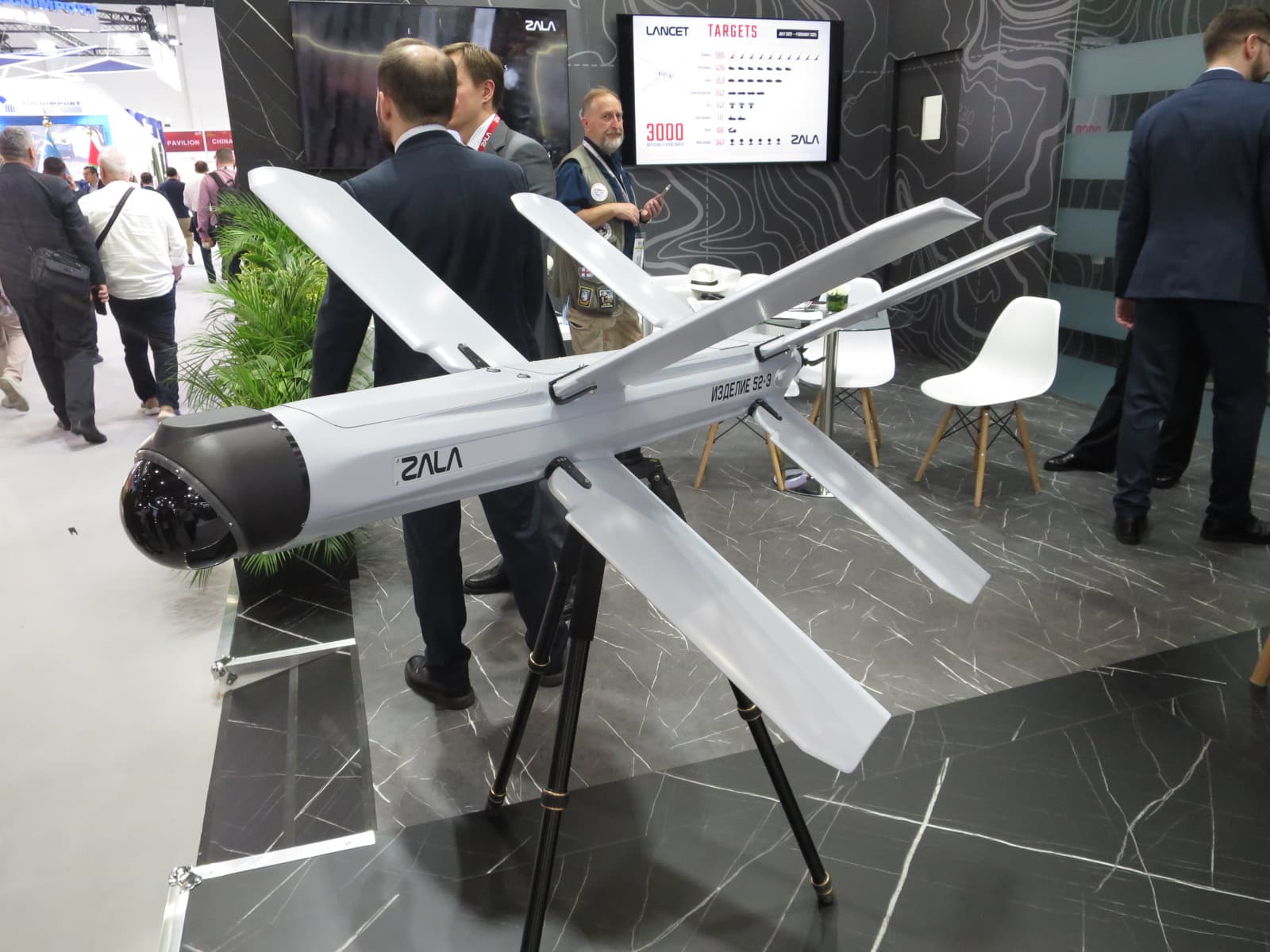
Russia's Lancet-3 isn't truly man-portable, but it proved that volume of employment plus good operators could produce devastating results with a modestly sized loitering munition. Different class, but the lesson applied.
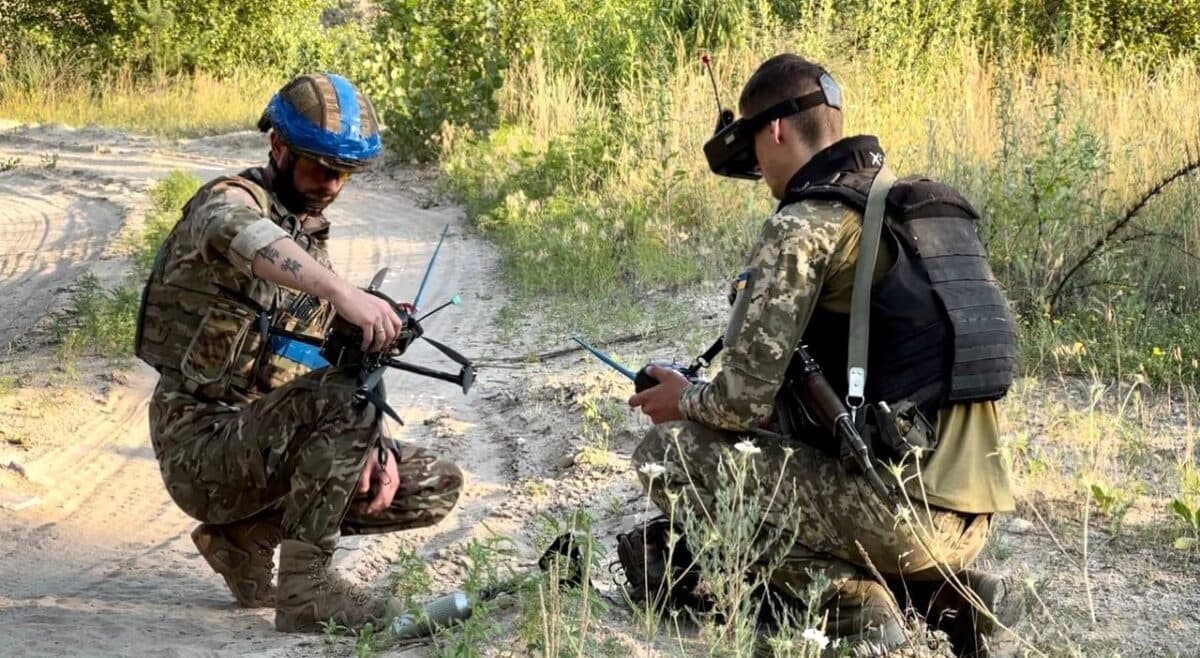
The real killer, though, wasn't a purpose-built system at all. Ukraine's FPV drone programme, thousands of $400 commercial quadcopters with grenades or shaped charges strapped on, did much of what the Switchblade 300 was meant to do. Cheaper. Operated by Ukrainians who understood the local EW environment intimately. Massively scalable.
The takeaway isn't that the Switchblade 300 is a bad weapon. It's that its concept of operations (relatively expensive, centrally manufactured, GPS-dependent, precision-focused) ran headfirst into a battlefield that rewarded volume, adaptability, and EW resilience over individual sophistication.
Who's Buying It
Despite the mixed combat record, the customer list has actually grown. The visibility from Ukraine cut both ways: it exposed the limitations, but it also demonstrated the concept to every military watching.
The US remains the main customer. The Army adopted it under the Lethal Miniature Aerial Munition System (LMAMS) programme. The Marine Corps picked the Block 20 for its Organic Precision Fires-Light (OPF-L) programme in 2024, which is a significant institutional bet on the platform. SOCOM has been buying variants since the early days.
Australia signed on in 2024, selecting the Block 20 as part of a broader push to get loitering munitions into the Australian Defence Force. The thinking there is about Indo-Pacific contingencies: man-portable strike systems that can operate from dispersed island and coastal positions without needing heavy logistics.
The UK, France, and other NATO members have evaluated it, but procurement decisions have been mixed. European alternatives are multiplying. The WB Group Warmate, plus emerging systems from Elbit and Thales, mean the Switchblade no longer competes against nothing.
The big number: in 2024, the US Army signed a contract worth roughly $990 million covering both Switchblade 300 and 600 variants, with the Block 20 making up a substantial portion. That's a lot of institutional commitment for a system with a complicated combat reputation.
300 vs. 600
Worth being clear about this, because the two get conflated constantly:
| Switchblade 300 | Switchblade 600 | |
|---|---|---|
| Weight | 2.5 kg (with tube) | 22.7 kg (airframe) |
| Warhead | 1.68 kg blast-frag | Shaped charge (Javelin-class) |
| Range | 10 to 30 km | 40 km |
| Endurance | 15 to 20+ min | 40 min |
| Target set | Personnel, soft vehicles | Armour, fortifications |
| Role | Squad weapon | Platoon/company asset |
| Cost | $6,000 to $70,000 | $70,000 to $175,000 |
The 300 is a personal weapon. The 600 is a crew-served system. Same manufacturer, same product family, completely different tactical problems. AeroVironment's strategy is to cover the full spectrum from individual soldier to company level with ground control station commonality across the range. Whether the market supports that approach against cheaper, more numerous competitors is genuinely unclear.
The Design Thinking Behind It
Three ideas shaped the Switchblade 300, and they're all distinctly American in flavour.
Low training burden: AeroVironment built the interface for troops already comfortable with commercial electronics. Their experience with the Raven and Puma reconnaissance drones, which are flown by non-specialist soldiers, informed the design. Pick it up, figure it out, use it.
Strict human control: the Switchblade 300 will not attack on its own. Every strike requires a human operator to positively identify the target and command the dive. That's compliant with DoD Directive 3000.09 on autonomy in weapons, and it reflects a deliberate policy decision that goes beyond legal requirement.
Precision over blast radius: the focused lethality warhead kills the target without levelling the surroundings. In counterinsurgency, where civilian casualties carry strategic weight, that matters a great deal. In conventional high-intensity warfare with a less constrained target set, the trade-off is less obviously worth it.
What It Proved, and What It Didn't
The Switchblade 300 proved conclusively that loitering munitions could be miniaturised to the single-soldier level without losing the core capability: find, identify, track, and destroy a target at range with precision. Before this existed, that required assets weighing hundreds of kilograms. AeroVironment got it down to 2.5 kg. That's a genuine engineering achievement, whatever you think of the combat record.
It also proved, less comfortably, that a precision loitering munition designed for low-intensity conflict needed to evolve much faster than anyone at AeroVironment anticipated. GPS dependency, limited EW hardening, and a cost structure built for Afghanistan didn't survive contact with high-intensity conventional warfare in Ukraine. The weapon worked. The war it was designed for and the war it got sent to were different wars.
The Switchblade 300 didn't fail in Ukraine so much as it met a future that arrived early. The lessons from its deployment (resilience beats precision, volume beats sophistication, adaptability beats planning) are reshaping how every military thinks about small loitering munitions. The Block 20 tries to absorb those lessons. Whether it does so quickly enough, at the right price point, against competitors who learned everything from the same conflict, is the open question. The answer will determine whether the Switchblade 300 stays relevant or becomes a historical footnote in the drone revolution it helped kick off.
Every major military on earth is now developing or buying man-portable loitering munitions. That's the Switchblade 300's real legacy. Not what it did in combat, but the idea it put into every infantry officer's head: one soldier, one rucksack, one precision strike. That concept isn't going away. The specific weapon that proved it might.
Sponsored
Place your ad hereSpecifications
| Wingspan | ~686 mm (deployed) |
| Length | ~610 mm (deployed) |
| Weight | 2.5 kg (with launch tube) |
| Warhead | 1.68 kg blast-fragmentation (40 mm grenade-equivalent) |
| Range | 10 km (Block 10C), 30 km (Block 20) |
| Endurance | 15 minutes (Block 10C), 20+ minutes (Block 20) |
| Speed | 101 km/h (cruise), 161 km/h (dash) |
| Guidance | GPS + EO seeker, operator-in-the-loop |
| Launch | Tube-launched, single-operator |