Drones of War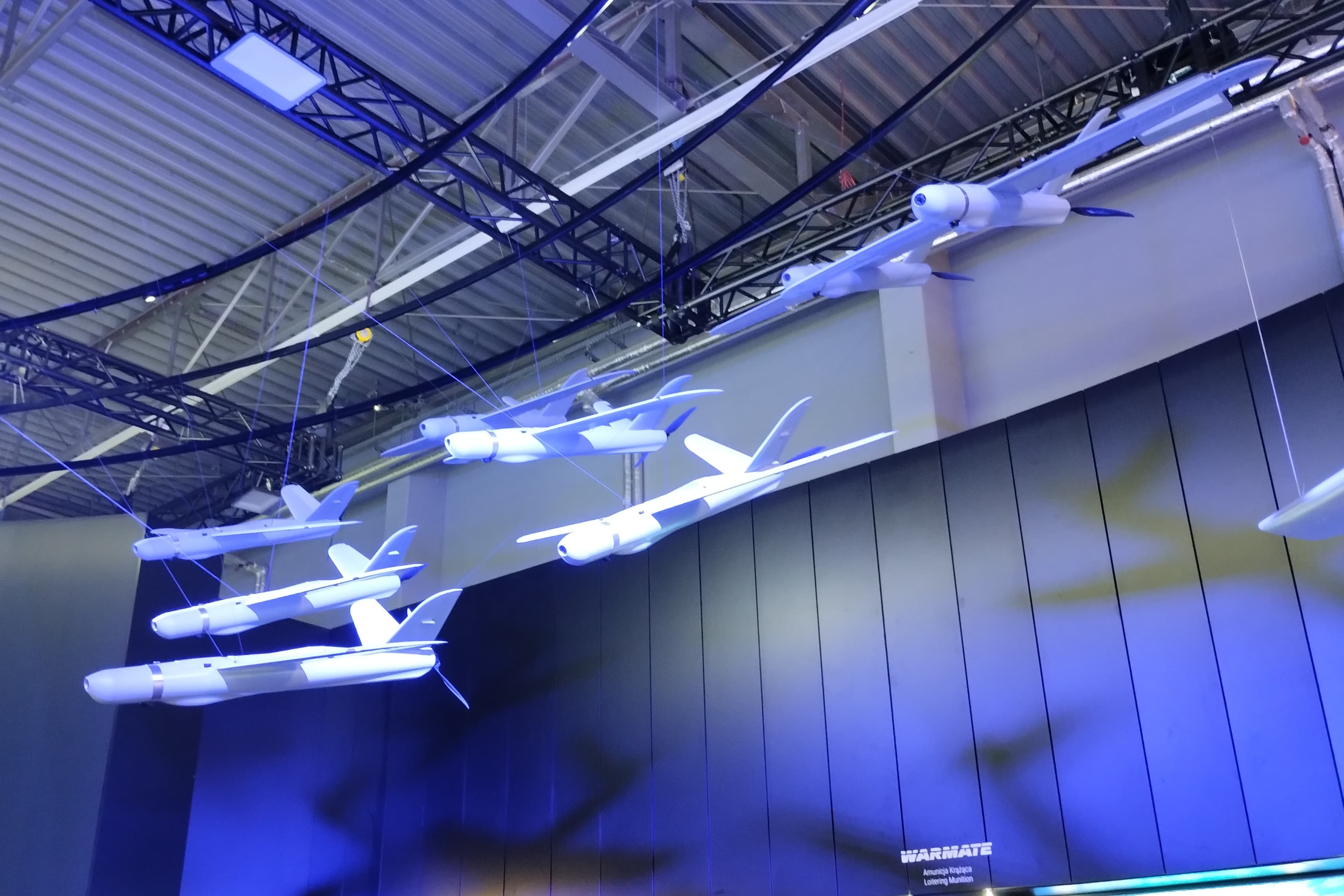
Warmate
The WB Group Warmate is a Polish man-portable loitering munition that has been fighting in Ukraine since 2014, long before loitering munitions became headline news. Its video guidance system, designed to operate in GNSS-denied environments, made it one of the few Western-origin kamikaze drones to perform reliably against Russian electronic warfare — earning it a combat reputation that its modest profile belies.
Why the Guidance System Matters More Than Anything Else
The thing that makes the Warmate worth writing about isn't its size, its warhead, or its endurance, though the endurance is genuinely impressive. It's the guidance system. Specifically, it's a design decision WB Group made back around 2014-2015 that turned out to be exactly right.
The Warmate uses video guidance for its terminal attack. The operator watches a live feed from the nose camera and manually steers the drone onto the target. That's it. No GPS lock, no satellite coordinates in the final approach. Just a human watching a screen and flying the thing into what they can see.
Why does this matter? Because GPS gets jammed. Russia's electronic warfare infrastructure along the Ukrainian front is dense, layered, and specifically designed to break GPS-dependent weapons. GPS jamming and spoofing sent expensive Western systems off course, crashed them intact, or caused them to miss their targets entirely. The Switchblade 300's troubles with Russian EW are well documented.
The Warmate's video feed doesn't care about GPS. As long as the data link between operator and drone holds, the video works. WB Group markets this as operation in "GNSS-denied environments," which sounds like a niche capability until you realise that eastern Ukraine is basically one giant GNSS-denied environment. The design assumption that satellite navigation might not be available in the target area, which might have seemed cautious in 2015, turned out to be the most important decision in the entire system's engineering.
The system also has target tracking built in: lock the camera onto a moving target and it maintains tracking automatically even as the target manoeuvres. That puts the Warmate somewhere between a traditional loitering munition and an FPV drone in terms of how hands-on the operator needs to be.
Now, the data link is the obvious vulnerability. Jam the communication frequencies and the operator loses contact. WB Group addresses this with frequency-hopping and encryption, and they state that the system has been "repeatedly operated" in heavy signal jamming conditions. The combat record backs that up, though I'd note that we don't have granular data on how many Warmates have been lost to EW versus how many completed their attacks. The overall picture is positive, but exact numbers aren't public.
The Weapon Nobody Talked About
When Western media discovered loitering munitions in 2022, all anyone could talk about was American hardware. Switchblade was the buzzword. Phoenix Ghost added some mystery. The narrative was that the US was rushing precision kamikaze drones to the front.
Meanwhile, Poland's WB Group had been shipping Warmates to Ukraine since 2014. Thousands of them, well before anyone in the West knew what a loitering munition was. Ukrainian forces had been training on the system for years. They knew the data link's effective range under local jamming. They knew which approach angles worked against which targets. They'd developed their own tactics for integrating it with ground reconnaissance and artillery spotting.
That head start mattered. The Switchblade 300 arrived as an emergency wartime delivery with limited training. The Warmate arrived as a deliberate peacetime procurement, with training programmes, maintenance infrastructure, and operator familiarity already in place. By the time the full-scale invasion kicked off in February 2022, Ukrainian Warmate operators were genuinely experienced.
The Specs
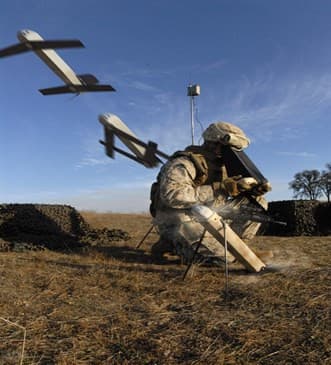
Physically, it's a tube-launched, electric-powered munition. 1,100 mm long, 1,600 mm wingspan, 5.7 kg max takeoff weight. One soldier can carry the launch tube and ground station in a rucksack, though realistically you'd spread the complete system (with extra munitions) across a two- or three-person team.
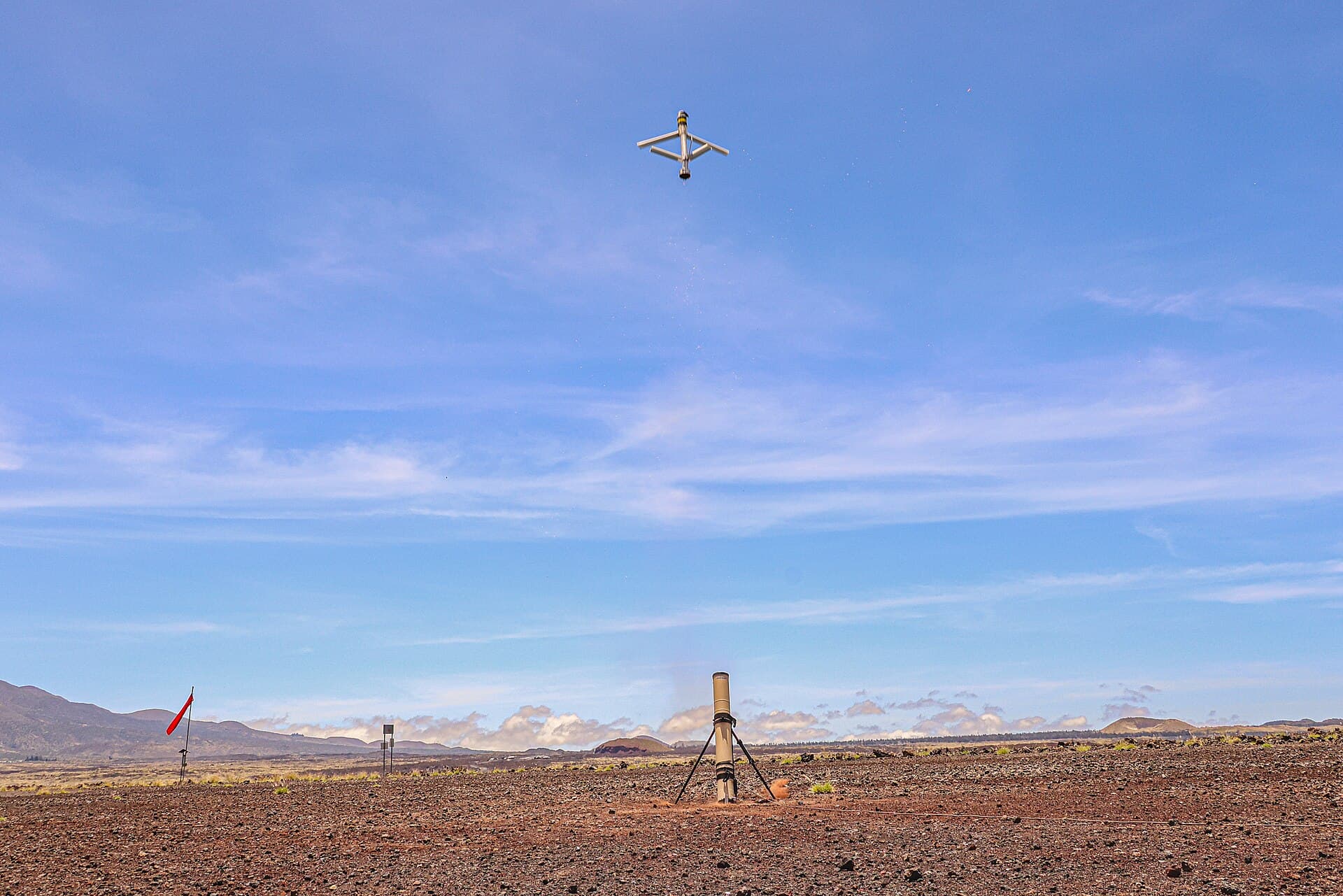
Pneumatic launch from the tube, wings deploy, electric motor kicks in. Quiet. Max speed of 150 km/h, cruise around 80 km/h.
The endurance number is the one that stands out: 70 minutes. Compare that to the Switchblade 300 Block 20's 20-odd minutes. Three and a half times longer in the air. That's the difference between flying to a target area and immediately needing to attack something, versus flying there and still having 40+ minutes to search, loiter, wait for something worth hitting.
The warhead is 1.4 kg, available in three flavours: fragmentation for anti-personnel, HEAT for light armour, and thermobaric for blast effect. The multi-warhead option is a real tactical advantage. A unit carrying a mix of Warmate warheads can engage personnel, light vehicles, or fortified positions depending on what shows up. Single-warhead systems like the Switchblade 300 don't give you that flexibility.
Range is up to 30 km on the radio link, with the option for longer range using the autonomous waypoint navigation during transit (GPS-assisted inertial navigation). The transit phase does use GPS, which means jamming can affect the Warmate during that part of the flight. But the critical moment, the terminal engagement when you actually need to hit something, runs on video. That division is smart engineering.
The FlyEye Connection
One of the things that gets overlooked is how the Warmate integrates with WB Group's FlyEye reconnaissance drone. The FlyEye is a small hand-launched surveillance UAV that's been in Polish service since 2009. It does ISR (intelligence, surveillance, reconnaissance) at the tactical level, exactly the kind of information a Warmate operator needs.
WB Group designed the two to work as a pair. FlyEye spots a target, passes the location and description to a Warmate operator, and the Warmate launches within minutes. Same manufacturer, compatible ground stations, purpose-built to create a find-and-kill loop at the company or battalion level without depending on external intelligence support.
That's a genuinely clever system architecture. The Switchblade 300 can do its own target acquisition through its onboard camera, but with only 20 minutes of endurance, it can't search for long. The Warmate can self-acquire too, with 70 minutes of flight time. But pairing a dedicated search drone with a dedicated strike drone means you preserve your Warmates for killing rather than burning endurance on finding. One drone to look, another to hit. More efficient.
The Warmate Family
WB Group has expanded the concept into a full product family. Quick rundown:
The Warmate 2 scales up to 30 kg MTOW with a 5 kg warhead. Substantially more destructive, more range, but you lose the single-soldier portability. More comparable to the Switchblade 600 in capability, still with the video guidance advantage.
Warmate 3 pushes range past 80 km with a 3 kg warhead and adds swarming capability, meaning multiple Warmate 3 units can coordinate attacks on a target area. Poland ordered these in 2025 for its own armed forces.
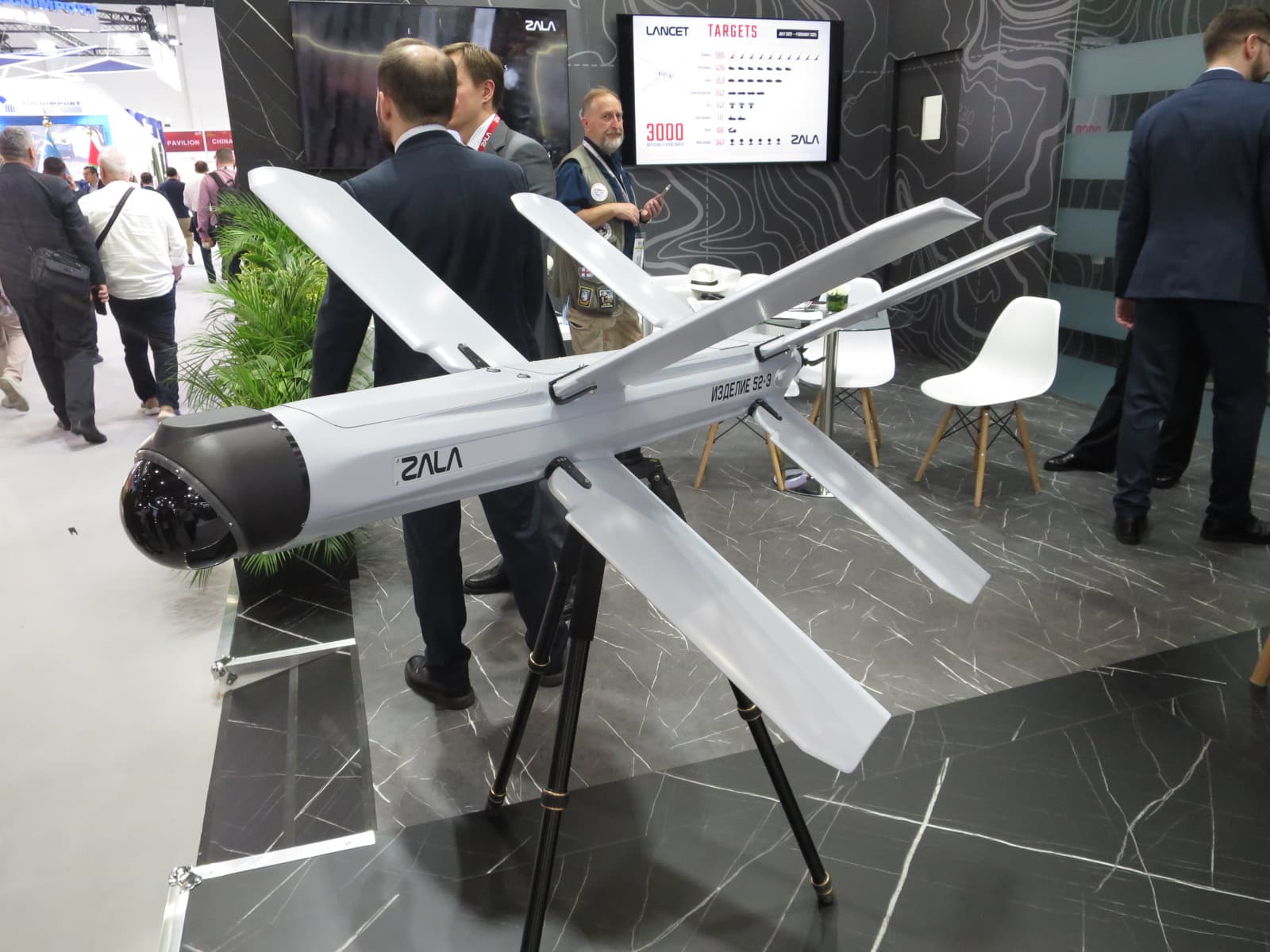
Warmate 5, announced in 2024, is pitched as a Lancet competitor. Designed specifically for high-intensity conventional warfare with improved EW resilience, better target tracking, and modular warheads.
The progression from the original 5.7 kg Warmate to the Warmate 5 shows how directly Ukraine's combat experience has driven the product line forward. Each variant addresses something that operators ran into on the ground.
Where It Came From
WB Group (then WB Electronics) showed the Warmate prototype at MSPO 2015 in Kielce, Poland. The company had been building the FlyEye for the Polish military since 2009, so the Warmate was a natural extension: take the small-drone expertise and bolt on a warhead.
Production started in 2016. First export customer was the United Arab Emirates for evaluation and deployment. Ukraine followed, with deliveries starting in the context of the Donbas conflict.
This fits into a bigger picture for Poland. Since 2014, the country has been building up domestic defence manufacturing as hard as it can, reducing dependence on imports, developing exportable products. WB Group is a centrepiece of that strategy. The FlyEye-Warmate combination gives Poland an end-to-end drone capability from a domestic supplier. No need to negotiate with a foreign government for more ammunition. They build it themselves.
The 10,000-unit Warmate order Poland placed in 2025 signals intent to make loitering munitions a standard infantry weapon, not a niche capability. That reflects the lesson from Ukraine: these aren't exotic special-operations toys anymore, they're as basic as mortars.
Who Else Is Buying
Ukraine remains the primary combat operator. Thousands delivered, active use since 2014.
The UAE was the first export customer.
Poland's 10,000-unit order in 2025 is the largest single buy.
In November 2025, WB Group announced contracts for 1,000 Warmate 3 units to non-European armed forces, though they didn't name the customers.
The company has stated that 90-95% of its FlyEye and Warmate production goes to export, which tells you the international demand is serious. Production capacity has been ramped up significantly since the full-scale invasion, with new lines established to meet both Ukrainian and other customer needs.
Limitations
The warhead size constrains what you can engage. At 1.4 kg, it handles personnel and light vehicles but won't do much to anything with real armour. The HEAT option gives some anti-armour capability, but it's not penetrating the frontal plate of a modern tank or IFV.
Speed is moderate. 150 km/h max makes it vulnerable to SHORAD systems and even aimed small-arms fire during the terminal approach. The small size and quiet motor help with concealment, but a defender who picks up the approach has a reasonable shot at engaging it.
The data link has finite range. Beyond it, you lose contact and the weapon is gone. EW that specifically targets the Warmate's comm frequencies can squeeze that range further.
And training isn't trivial. Video-guided terminal attack requires decent hand-eye coordination and situational awareness. It's simpler than many weapons systems, but it's not point-and-shoot.
What It Proved
The Warmate demonstrated something that a lot of people in the defence world needed to see: video guidance isn't a legacy technology waiting to be replaced by GPS. It's a complementary capability that becomes essential the moment GPS gets denied. Every loitering munition programme that has studied Ukraine is now incorporating this lesson.
It also validated getting weapons into the hands of your allies years before the shooting starts, rather than rushing them over in emergency packages with minimal training. Ukraine could use the Warmate effectively from day one of the full-scale invasion because it had been preparing for years. The contrast with the Switchblade's hurried arrival and training gaps tells the story.
And it showed that a mid-sized European defence company can build a loitering munition that competes with American and Israeli products in actual combat. WB Group's success has encouraged other European firms to enter the market, which is good for diversifying the global supply base.
The Warmate doesn't make many "wonder weapon" lists. It lacks the media profile of the Bayraktar TB2 and the conceptual novelty of the Switchblade. But it's been in continuous combat longer than either, it works in the electromagnetic conditions that actually matter, and it keeps getting better with each variant. In a war where reliability counts for more than spectacle, that's the best credential a weapon can have.
Sponsored
Place your ad hereSpecifications
| Wingspan | 1,600 mm |
| Length | 1,100 mm |
| Weight | 5.7 kg (MTOW) |
| Warhead | 1.4 kg (fragmentation, HEAT, or thermobaric) |
| Range | 30 km |
| Endurance | 70 minutes |
| Speed | 150 km/h (max), 80 km/h (cruise) |
| Guidance | Video guidance (jam-resistant), target tracking lock-on |
| Launch | Pneumatic tube or rail, man-portable |
| Propulsion | Electric motor |