Drones of War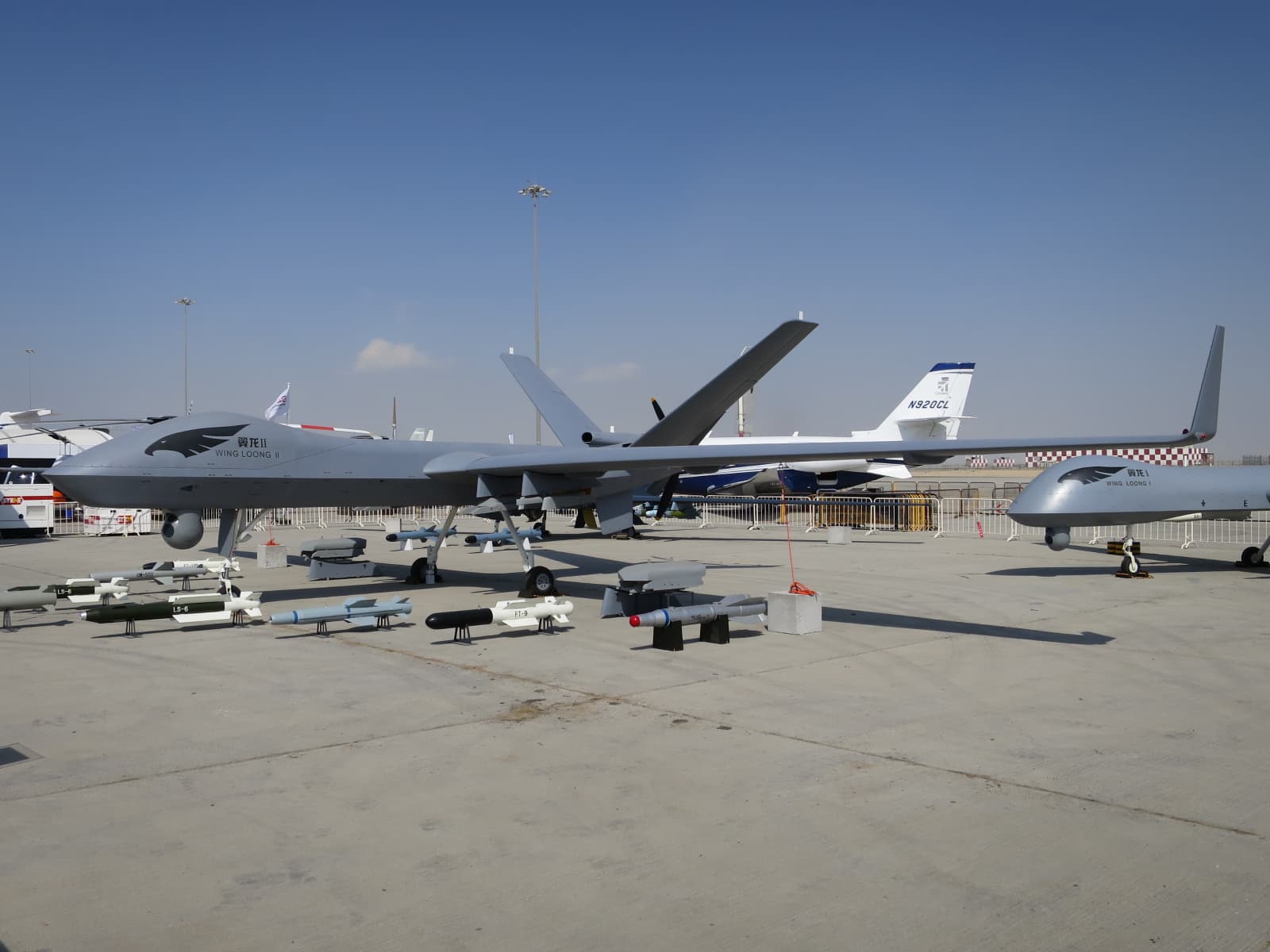
Wing Loong II
The Wing Loong II is China's primary armed drone export, a Reaper-class MALE UCAV that has seen combat in Libya, Yemen, and Egypt's Sinai Peninsula. Operated by the UAE, Saudi Arabia, Egypt, Pakistan, and a growing list of buyers, it represents Beijing's most successful entry into the global armed drone market and a direct challenge to American dominance.
A Graduation Ceremony in Tripoli
On 4 January 2020, a Wing Loong II drone fired Chinese-made Blue Arrow 7 missiles into a military academy in Tripoli. The target was a graduation ceremony. Twenty-six unarmed cadets were killed, dozens more wounded. A BBC investigation traced the drone to the United Arab Emirates, which was backing Khalifa Haftar's Libyan National Army against the internationally recognised Government of National Accord.
That strike tells you most of what you need to know about the Wing Loong II in a single incident. The weapon was Chinese. The operator was Emirati. The target was Libyan. Nobody faced consequences. The export controls that might have prevented the transfer didn't exist, because China doesn't subject its drone sales to the human rights frameworks that constrain Western defence exports.
The Wing Loong II is a capable, affordable weapon system sold to anyone who can pay, deployed in conflicts with minimal oversight, and quietly reshaping the military balance in regions that American and Israeli manufacturers can't or won't reach.
Why China Sells Drones That America Won't
This is the part that matters most, and it's worth understanding before getting into specs and combat records.
The US historically restricted armed drone exports through the Missile Technology Control Regime (MTCR) and its own Arms Export Control Act. Until the Trump administration loosened some restrictions in 2020, Washington essentially refused to sell armed Reapers to most potential buyers. Even after the policy change, approvals remained slow, conditional, and wrapped in end-use monitoring requirements.
China isn't a signatory to the MTCR. A country that wants an armed MALE drone and has cash can buy a Wing Loong II with few questions. No human rights assessments. No congressional notifications. No end-use monitoring requirements.
The price gap reinforces the advantage. A Wing Loong II reportedly costs $1-2 million per unit, though actual contract values including ground stations, weapons, training, and support run considerably higher. Even so, that's a fraction of the MQ-9 Reaper at roughly $32 million per unit for a Block 5. The combination of low price, no-strings export policy, and genuine combat capability has made the Wing Loong II the most widely exported armed drone from any country outside the Western alliance and Israel.
Pakistan's case is particularly telling. Islamabad wanted MQ-9 Reapers. Washington said no. Pakistan turned to Beijing. America's refusal to sell drones to a nominal ally created the market opportunity.
The Aircraft Itself
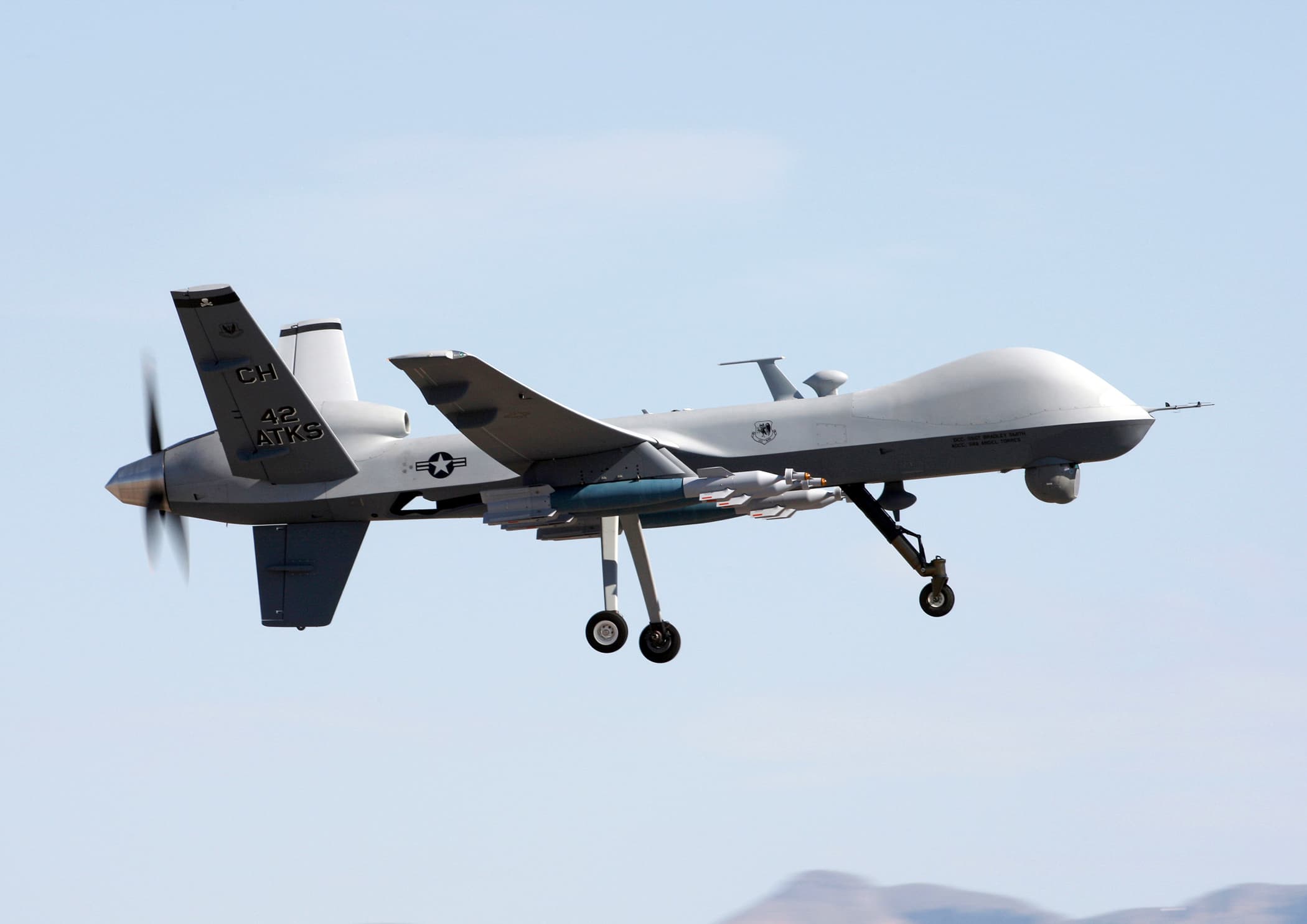
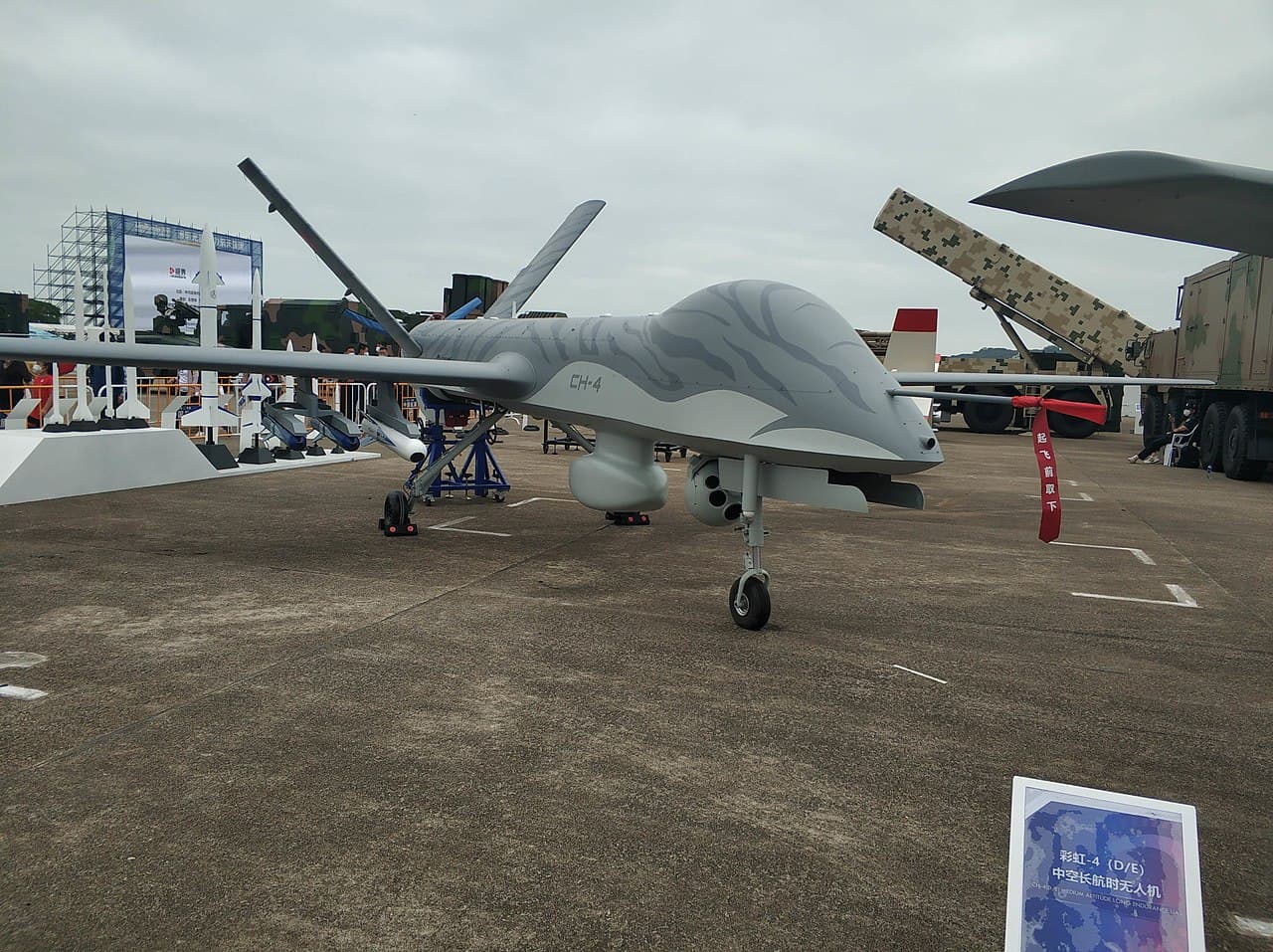
The Wing Loong II (designated GJ-2 in Chinese military service) comes from the Chengdu Aircraft Industry Group (CAIG), a subsidiary of AVIC (Aviation Industry Corporation of China). It follows the original Wing Loong (GJ-1), which first flew in 2007 and entered Chinese service around 2008. Where the original was roughly in MQ-1 Predator territory, a light recon platform with limited strike capability, the Wing Loong II is squarely aimed at the MQ-9 Reaper class.
First flight was 27 February 2017. Wingspan is 20.5 metres, nearly matching the Reaper's 20 metres. Length 11 metres. Maximum takeoff weight around 4,200 kg versus the Reaper's 4,760 kg. The physical resemblance to the Reaper is not coincidental. The Reaper established the optimal layout for a MALE UCAV, and the Wing Loong II followed the template: high wing, turboprop, V-tail, nose sensor turret, multiple underwing hardpoints.
The engine is a turboprop. CAIG hasn't publicly confirmed the model, but output is estimated at roughly 750 shp, below the Reaper's 950 shp. That means somewhat lower speed (370 km/h versus the Reaper's 482 km/h) but still adequate for the mission.
Endurance is quoted at 32 hours clean, which would beat the Reaper's 27 hours if accurate. Independent verification of Chinese performance claims is limited, though, and realistic armed endurance is probably 16-20 hours.
Sensors and Weapons
EO/IR sensor turret under the nose for full-motion video and targeting. Optional synthetic aperture radar for all-weather, day-night surveillance. The sensor package is functional but, from what's visible in imagery and limited operator feedback, doesn't match Western systems like the MTS-B or Litening pod in resolution or reliability.
Six underwing hardpoints carrying roughly 480 kg of weapons. The menu:
- Blue Arrow 7 (BA-7): Semi-active laser-guided air-to-ground missile, the Hellfire equivalent. Primary precision weapon.
- AKD-10: Heavier air-to-ground missile with longer range.
- FT-9/FT-10: GPS/INS-guided small-diameter bombs, 25 kg and 50 kg.
- GB-7: Laser-guided bomb, 100 kg class.
- LS-6: GPS-guided glide bomb for standoff delivery.
That gives real multi-role flexibility: precision strikes with the BA-7, area targets with guided bombs, and the ability to mix ISR-heavy and strike-heavy loadouts.
Combat Record
UAE in Libya
The UAE was the launch customer, receiving Wing Loong IIs from 2017. They've been the most aggressive operator. UAE drones flew out of Al-Khadim Air Base in eastern Libya in support of Haftar's forces, and the tempo was high. Hundreds of strikes against GNA military positions, weapons depots, logistics infrastructure.
The Tripoli academy strike was the deadliest and most controversial, but it wasn't isolated. At least six Wing Loong IIs have been confirmed lost in Libya, shot down by GNA air defences or crashed, which gives you a sense of the operational pace.
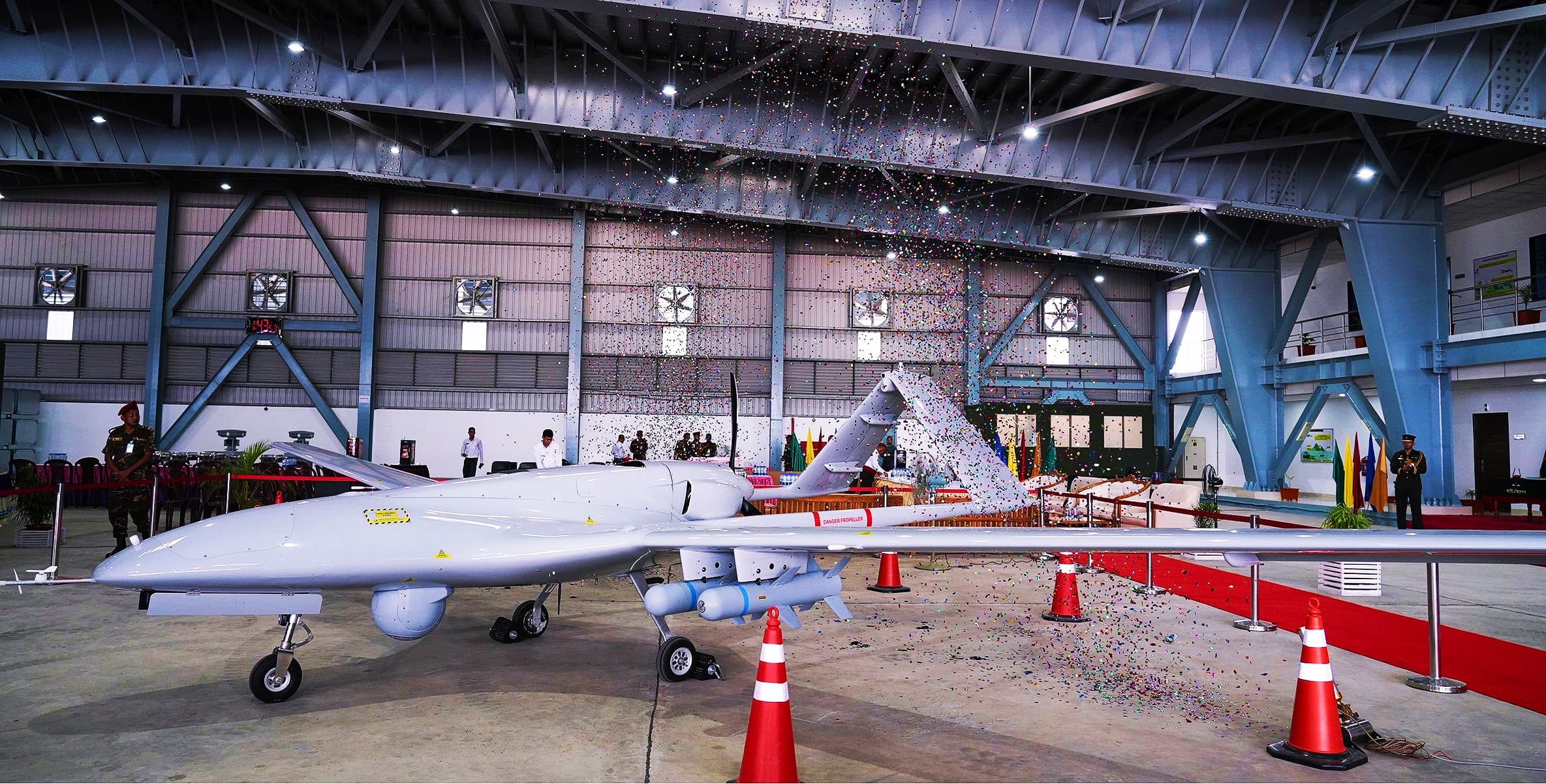
Libya is actually the conflict that best illustrates both the Wing Loong II's capability and the proliferation problem. Turkey supplied Bayraktar TB2s to the GNA. The UAE supplied Wing Loong IIs to Haftar. It was arguably the first proxy drone war: two rival drone systems, from rival powers, fighting each other's clients in someone else's civil war. The Wing Loong II showed effective precision strike capability against fixed targets and vehicles, but it also took losses from Turkish-supplied air defences, including KORAL EW systems and HISAR surface-to-air missiles. Like the Reaper, it's not survivable against modern integrated air defences.
The accountability vacuum was total. Neither China nor the UAE faced consequences for strikes that killed civilians or violated the UN arms embargo. The UN documented violations. Nothing happened. China kept supplying parts. The UAE kept flying.
Saudi Arabia in Yemen
The Royal Saudi Air Force operates Wing Loong IIs in the Yemen campaign against the Houthis. In April 2018, a Wing Loong II strike killed Saleh Ali al-Sammad, chairman of Yemen's Supreme Political Council, near Hodeidah. One of the highest-profile kills achieved by a Chinese-made drone.
Saudi Arabia has also lost Wing Loong drones to Houthi air defences, which have gotten increasingly competent at intercepting medium-altitude drones using modified Soviet-era systems and Iranian-supplied equipment.
The UAE also deployed Wing Loong drones in Yemen as part of the Saudi-led coalition. A UAE-operated Wing Loong I was shot down by Houthi forces on 26 September 2016, one of the family's earliest combat losses.
Egypt in Sinai
Egypt's Air Force has used Wing Loong drones for counterterrorism in the Sinai Peninsula. In March 2017, Wing Loong I strikes in North Sinai killed eighteen militants affiliated with ISIS's Sinai Province near El Arish, Rafah, and Sheikh Zuweid. Egypt has since acquired the Wing Loong II as well. Low-intensity counterinsurgency against opponents with minimal air defences is the kind of environment where these platforms work best.
Other Operators
Pakistan acquired the type, reportedly for counterterrorism along the Afghan border. Additional confirmed or reported operators include Algeria, Kazakhstan, Nigeria, Serbia, and Uzbekistan, with more African and Central Asian countries expressing interest. The customer list reads as a catalogue of countries that want armed drone capability but can't, or don't want to, buy American.
Where the Reaper Comparison Breaks Down
The Wing Loong II gets called a Reaper clone. The physical similarity is obvious and not coincidental. But the comparison flatters the Chinese aircraft more than it should.
The Reaper's Raytheon MTS-B sensor suite is substantially more capable. Higher resolution, better target discrimination, more mature processing software. The Reaper's Honeywell engine is more powerful and has a much longer reliability track record. The Reaper's SATCOM data link provides genuine global reach; the Wing Loong II's satellite capability is less proven in practice. And the Reaper has two decades of combat-validated operational procedures, maintenance documentation, and institutional knowledge behind it. The Wing Loong II has maybe a decade, mostly in permissive environments.
Where the Wing Loong II genuinely competes is on the dimensions that matter most to export customers: price, availability, and the absence of political strings. If you need an armed drone and can get a Wing Loong II delivered in months with no congressional review, you'll often choose it over a Reaper that takes years to approve, costs ten times as much, and comes with American eyes watching how you use it.
Variants and Production
The Wing Loong I (GJ-1) remains in service as a lighter ISR and strike platform, exported to Nigeria, Egypt, Kazakhstan, Uzbekistan, and others.
The Wing Loong-1D is an upgraded variant with improved avionics and sensors.
The Wing Loong-10 is a reported next-generation development with stealth features. Details are scarce and the programme's status is unclear.
Production runs at CAIG's Chengdu facilities. The line can reportedly deliver dozens of airframes per year, though China doesn't publish production figures. Saudi Arabia has discussed local assembly as part of its Vision 2030 defence industrialisation effort. The UAE has a drone facility at Al Ain that may handle Wing Loong maintenance and partial assembly, though the extent of local manufacturing versus imported complete airframes is unclear.
China bundles the whole weapons package: Blue Arrow 7 missiles, FT-series bombs, AKD-10 missiles all produced domestically and exported alongside the drone. That approach locks customers into Chinese supply chains and generates recurring weapons revenue.
Technology Transfer and Proliferation
Several Wing Loong II customers have their own emerging drone development programmes. Access to the platform could accelerate those efforts through reverse engineering or technical exposure. Turkey's experience is instructive: operating Israeli Heron drones and American Predators gave Turkish engineers knowledge that informed the Bayraktar series. Something similar could happen with Wing Loong II buyers.
The counter-argument is that the Wing Loong II isn't cutting-edge. Conventional aerodynamics, mature sensors, straightforward command and control. A country with the engineering depth to reverse-engineer it could probably develop something comparable independently given time and money.
Either way, the export programme has established China as a reliable, competitively priced supplier in the armed drone market. Even if customers eventually develop indigenous alternatives, the commercial relationships and strategic dependencies take years to unwind.
What the Wing Loong II Actually Changed
Before Chinese drone exports, a country that wanted an armed MALE drone had three options: buy American (expensive, restricted, politically conditional), buy Israeli (expensive, available to some), or build your own (expensive, slow, technically hard).
China created option four: cheap, fast, no conditions. The result has been rapid proliferation of armed drone capability to states that previously had none. Whether that's stabilising or destabilising depends entirely on who's buying and what they're doing with the aircraft.
The Wing Loong II has been used to kill unarmed cadets at a graduation ceremony, to assassinate political leaders, to fight counterterrorism campaigns, and to wage proxy wars. A tool, in other words. China sells it. What happens with it, in Beijing's view, is someone else's problem.
That position is convenient. It's also, for now, commercially unstoppable. The Wing Loong II will keep selling, keep arming new operators, and keep appearing in conflicts where the rules of engagement are written by the buyer. The global armed drone market is already shaped more by Chinese export policy than by any other single factor.
Sponsored
Place your ad hereSpecifications
| Wingspan | 20.5 m (67.3 ft) |
| Length | 11 m (36.1 ft) |
| Height | 4.1 m (13.5 ft) |
| Max Takeoff Weight | 4,200 kg (9,259 lb) |
| Payload | 480 kg (1,058 lb) |
| Max Altitude | 9,000 m (29,500 ft) |
| Endurance | 32 hours |
| Max Speed | 370 km/h (230 mph) |
| Engine | Turboprop (estimated 750 shp) |
| Armament | BA-7 air-to-ground missiles, FT-series guided bombs, Blue Arrow 7 missiles, AKD-10 missiles |
| Hardpoints | 6 (wing) |
| Range | 4,000 km (2,485 mi) |