Drones of War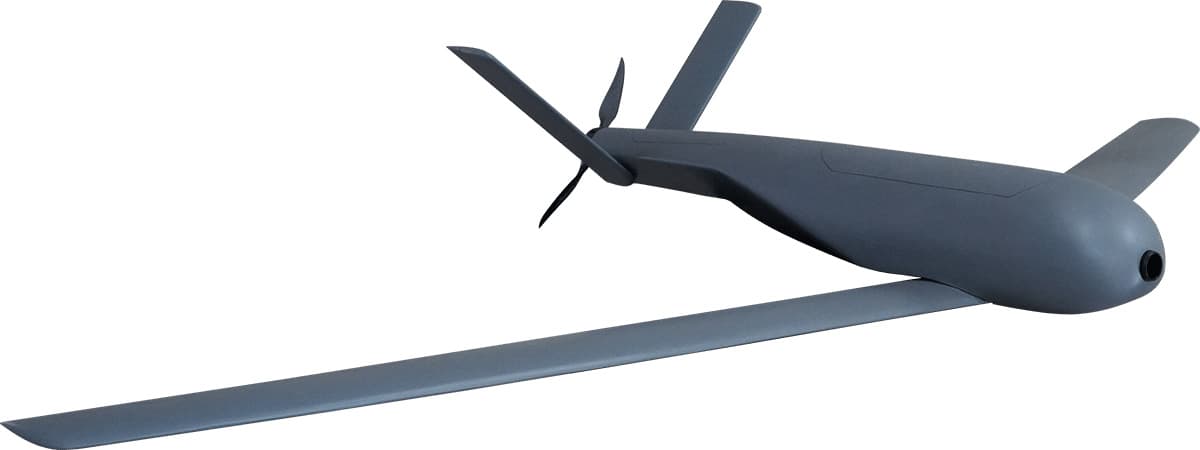
Phoenix Ghost
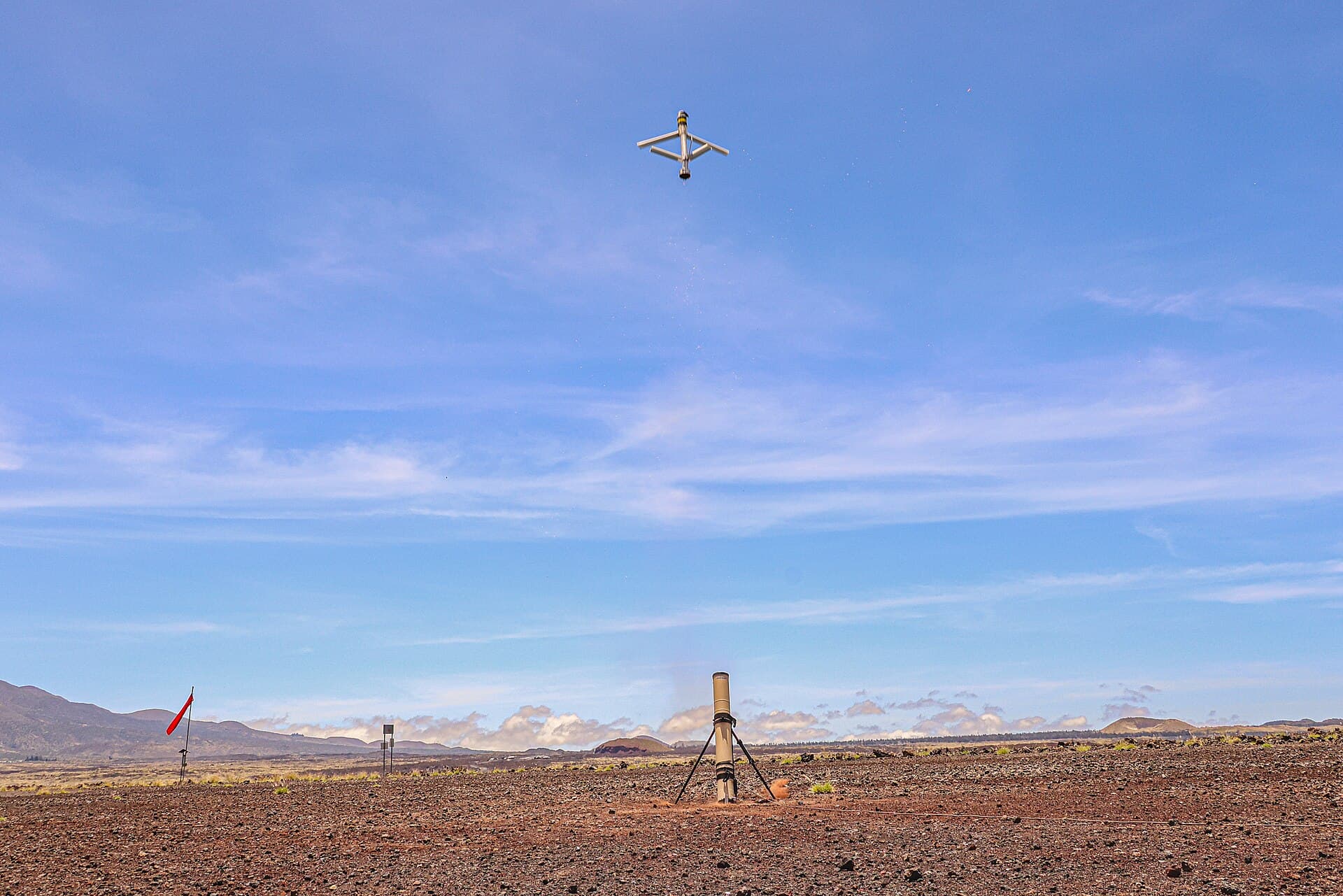
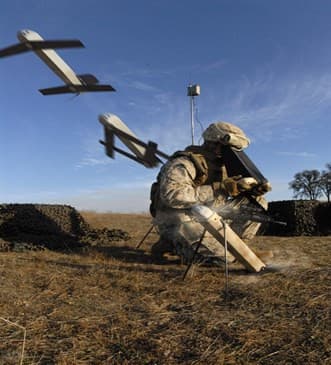
The Phoenix Ghost is not a single drone but a family of increasingly capable loitering munitions developed by Aevex Aerospace and rapidly fielded to Ukraine via the US Air Force's AFWERX programme. Shrouded in secrecy from its first delivery in April 2022, the programme was finally revealed at AUSA 2024 — exposing a sophisticated portfolio of GPS-independent kamikaze drones that had been fighting in Ukraine for over two years.
What Aevex Actually Showed at AUSA
In October 2024, Aevex Aerospace walked into the Association of the US Army symposium in Washington and did something nobody in the defence press expected. They put their previously classified drone programme on display. Not one drone. An entire family of loitering munitions, at least five distinct designs, that had been killing things in Ukraine since mid-2022 while the rest of the world knew essentially nothing about them.
By December 2024, Aevex had delivered 5,000 Phoenix Ghost drones to Ukraine. Five thousand. That number alone tells you the programme was working, because you don't keep ordering a weapon that isn't delivering results.
But the really striking part of the AUSA reveal wasn't the delivery numbers. It was the navigation.
Aevex disclosed that the Phoenix Ghost family uses "visual-based navigation to autonomously identify and follow landmarks or features in their environments, enabling precise positioning and pathfinding" without relying on satellite navigation. Read that again. These drones don't use GPS. They look at the ground, compare what they see to stored reference imagery, and figure out where they are by matching visual features. It's conceptually similar to how a pilot navigates by looking at a map and comparing it to the terrain below, except the drone does it autonomously using machine learning.
The implications for Ukraine are hard to overstate. Russia's entire counter-drone electronic warfare strategy is built around denying GPS. Systems like the Pole-21 create GPS denial zones extending tens of kilometres. The Krasukha-4 jams multiple navigation and communication bands at once. Against GPS-dependent drones, these systems are devastating. Against a drone that navigates by vision? GPS jamming is irrelevant. The drone doesn't need GPS. It looks at the ground and knows where it is.
This is almost certainly why the programme was classified for so long. A drone that's immune to GPS jamming is a significant intelligence target. If Russian EW planners understood the navigation method, they could work on countermeasures: visual obscurants, terrain modification, camera-specific interference. Keeping the whole thing secret preserved the operational advantage for over two years. That's a long time in a war that was consuming thousands of drones monthly.
Visual navigation does have edge cases. Night operations, heavy fog, featureless terrain (open water, snow-covered plains, uniform desert) all degrade optical navigation. The system likely incorporates infrared or other sensor modes to deal with some of these, but the physics impose limits.
The Disruptor Numbers
Of the variants Aevex showed, the Disruptor is the one that made the room pay attention.
Standard configuration: 4.5 hours aloft, maximum range of at least 600 kilometres, carrying a 22.5 kg payload. The electronic fuel injection (EFI) variant pushes those numbers to 11.6 hours of endurance and 1,300 kilometres of range.
I want to sit with those figures for a moment. A loitering munition with a 22.5 kg warhead, 1,300 km range, and nearly 12 hours in the air is not a tactical weapon in any normal sense. It's a strategic strike platform that happens to be expendable. The range exceeds the distance from Ukraine's western border to Moscow. The endurance means it can fly hundreds of kilometres, loiter for hours waiting for the right target, and still have fuel left to attack. This is fixed-wing, internal-combustion-powered, nothing exotic about the propulsion. But the performance envelope puts it closer to a cruise missile than to what most people picture when they hear "kamikaze drone."
The Disruptor was reportedly the first Phoenix Ghost variant to reach Ukraine, with deliveries starting in mid-2022.
The Rest of the Family
The other variants fill out the range from medium to light.
The Dagger is 1.8 metres long with a 2.6-metre wingspan. 16 kg max takeoff weight, 3.6 kg payload, up to 80 minutes of endurance, about 190 km range. This is your battalion-level loitering munition, the slot between a man-portable system like the Switchblade 300 and the Disruptor's strategic reach. It competes most directly with the Switchblade 600, though with much better range.
The Atlas is lighter: 9.5 kg total including a 3.7 kg payload, one to two hours of endurance, around 120 km range. Group 2 classification (9.5 to 25 kg). This looks like the workhorse of the family. Light enough for small-unit employment, enough range and endurance for typical tactical missions, and a payload weight that allows a serious warhead.
Then there's the Dominator, which is dimensionally the same as the Disruptor in length and wingspan but uses a completely different twin-boom configuration with an inverted V-tail. Aevex hasn't released detailed specs on this one. Could be an EW variant, a recon platform, or a different warhead configuration. The fact that they showed it without explaining it suggests a specialised role they'd rather not discuss publicly.
For context on how the Dagger stacks up against what else is available:
| Phoenix Ghost (Dagger) | Switchblade 600 | Warmate | Lancet-3 | |
|---|---|---|---|---|
| Weight | 16 kg | 22.7 kg | 5.7 kg | 12 kg |
| Payload | 3.6 kg | Javelin-class | 1.4 kg | 3 kg |
| Range | 190 km | 40 km | 30 km | 40 km |
| Endurance | 80 min | 40 min | 70 min | 40 min |
| GPS dependent | No | Yes | Partially | Yes |
| Cost | Classified | $70K-$175K | Not disclosed | Not disclosed |
The range advantage is striking. 190 km vs. 40 km for the Switchblade 600 and Lancet-3. And the GPS independence applies across the whole Phoenix Ghost family, which is something none of the competitors offer.
How It Happened So Fast
The speed of this programme deserves attention because it breaks almost every stereotype about defence procurement.
The Phoenix Ghost didn't start as a Ukraine weapons project. Aevex Aerospace was building aerial targets, cheap expendable drones designed to be shot down during testing of counter-drone systems. They had contracts with the US military, production experience with low-cost expendable airframes, and engineering teams that knew how to build something quickly and cheaply.
When Russia invaded in February 2022, the Air Force's Big Safari special projects office (a secretive unit responsible for rapid development of specialised systems) saw the connection. Aevex's target drones could become kamikaze drones. Conceptually straightforward: both are expendable airframes that fly to a designated point. One gets shot down on purpose. The other does the hitting.
AFWERX, the Air Force's innovation arm, handled the contracting. On March 4, 2022, Aevex was among over 50 companies awarded an IDIQ (indefinite-delivery/indefinite-quantity) contract by the US Navy for innovative unmanned systems. By April 17, barely seven weeks after the invasion started, Aevex had specific orders to manufacture 121 Phoenix Ghost units. These were assembled and delivered within weeks, as part of an $800 million military assistance package. In July 2022, another 580 units followed.
Seven weeks from invasion to manufacturing order. Weeks more to first deliveries. For context, the F-35 programme took over two decades from concept to initial operating capability. Aevex went from concept to combat in about two months.
The key enablers: existing airframe designs that needed repurposing rather than invention, non-traditional contracting that bypassed standard acquisition timelines, and a classification umbrella that eliminated the usual public scrutiny and debate cycle.
The Two-Week Design Loop
Possibly the most impressive claim from the AUSA presentation: Aevex runs a two-week design cycle. Every two weeks, they evaluate combat data from Ukraine, identify needed improvements, modify the design, and push updated versions into production.
Two weeks. Traditional defence programmes measure design cycles in months or years. Aevex is doing it in 14 days.
This works because the airframes are relatively simple (fixed-wing drones with electric or small IC engines, commercial-grade electronics, modular payloads), because Ukrainian operators provide direct feedback on what works and what doesn't, and because the production method appears to use rapid prototyping and small-batch manufacturing that can absorb design changes without requiring the kind of recertification and retooling that a mass-production system like Switchblade's demands.
The Secrecy Question
Two and a half years of silence. That's how long the Phoenix Ghost existed in public as nothing more than a name. Pentagon spokesman John Kirby first mentioned it on April 21, 2022, saying it was built by Aevex Aerospace with Air Force support to address Ukrainian battlefield needs. He declined to give specs, photos, or basically anything else. After that, the programme appeared on security assistance fact sheets alongside Switchblades and Javelins, but no photograph, no specification, no operator footage ever surfaced. Defence analysts pieced together fragments from patent filings, job postings, corporate press releases, satellite imagery of Aevex facilities. That was it.
The operational security benefit was real. Every other Western drone sent to Ukraine got immediately studied by Russian intelligence. The Switchblade, the Bayraktar, the HIMARS-launched GMLRS, all publicly known, all analysable. The Phoenix Ghost avoided that exposure entirely.
The cost of that secrecy was accountability. The programme was funded through presidential drawdown authority and the Ukraine Security Assistance Initiative. Both are subject to Congressional oversight, but technical details stay classified. Whether 5,000 drones costing potentially hundreds of millions of dollars actually delivered what was promised is a question only classified briefings can answer. The AUSA reveal partially addressed this by disclosing the programme's existence and general capabilities, but detailed combat assessments remain under wraps.
Defence Express reported in late 2024 that the per-unit costs varied by variant but were substantially lower than comparable Western systems. The aerial target heritage probably helps here, since those production lines were already optimised for cheap expendable drones.
What It Means Beyond Ukraine
Three things about this programme matter beyond the specific weapon.
First, it proved the US defence industrial base can produce a combat-effective drone family from concept to mass delivery in weeks when the barriers are removed. The AFWERX pathway, the Big Safari oversight, the non-traditional contracting, these mechanisms existed before Phoenix Ghost. This programme proved they work at scale under wartime pressure.
Second, the visual navigation changes the electronic warfare calculus for everyone. If drones can navigate reliably without GPS, GPS denial stops being a reliable counter-drone strategy. That affects not just Russia but China and anyone else whose counter-UAS planning centres on breaking satellite navigation. Every military planning for future conflict has to account for this now.
Third, the secrecy model may become a template. Fight with a weapon for two years before your adversary even knows what it looks like? That's an intelligence advantage that normal procurement can't provide. Whether democracies should be comfortable with that level of opacity in weapons programmes is a legitimate question, but the operational value is undeniable.
The Phoenix Ghost didn't win the war in Ukraine. No single system does. But it may have changed how future weapons get developed, delivered, and used: quickly, quietly, and in the dark until the mission says otherwise.
Sponsored
Place your ad hereSpecifications
| Variants | Multiple (Disruptor, Dagger, Atlas, Dominator) |
| Disruptor Range | 600 km (standard), 1,300 km (EFI variant) |
| Disruptor Endurance | 4.5 hours (standard), 11.6 hours (EFI variant) |
| Disruptor Payload | 22.5 kg |
| Dagger Length | 1.8 m |
| Dagger Wingspan | 2.6 m |
| Dagger Weight | 16 kg (MTOW, including 3.6 kg payload) |
| Dagger Endurance | 80 minutes |
| Dagger Range | 190 km |
| Guidance | Visual-based navigation (GPS-independent), autonomous landmark following |
| Launch | Various (ground-launched) |