Drones of War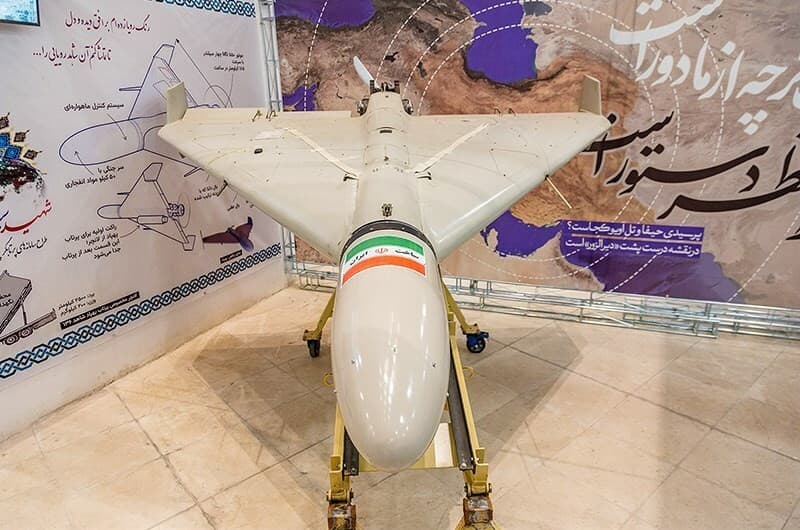
Shahed-238
The Shahed-238 is a turbojet-powered evolution of Iran's Shahed-136 one-way attack drone, reaching speeds of 500-600 km/h with radar-seeking and infrared-homing variants, designed to overwhelm air defences that had adapted to its slower predecessor.
Why It Exists
By mid-2023, Ukraine had figured out the Shahed-136. That's the short version. The longer version is that Ukrainian air defences, after months of being hammered by waves of propeller-driven drones flying at 185 km/h, had adapted. Mobile fire teams, anti-aircraft guns, electronic warfare units, even improvised acoustic detection networks that picked up the distinctive buzz of the Mado MD-550 piston engine from kilometres away. Interception rates climbed above 75 percent. Some months they exceeded 90 percent. The Shahed-136, which had terrorised Ukrainian cities through the winter of 2022-2023, was becoming a manageable problem.
So Iran built a faster one.
The Shahed-238 was first shown publicly in November 2023 at an IRGC Aerospace Force exhibition in Qom, attended by Supreme Leader Ali Khamenei. Three variants were on display, all in black paint that immediately set off speculation about radar-absorbent coatings (though it could just as easily have been a presentation choice or night-operations scheme). The core change was obvious: the piston engine was gone, replaced by a turbojet. Cruise speed roughly tripled to 500-600 km/h. Terminal dive speed, according to Iranian sources, exceeds 700 km/h.
That speed difference isn't incremental. It breaks the defensive playbook that Ukraine had spent a year developing.
What Changed from the Shahed-136
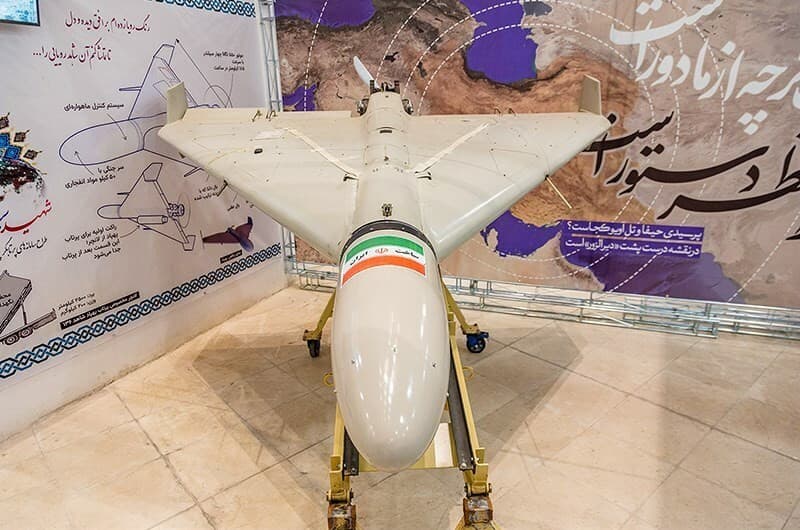
The airframe looks related but isn't identical. Same basic concept, a delta-wing planform with swept leading edges, but stretched to about 3.5 metres long with a 3-metre wingspan to accommodate the jet engine and its fuel demands. Maximum takeoff weight nearly doubles to roughly 380 kg, up from the Shahed-136's estimated 200 kg. That extra weight buys you the heavier engine, more fuel (turbojets are thirsty compared to pistons), and enhanced seeker systems.
The warhead stays around 50 kg. But here's the thing about kinetic energy: at 700+ km/h terminal velocity, a 50 kg warhead delivers dramatically more destructive force than the same mass arriving at 185 km/h. The physics are straightforward. Kinetic energy scales with the square of velocity. Triple the speed, and you get roughly nine times the kinetic energy contribution on top of the explosive itself.
The engine is the heart of it. Iran calls it the Toloue-10 (some sources say Toloue-13). When wreckage was recovered in Ukraine and taken apart, Defence Express and other investigators identified it as a TJ150 micro-turbojet made by PBS Velka Bites in the Czech Republic. The TJ150 puts out 1,500 newtons of maximum thrust, weighs 18.9 kg, and is designed for drone and light unmanned applications. Czech authorities confirmed matching components in recovered debris. How Iran obtained them, whether through procurement of actual TJ150s or reverse-engineering from acquired examples, is still under investigation.
Three Seekers, Three Problems
This is the part that should worry defence planners more than the speed.
The IRGC displayed three distinct guidance configurations at the Qom exhibition:
GPS/INS. The baseline variant. Inertial navigation plus GNSS (GPS/GLONASS), functionally the same approach as the Shahed-136 but with reportedly improved receivers and potential anti-jam features. Good enough for area targets: buildings, power substations, industrial facilities. This is the volume variant.
Imaging infrared (IIR) seeker. A nose-mounted thermal imager that provides autonomous terminal guidance. The drone can lock onto heat-emitting targets, running generators, vehicles, ships, without needing GPS at all. That makes it resistant to GPS jamming and spoofing, which has been one of Ukraine's more effective countermeasures against the Shahed-136. The seeker can also do a degree of autonomous target recognition, matching heat signatures against pre-programmed parameters.
Anti-radiation seeker. This is the nasty one. A passive radar-homing head that guides on the electromagnetic emissions of air defence radars. Think about the tactical bind this creates: you turn on your radar to track incoming drones, and that same radar emission attracts a purpose-built weapon designed to kill it. Turn off the radar and the GPS-guided variants fly through unopposed. It's a genuine dilemma, and putting this capability on a drone that might cost $50,000 to $100,000 rather than a million-dollar anti-radiation missile changes the affordability calculus completely.
Why Speed Breaks the Defensive Playbook
I want to walk through this concretely, because the speed increase isn't just about making the drone harder to shoot. It fundamentally changes what defenders need to do.
Reaction time. A Shahed-136 at 185 km/h gives you minutes from detection to impact, depending on range. Time to alert crews, position guns, track and engage. A Shahed-238 at 500-600 km/h cuts that window by roughly two-thirds. For mobile AA guns and MANPADS teams, which were surprisingly effective against the slow drone, the faster target may simply be outside their engagement envelope.
Acoustic detection stops working. Ukraine built an entire improvised early-warning network around listening for the Shahed-136's distinctive piston-engine drone. The turbojet has a different acoustic signature: higher-pitched, less distinctive, and arriving with far less warning because the aircraft is moving so much faster. By the time you hear it, it's much closer.
The gun problem. ZPU-series anti-aircraft guns and crew-served weapons did real work against the Shahed-136. Against a target moving three times faster, the lead angle required triples while the time available to fire drops by the same factor. The engagement geometry gets very difficult very fast.
Cost escalation for defenders. If gun-based defences become less effective, the burden shifts to missile systems: NASAMS, IRIS-T, Gepard, and similar. These can handle the faster target, but their interceptors cost orders of magnitude more than the drone. The economic mismatch that already favoured the Shahed-136 gets worse.
Mixed Salvos: The Real Tactic
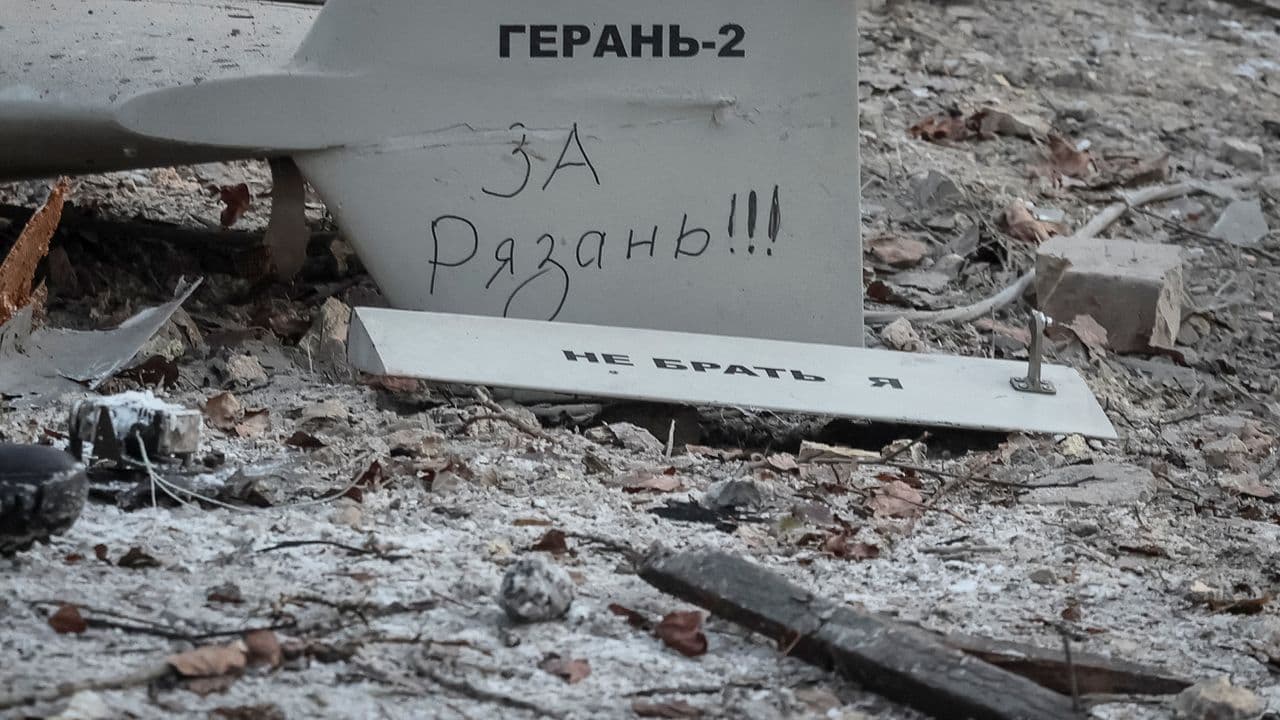
The Shahed-238 doesn't need to replace the Shahed-136 to be effective. In practice, Russia has been using them together: waves of cheaper Geran-2s (the Russian designation for the Shahed-136) mixed with smaller numbers of Geran-3s (the Shahed-238). Sometimes cruise missiles and ballistic missiles get thrown into the same attack package.
This is tactically smart. Defenders calibrated for a slow target at 185 km/h have to simultaneously track and engage a fast target at 500+ km/h. Different weapon systems are optimal for each. The combination saturates defensive capacity more effectively than either type alone. And if any of those incoming drones carry anti-radiation seekers, every radar that lights up to engage the swarm becomes a potential target itself.
Ukrainian air force spokespeople have acknowledged the increased challenge. Initial interception rates against the Geran-3 were lower than the well-understood Geran-2, though Ukrainian forces adapted by adjusting engagement parameters on their missile-based systems. The adjustment cycle continues.
The Supply Chain Problem
Here's where the Shahed-238's story gets interesting from a strategic perspective. Every time wreckage gets recovered in Ukraine, it becomes a forensic map of Iran's sanctions-evasion procurement network.
The jet engine, whether it's a domestically produced Toloue-10 or a procured Czech TJ-100, depends on manufacturing capabilities and materials that Iran doesn't fully control domestically. Czech authorities and EU sanctions enforcement agencies are actively investigating the procurement channels.
Canadian-made satellite navigation modules turned up in recovered debris, routed to Iran through intermediary countries in violation of export controls. Various other Western-origin components were identified, consistent with the broader pattern across Iranian drone systems of acquiring restricted technology through front companies and intermediary states.
These dependencies are the Shahed-238's biggest strategic vulnerability. The Shahed-136's piston engine and simple electronics can be sourced or substituted more easily. A turbojet requires precision manufacturing that's harder to replicate in isolation. If sanctions enforcement actually tightens around the engine supply chain, production volume hits a ceiling.
Comparable Systems
The Shahed-238 sits in an unusual space. Faster than any one-way attack drone Iran has fielded before, but still cheaper than a cruise missile. Some comparisons that help frame it:
The Shahed-136 remains the volume weapon. Slower, cheaper, simpler, available in much larger numbers. The 238 is the penetrator, used to punch through defences that learned to handle the 136.
The Israeli Harop is a more sophisticated loitering munition with its own turbojet and anti-radiation seeker. Considerably more capable but also much more expensive. The Shahed-238's anti-radiation variant attempts something similar at a fraction of the cost, with corresponding compromises in sophistication.
There was an American programme in the 1980s, the AGM-136 Tacit Rainbow, that aimed at exactly this concept: a cheap jet-powered weapon that could loiter and then home on enemy radars. It was cancelled over cost and complexity. The Shahed-238 anti-radiation variant gets at the same idea with much simpler technology and fewer ambitions.
What It Can't Do
The speed helps. It doesn't solve everything.
Endurance takes a hit. Turbojets burn fuel fast, and with roughly 2 hours of flight time the Shahed-238 has a range of about 1,200 km. That's still significant, but the Shahed-136 could reach 2,000 to 2,500 km on its sipping piston engine. The operational geometry is different.
Cost goes up. Estimates range from $50,000 to $100,000 per unit, compared to $20,000 to $50,000 for the Shahed-136. Cheap relative to cruise missiles, but expensive enough that the mass-saturation approach of the 136 doesn't scale the same way.
Production is bottlenecked by the engine. Whether Iran manufactures the Toloue-10 at home or procures the TJ-100 abroad, jet engine production is harder to scale than assembling piston-powered airframes. The Shahed-238 supplements the 136. It doesn't replace it.
Accuracy in the GPS/INS variant is still area-targeting, not precision. The IIR and anti-radiation variants improve terminal guidance but add cost and complexity. Against hardened or very small targets, reliable single-shot kills aren't guaranteed.
And the turbojet creates a new vulnerability: a big infrared signature. The piston-engine Shahed-136 had a cool exhaust that made IR detection harder. The jet plume on the 238 lights up on infrared search and track systems, heat-seeking missiles, and thermal imagers. Speed partially compensates, but the trade-off is real.
The aircraft is still subsonic, still lacks stealth characteristics, still has no electronic countermeasures or evasive manoeuvring. Modern air defence systems like NASAMS, IRIS-T, and Patriot can engage at these speeds. The Shahed-238 makes interception harder. Not impossible.
The Bigger Picture
The Shahed-238 is a transitional weapon, and I mean that in a specific sense. It solves the immediate problem of adapted Shahed-136 defences while Iran continues working on what comes next. The development trajectory points in clear directions: domestication of turbojet production so the engine supply chain isn't vulnerable, onboard AI for smarter terminal guidance, swarm coordination so multiple drones can distribute themselves across a target set autonomously, and eventually stealthier airframes.
For defenders, the Shahed-238 is a preview. Every time they adapt to one generation of threat, the next generation arrives faster than the last. The question isn't whether Iran can build these things. They already have. The question is whether defensive technology, particularly directed energy weapons, electronic warfare, and cheap AI-guided interceptor drones, can mature fast enough to keep pace. So far, the offence has been staying ahead.
Sponsored
Place your ad hereSpecifications
| Wingspan | 3 m |
| Length | 3.5 m |
| Max Takeoff Weight | 380 kg |
| Warhead | ~50 kg high-explosive |
| Range | 1,200 km |
| Max Speed | 500–600 km/h |
| Impact Speed | 700+ km/h |
| Ceiling | 9,144 m (30,000 ft) |
| Endurance | ~2 hours |
| Engine | Toloue-10 micro-turbojet (based on PBS TJ150) |
| Guidance | INS + GPS/GLONASS (standard); IIR seeker variant; anti-radiation seeker variant |
| Cost | ~$50,000–$100,000 per unit (estimated) |