Drones of War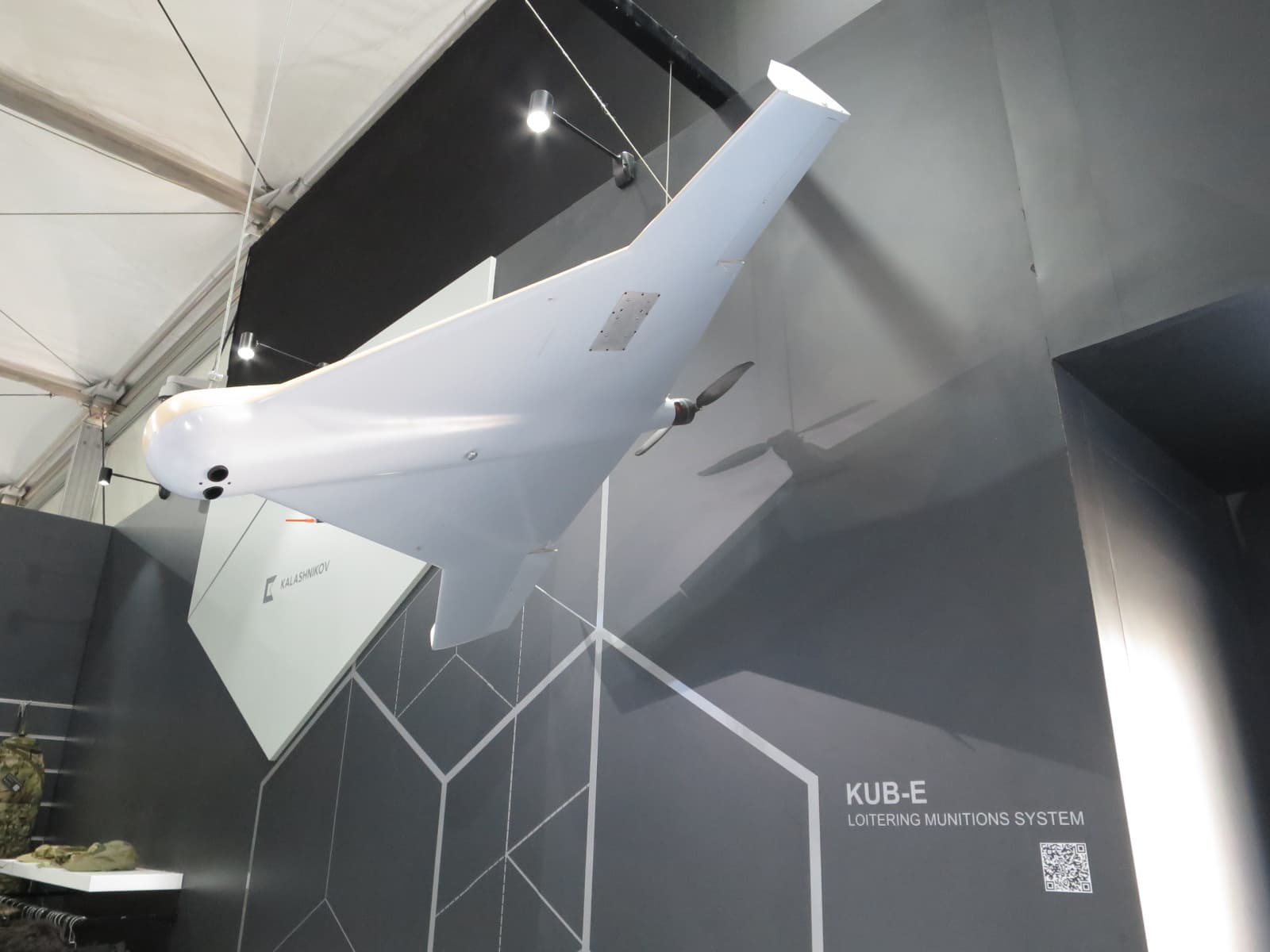
ZALA KYB (KUB-BLA)
The ZALA KYB, marketed under the KUB-BLA designation, is a fixed-wing loitering munition developed by ZALA Aero Group within Russia's Kalashnikov Concern. Unveiled at IDEX 2019 and deployed in Ukraine from March 2022, it represents Russia's attempt to build a smart, autonomous-capable kamikaze drone — though how much of that autonomy has been used in combat remains genuinely unclear.
The Autonomy Problem
The most interesting thing about the ZALA KYB isn't what it's done in combat. It's what it might be capable of doing, and whether anyone has actually let it.
ZALA Aero markets the KYB with something called AIVI (Artificial Intelligence Visual Identification). The pitch: onboard AI recognises and classifies targets through the camera in real time, increasing the area covered per flight by a factor of 60 and giving the drone genuine autonomy during search and engagement. If that works as described, you launch the thing, it flies to the target area, finds something worth hitting using its own vision system, and attacks. No continuous operator link required.
That's a significant claim. A drone that helps the operator spot targets faster is a useful tool. A drone that picks its own targets and kills them without asking permission is a lethal autonomous weapon system, with everything that phrase implies legally, ethically, and strategically.
So does it actually work that way? The CSIS analysis from 2023 ("Russia Probably Has Not Used AI-Enabled Weapons in Ukraine, but That Could Change") looked at this carefully and concluded: while the KYB may have image processing capable of target identification onboard, there's no confirmed evidence Russia has used it in fully autonomous mode. The 2019 product announcement, if you read it closely, describes target coordinates as "specified manually or acquired from the sensor payload targeting image," which is language consistent with how many semi-autonomous precision munitions work. Not exactly a smoking gun for full autonomy.
Here's where it gets interesting from a policy angle. Russia hasn't publicly stated a doctrine on lethal autonomy the way the US, UK, or NATO have. The Americans require "appropriate levels of human judgment" in the use of force. The UK insists on a human "in the loop" for lethal decisions. Russia has said nothing equivalent. Which means if the KYB can do autonomous attack, and no policy says it can't, then the absence of a policy is itself a policy. A commander can authorise fully autonomous strikes whenever the situation seems to call for it, without violating any stated Russian position.
Whether that's actually happened in Ukraine, Syria, or Mali is unknown. But the capability is there, the doctrinal guardrails aren't, and once that precedent gets set somewhere, it doesn't get unset.
The Physical Drone
Enough about the AI. What's the actual aircraft?
It's a small flying wing. No tail, no conventional fuselage, just a blended body-wing shape that gives it a flat, angular look. Compact: 1,210 mm wingspan, 950 mm long, only 165 mm tall. An electric motor drives a rear pusher propeller, which keeps it quiet. Flight speed sits between 80 and 130 km/h, with about 30 minutes of endurance.
The warhead is a 3 kg high-explosive charge in the nose. That's not much. Against exposed personnel, soft vehicles, crew-served weapons, comms equipment, it'll do the job. Against anything with armour protection, it won't, unless it happens to hit a vulnerable spot.
Launch is from a rail or catapult, usually vehicle-mounted. This isn't a man-portable system like the Switchblade 300 or Warmate. You need a dedicated launch platform and ground control station, which makes it a platoon or company-level asset.
Why the Lancet Won
You can't write about the KYB without writing about the Lancet-3, and the comparison isn't kind.
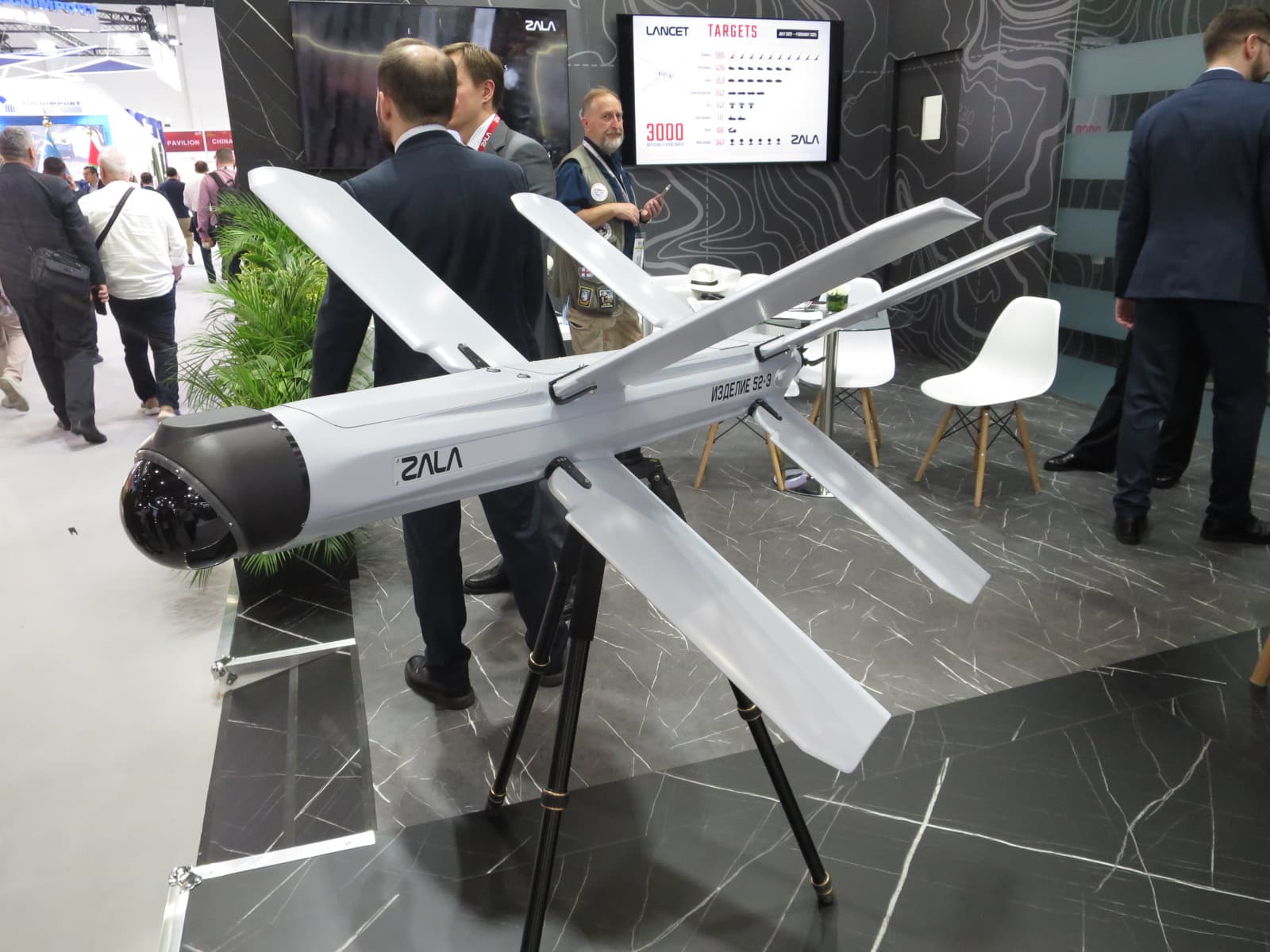
Both come from ZALA Aero. Both are loitering munitions. Both were deployed in Ukraine. But the Lancet became Russia's signature precision strike drone, documented in hundreds of successful hits against Ukrainian vehicles, artillery, and air defence systems. The KYB didn't come close to that record.
The reasons are pretty clear. The Lancet offers 40 minutes of endurance versus the KYB's 30. It has proven electro-optical lock-on guidance with a track record. Its terminal dive speed exceeds 300 km/h, which makes it genuinely hard to intercept and delivers far more kinetic energy on impact. The KYB tops out at 130 km/h in its terminal phase, slow enough that short-range air defences, small arms, even last-second EW disruption all become realistic counters. And the Lancet has a shaped-charge warhead option for anti-armour work. The KYB only carries HE.
| KYB (KUB-BLA) | Lancet-3 | |
|---|---|---|
| Configuration | Flying wing | Cruciform wings, tandem layout |
| Weight | ~7 kg (estimated) | 12 kg |
| Warhead | 3 kg HE | 3 kg HE or shaped charge |
| Endurance | 30 min | 40 min |
| Speed | 80-130 km/h | 110 km/h cruise, 300+ km/h terminal |
| Guidance | AIVI + manual | EO lock-on + GPS |
(Take the KYB weight with some caution. The 7 kg figure is an estimate; ZALA hasn't published an official number that I've been able to confirm independently.)
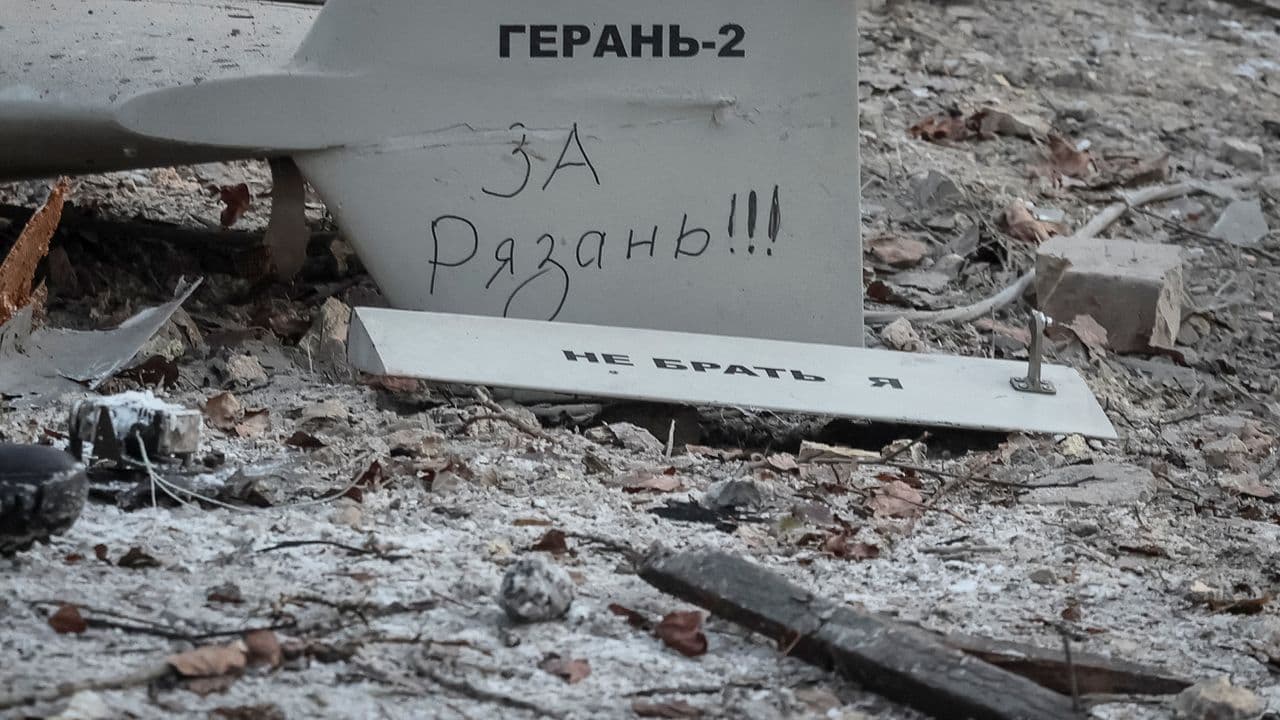
When a manufacturer has two products fighting for the same production resources, investment follows the one that's delivering results. Russia scaled Lancet production aggressively through 2023 and 2024, with multiple production lines and increasing automation. The KYB line existed but got less attention and less money. In 2024, Russia announced a tenfold increase in KYB production capacity, which sounds impressive until you remember that "tenfold" is relative to the original rate, and the original rate was modest. Even after that increase, KYB numbers likely don't approach Lancet output or the tens of thousands of Shahed/Geran-2 one-way attack drones Russia was building.
Combat Record
First confirmed appearance: March 2022, during the initial Russian push toward Kyiv. Ukrainian territorial defence forces in Kyiv Oblast shot down or recovered intact KUB units. ArmyInform, the Ukrainian military publication, released photos of a downed one.
Beyond that initial confirmation, the open-source record is thin compared to the Lancet. The KYB has killed people and destroyed equipment. But it hasn't generated the volume of documented strikes that made the Lancet famous. Part of that is lower production numbers. Part of it may be that the AI targeting capability, which is supposed to be the KYB's differentiator, proved less useful on a real battlefield than in controlled testing. Autonomous target recognition in a lab is one thing. Doing it reliably in a war zone where targets are camouflaged, hidden in tree lines, mixed in with civilian structures, and actively using deception is a completely different problem. Sometimes a human operator with a live video feed just handles that mess better.
Before Ukraine, the KYB saw some use in Syria. ZALA Aero explicitly stated the KUB-BLA was "built based on the combat experience of Russian armed forces in Syria." Details are sparse, mostly limited to Russian state media reporting strikes in Idlib Governorate without much independent verification. What Syria probably provided was test data in relatively uncontested airspace against clearly defined target sets (rebel positions, vehicle convoys), conditions much more favourable for autonomous target recognition than anything in Ukraine.
There's also a less-reported deployment: Wagner Group forces (now Africa Corps) operating in Mali. Military Africa reported in 2024 that Wagner was using KUB drones against armed groups in the Sahel. Open terrain, no serious EW threat, poorly equipped adversaries. Conditions where the KYB's capabilities probably match up better than in eastern Ukraine.
The Kalashnikov Connection
The name matters here, at least symbolically. Kalashnikov Concern's whole brand is built on a specific idea: weapons that are cheap, reliable, producible in huge numbers, and functional even when everything else falls apart. The AK-47 is the archetype of that philosophy.
When ZALA Aero (a Kalashnikov subsidiary) unveiled the KUB-BLA at IDEX 2019 in Abu Dhabi, the implicit promise was that same approach applied to drones. The reality hasn't quite delivered on that. The KYB's production numbers have been modest. It hasn't become the cheap, mass-produced drone weapon the brand might have suggested. The Lancet, from the same manufacturer, came closer to that ideal, and even the Lancet doesn't fit the "cheap and enormous quantities" template the way Iran's Shahed-136 does.
Evolution and Export
ZALA Aero hasn't given up on the platform. They showed the KUB-E at IDEX 2023 and the KUB-2E at IDEX 2025, so development continues. The "E" designation likely signals an export variant, which makes sense. If Russian forces clearly prefer the Lancet for domestic use, the logical play is to sell the KYB family internationally, especially to customers attracted by the AI targeting pitch.
Detailed specs on the newer variants haven't been publicly released. The KUB-E reportedly gets guidance improvements, better warhead options, and improved EW resilience.
For export customers, Eritrea reportedly received eight ZALA KYB drones in exchange for hosting a Russian military facility. The Wagner deployments in Mali represent a separate proliferation pathway through Russian private military companies rather than formal state-to-state sales.
That Wagner angle is worth dwelling on for a moment. Wagner forces operate with minimal oversight, in conflict zones where international humanitarian law enforcement is basically nonexistent. An AI-capable loitering munition in the hands of a private military company operating in Mali or the Central African Republic is a different risk profile entirely from the same weapon in the hands of a state military with formal rules of engagement.
Where It Sits
The KYB matters less for what it's accomplished than for what it represents. It's one of the first loitering munitions marketed with explicit AI autonomous targeting and deployed in combat by a major military power. Even if Russia hasn't actually used the autonomous mode, the weapon's existence and deployment normalise the concept.
For now, it remains a second-tier system in Russia's drone arsenal. The Lancet does the precision work. The Shahed/Geran-2 does the strategic attrition. The KYB occupies an awkward middle ground: more technically sophisticated than a basic one-way drone, less proven than either of its stablemates, carrying AI claims that remain more marketing than demonstrated battlefield reality.
But that AI capability, however imperfectly realised today, points somewhere. The direction is toward loitering munitions that don't need a human operator at all. The KYB may not be the weapon that gets there. It might just be a waypoint. But the destination it's pointing toward is going to arrive whether the arms control community is ready for it or not.
Sponsored
Place your ad hereSpecifications
| Wingspan | 1,210 mm |
| Length | 950 mm |
| Height | 165 mm |
| Weight | ~7 kg (estimated MTOW) |
| Warhead | 3 kg high-explosive |
| Range | 40 km (estimated) |
| Endurance | 30 minutes |
| Speed | 80–130 km/h |
| Guidance | AIVI (AI Visual Identification) + manual coordinate input |
| Launch | Rail or catapult |
| Propulsion | Electric motor |